Embedding best transfusion practice and blood management in neonatal intensive care
- PMID: 31986114
- PMCID: PMC7011898
- DOI: 10.1136/bmjoq-2019-000694
Embedding best transfusion practice and blood management in neonatal intensive care
Abstract
Background: Transfusion is a common procedure for neonates receiving intensive care management. Recognising a paucity of patient blood management (PBM) programmes in neonates, we aimed to embed blood management and best transfusion principles in the neonatal intensive care unit (NICU) by aligning local policies, providing targeted education and partnering with parents.
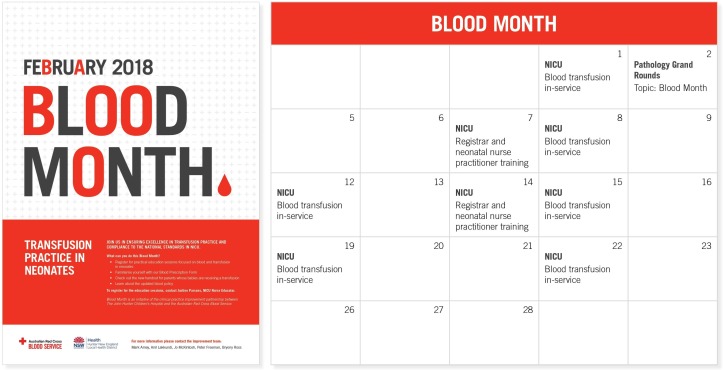
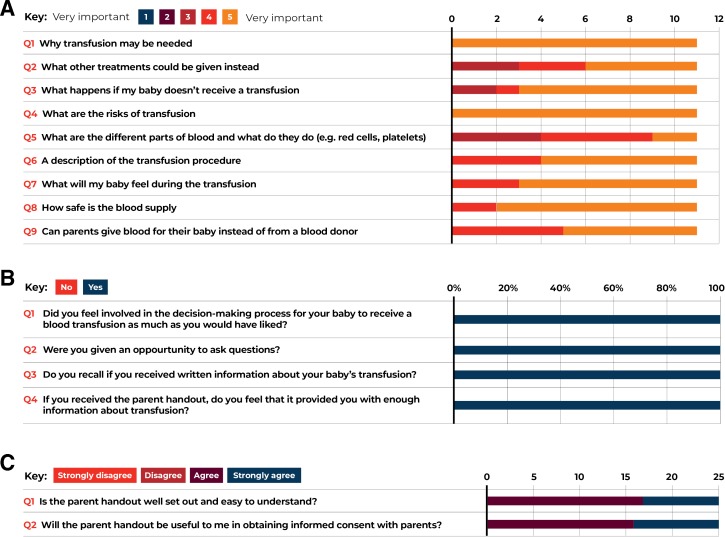
Methods: Practice-based evidence for clinical practice improvement (PBE-CPI) methodology was used. Previous hospital accreditation audits were reviewed and a neonate-specific transfusion audit was developed. Audit was performed at baseline and repeated following the intervention period. NICU clinicians received targeted education in obtaining informed consent, prescription and safe administration of blood components during a 'Blood Month' awareness period. A neonate-specific parent handout about transfusion was developed in partnership with parents. A pilot video demonstrating a shared consent discussion was also developed to assist in the consent process. Parents' knowledge, concerns and feedback regarding transfusion practice was sought at baseline (survey) and on project completion (experience trackers).
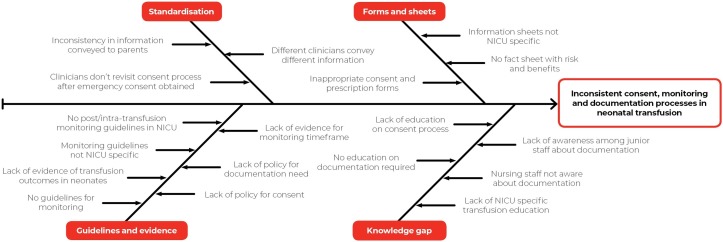
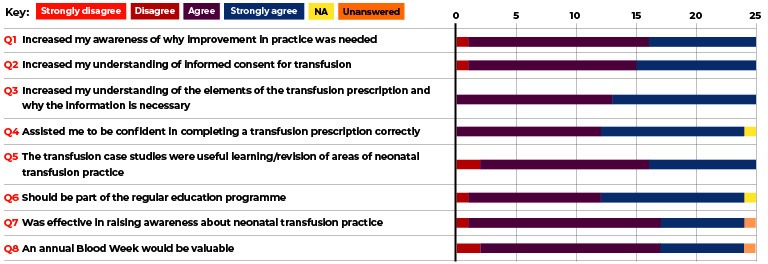
Results: Neonate-specific baseline transfusion audit showed inconsistent consent, monitoring and documentation processes in neonatal transfusions. Post-targeted education audit showed improvement in these parameters. The targeted PBM and transfusion-related education delivered during 'Blood Month' was well-received by staff. Parents' feedback about the NICU transfusion consenting process was consistently positive. NICU medical and nursing clinicians (n=25) surveyed agreed that the parent handout was well set out, easy to understand and recommended that it be used to complement practice.
Conclusion: PBE-CPI tools aligned with Australian PBM guidelines for clinicians and parents were well-accepted by clinical stakeholders and were associated with practice improvement in PBM awareness and transfusion consent processes. This PBE-CPI project developed NICU-specific consent information, not previously available, by partnering with parents to ensure quality of care in transfusion practice. Adoption of this also helps to meet accreditation for Australian Blood Management Standards. These strategies and tools translate readily into other NICUs to embed and support best PBM and transfusion practice.
Keywords: neonatology; patient blood management; quality improvement; shared-decision making; transfusion medicine.
© Author(s) (or their employer(s)) 2020. Re-use permitted under CC BY-NC. No commercial re-use. See rights and permissions. Published by BMJ.
Conflict of interest statement
Competing interests: None declared.
Figures
Similar articles
-
Variations in transfusion practice in neonatal intensive care.Pediatrics. 1998 Feb;101(2):194-200. doi: 10.1542/peds.101.2.194. Pediatrics. 1998. PMID: 9445491
-
SUPPORTING PRETERM INFANT ATTACHMENT AND SOCIOEMOTIONAL DEVELOPMENT IN THE NEONATAL INTENSIVE CARE UNIT: STAFF PERCEPTIONS.Infant Ment Health J. 2016 Mar-Apr;37(2):160-71. doi: 10.1002/imhj.21556. Epub 2016 Mar 3. Infant Ment Health J. 2016. PMID: 26938792
-
Parents' understanding and experiences of blood component transfusion in the neonatal intensive care unit: A qualitative study.Acta Paediatr. 2023 Dec;112(12):2493-2502. doi: 10.1111/apa.16952. Epub 2023 Aug 24. Acta Paediatr. 2023. PMID: 37615240
-
To Consent, or Not to Consent, That Is the Question: Ethical Issues of Informed Consent for the Use of Donor Human Milk in the NICU Setting.Adv Neonatal Care. 2019 Oct;19(5):371-375. doi: 10.1097/ANC.0000000000000651. Adv Neonatal Care. 2019. PMID: 31651471 Review.
-
Pediatric Patient Blood Management Programs: Not Just Transfusing Little Adults.Transfus Med Rev. 2016 Oct;30(4):235-41. doi: 10.1016/j.tmrv.2016.07.004. Epub 2016 Aug 1. Transfus Med Rev. 2016. PMID: 27559005 Review.
Cited by
-
Strategies to Improve Compliance with Clinical Nursing Documentation Guidelines in the Acute Hospital Setting: A Systematic Review and Analysis.SAGE Open Nurs. 2022 Feb 14;8:23779608221075165. doi: 10.1177/23779608221075165. eCollection 2022 Jan-Dec. SAGE Open Nurs. 2022. PMID: 35620302 Free PMC article. Review.
-
Prophylactic Transfusion Strategies in Children Supported by Extracorporeal Membrane Oxygenation: The Pediatric Extracorporeal Membrane Oxygenation Anticoagulation CollaborativE Consensus Conference.Pediatr Crit Care Med. 2024 Jul 1;25(7 Suppl 1):e25-e34. doi: 10.1097/PCC.0000000000003493. Epub 2024 Jul 3. Pediatr Crit Care Med. 2024. PMID: 38959357 Free PMC article.
References
-
- National Blood Authority (NBA) Patient Blood Management Guidelines: Module 6 - Neonatal and Paediatrics. Canberra, Australia: NBA, 2016.
-
- Australian Commission on Safety and Quality and Health Care National Safety and Quality Health Service Standards, second edition. Sydney NSW: ACSQHC, 2018.
MeSH terms
LinkOut - more resources
Full Text Sources
Medical