


Comorbidity and health services' usage in children with autism spectrum disorder: a nested case-control study
- PMID: 31987063
- PMCID: PMC7214718
- DOI: 10.1017/S2045796020000050
Comorbidity and health services' usage in children with autism spectrum disorder: a nested case-control study
Abstract
Aims: Children with autism spectrum disorder (ASD) tend to suffer from various medical comorbidities. We studied the comorbidity burden and health services' utilisation of children with ASD to highlight potential aetiologies and to better understand the medical needs of these children.
Methods: In this nested case-control study, ASD cases and controls - matched by age, sex and ethnicity in a 1:5 ratio - were sampled from all children born between 2009 and 2016 at a tertiary medical centre. Data were obtained from the hospital's electronic database. Comorbid diagnoses were classified according to pathophysiological aetiology and anatomical/systemic classification of disease. Standard univariate and multivariate statistics were used to demonstrate comorbidities and health services' utilisation patterns that are significantly associated with ASD.
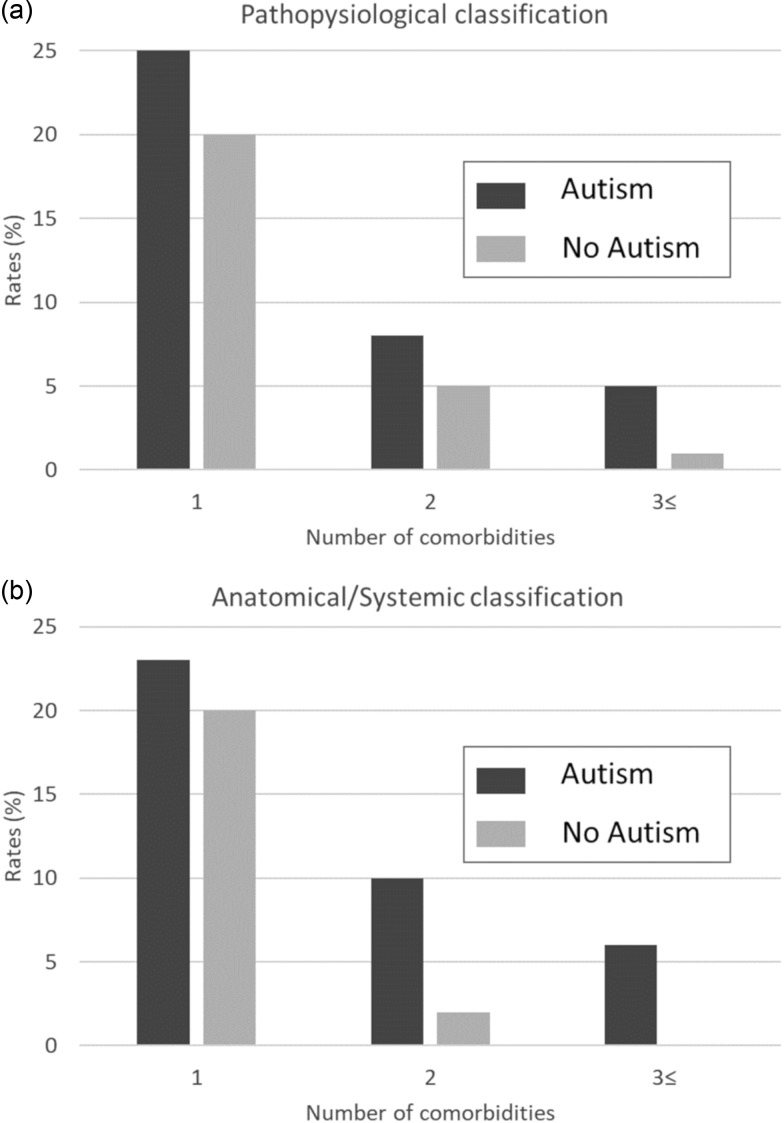
Results: ASD children had higher rates of comorbidities according to both pathophysiological and anatomical/systemic classifications (p < 0.001). The most marked significant differences were observed for: hearing impairments (OR = 4.728; 95% CI 2.207-10.127) and other auricular conditions (OR = 5.040; 95% CI 1.759-14.438); neurological (OR = 8.198; 95% CI 5.690-11.813) and ophthalmological (OR = 3.381; 95% CI 1.617-7.068) conditions; and ADD/ADHD (OR = 3.246; 95% CI 1.811-5.818). A subgroup analysis revealed a more profound case-control difference in anaemia rates among girls than in boys (OR = 3.25; 95% CI 1.04-10.19 v. OR = 0.74; 95% CI 0.33-1.64 respectively) and an opposite trend (larger differences in males than in females in cardiovascular diseases (OR = 1.99; 95% CI 1.23-3.23 v. OR = 0.76; 95% CI 0.17-3.45, respectively)). In addition, larger case-control differences were seen among Bedouin children than in Jewish children in a number of medical comorbidities (Breslow-Day test for homogeneity of odds ratio p-value <0.05). Finally, we found that children with ASD tended to be referred to the emergency department and to be admitted to the hospital more frequently than children without ASD, even after adjusting for their comorbidity burden (aOR = 1.28; 95% CI 1.08-1.50 and aOR = 1.28; 95% CI 1.11-1.47 for >1 referrals and admissions per year, respectively).
Conclusions: The findings of this study contribute to the overall understanding of comorbid conditions and health services' utilisation for children with ASD. The higher prevalences of comorbidities and healthcare services' utilisation for children with ASD highlight the additional medical burden associated with this condition.
Keywords: Autism spectrum disorder; comorbidity; health care; health services.
Conflict of interest statement
None.
Figures
References
-
- Antshel KM, Zhang-James Y and Faraone SV (2013) The comorbidity of ADHD and autism spectrum disorder. Expert Review Neurotherapeutics 13, 1117–1128. - PubMed
-
- Beers AN, McBoyle M, Kakande E, Dar Santos RC and Kozak FK (2014) Autism and peripheral hearing loss: a systematic review. International Journal of Pediatric Otorhinolaryngology 78, 96–101. - PubMed
-
- Brierley SM and Linden DR (2014) Neuroplasticity and dysfunction after gastrointestinal inflammation. Nature Reveiews Gastroenterology & Hepatology 11, 611–627. - PubMed
