. 2020 Jan 24:100841.
doi: 10.1016/j.preteyeres.2020.100841. Online ahead of print.

Ocular blood flow as a clinical observation: Value, limitations and data analysis

Affiliations

Ocular blood flow as a clinical observation: Value, limitations and data analysis

Alon Harris et al. Prog Retin Eye Res. .

Abstract

Alterations in ocular blood flow have been identified as important risk factors for the onset and progression of numerous diseases of the eye. In particular, several population-based and longitudinal-based studies have provided compelling evidence of hemodynamic biomarkers as independent risk factors for ocular disease throughout several different geographic regions. Despite this evidence, the relative contribution of blood flow to ocular physiology and pathology in synergy with other risk factors and comorbidities (e.g., age, gender, race, diabetes and hypertension) remains uncertain. There is currently no gold standard for assessing all relevant vascular beds in the eye, and the heterogeneous vascular biomarkers derived from multiple ocular imaging technologies are non-interchangeable and difficult to interpret as a whole. As a result of these disease complexities and imaging limitations, standard statistical methods often yield inconsistent results across studies and are unable to quantify or explain a patient's overall risk for ocular disease. Combining mathematical modeling with artificial intelligence holds great promise for advancing data analysis in ophthalmology and enabling individualized risk assessment from diverse, multi-input clinical and demographic biomarkers. Mechanism-driven mathematical modeling makes virtual laboratories available to investigate pathogenic mechanisms, advance diagnostic ability and improve disease management. Artificial intelligence provides a novel method for utilizing a vast amount of data from a wide range of patient types to diagnose and monitor ocular disease. This article reviews the state of the art and major unanswered questions related to ocular vascular anatomy and physiology, ocular imaging techniques, clinical findings in glaucoma and other eye diseases, and mechanistic modeling predictions, while laying a path for integrating clinical observations with mathematical models and artificial intelligence. Viable alternatives for integrated data analysis are proposed that aim to overcome the limitations of standard statistical approaches and enable individually tailored precision medicine in ophthalmology.

Keywords: Artificial intelligence; Glaucoma; Mathematical models; Ocular blood flow; Vascular risk factors.


Conflict of interest statement

Declaration of competing interest There are no conflicts of interest.

Figures
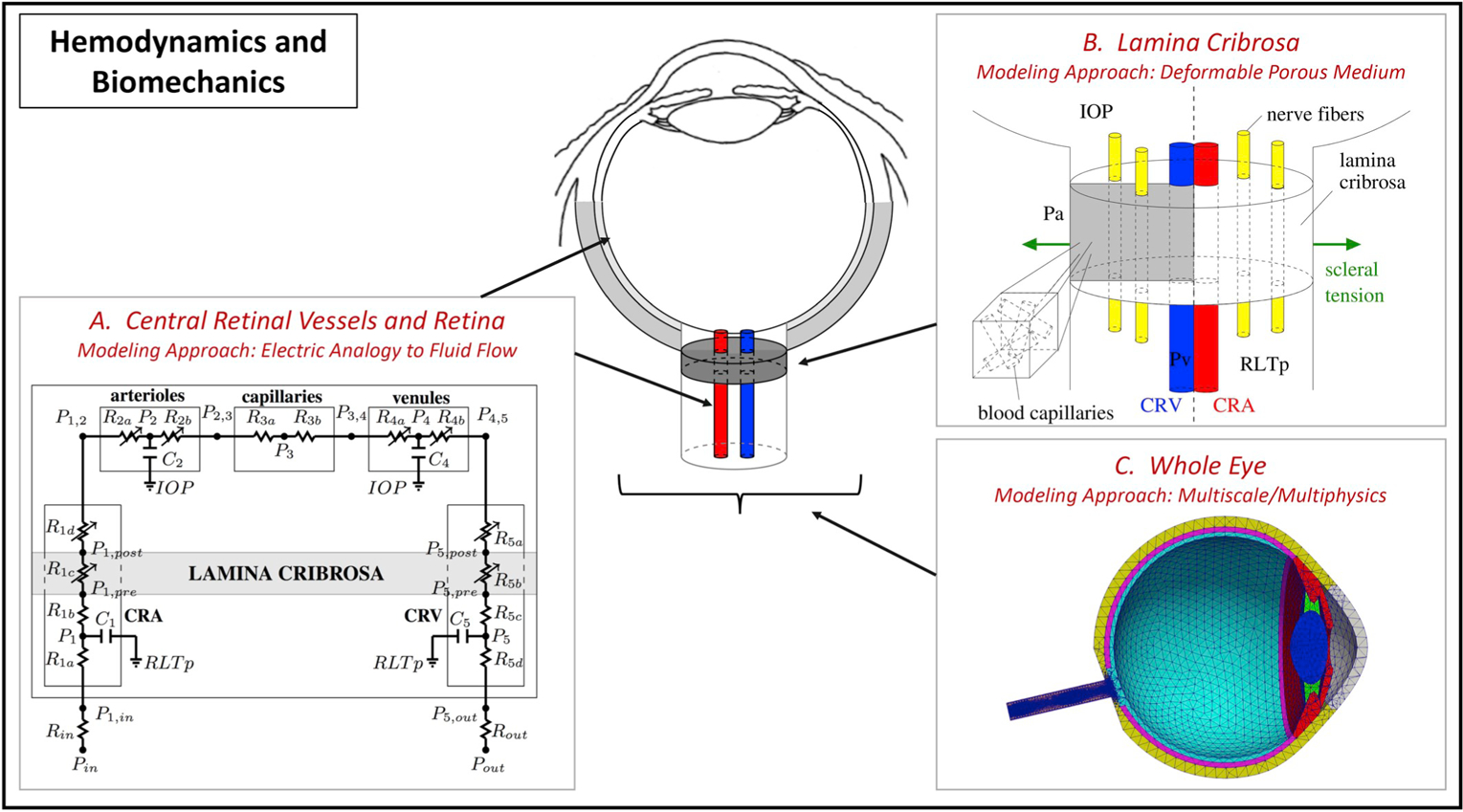
Fig. 1.
Fig. 1.
Overview of mechanism-driven models to study the interaction between hemodynamics and biomechanics in A) the central retinal vessels and retina by means of electric analogy to fluid flow. Image reproduced from (Guidoboni et al., 2014b), with permission (Image copyright holder: Association for Research in Vision and Ophthalmology), B) the lamina cribrosa in the optic nerve head by means of deformable porous medium model. Image reproduced from (Prada, 2016), with permission, and C) the whole eye by means of multiscale/Multiphysics model. Image reproduced from (Sala, 2019), with permission.
Fig. 2.
Fig. 2.
Overview of mechanism-driven models to study the interaction between hemodynamics and oxygenation in A) the retina by means of Krogh cylinder model. Image taken directly from (Carichino et al., 2016), with permission, B) the central retinal vessels and retina by means of advection-diffusion-reaction problem through the retinal vasculature and tissue layers (Causin et al., 2016) (Reprinted by permission from Springer Nature), and C) the retina by means of Green’s function method (Fry et al., 2018).
Fig. 3.
Fig. 3.
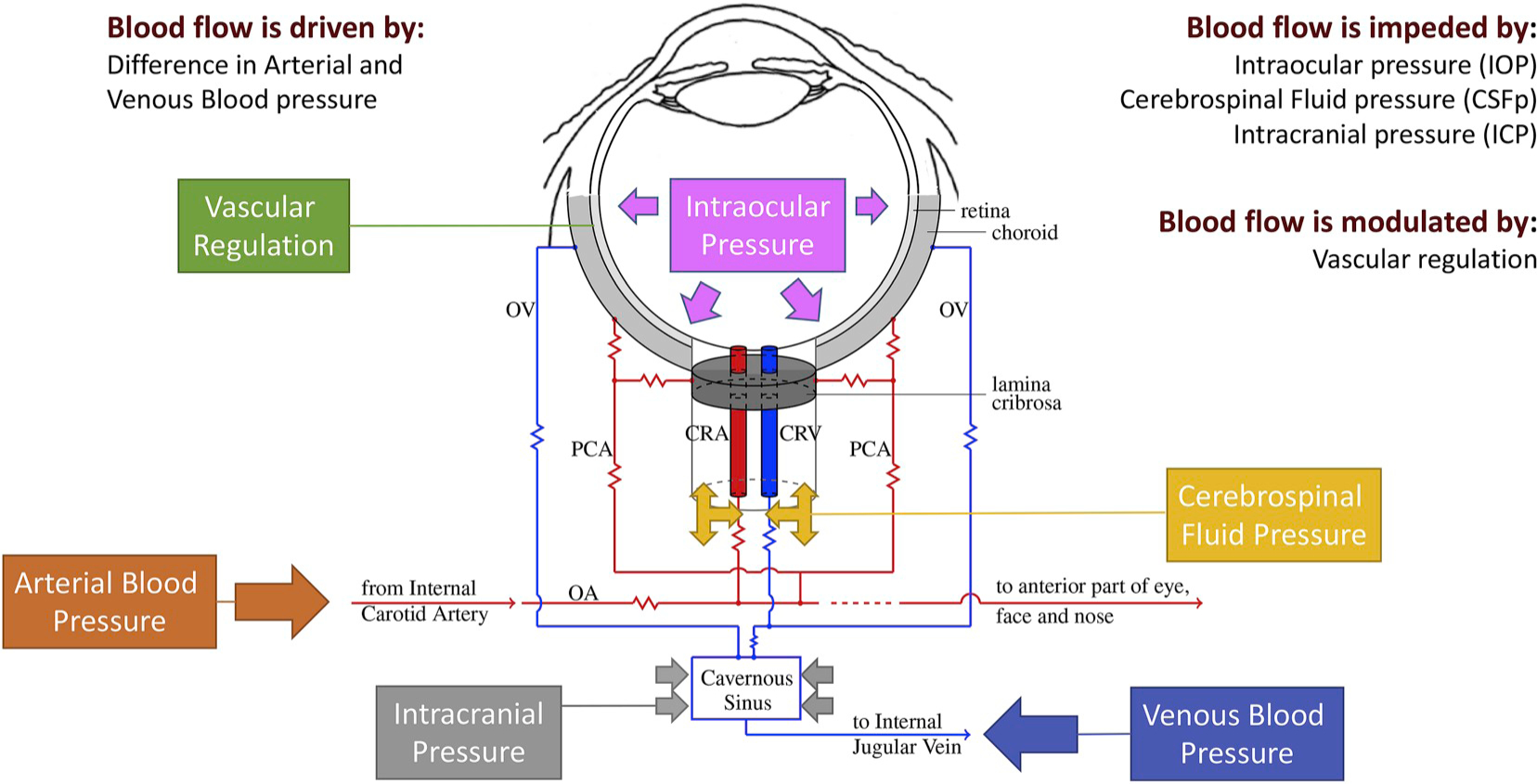
Schematic representation of competing mechanisms influencing ocular circulation. Blood flow is driven by the difference between arterial and venous pressures, impeded by external pressures acting upon the vasculature (e.g. intraocular pressure, cerebrospinal fluid pressure and intracranial pressure), and modulated by vascular regulation. In vivo measurements are the result of a complex interaction among these mechanisms. Abbreviations: OA: Ophthalmic Artery; OV: Ophthalmic Vein; CRA: Central Retinal Artery; CRV: Central Retinal Vein; PCA: Posterior Ciliary Artery.
Fig. 4.
Fig. 4.
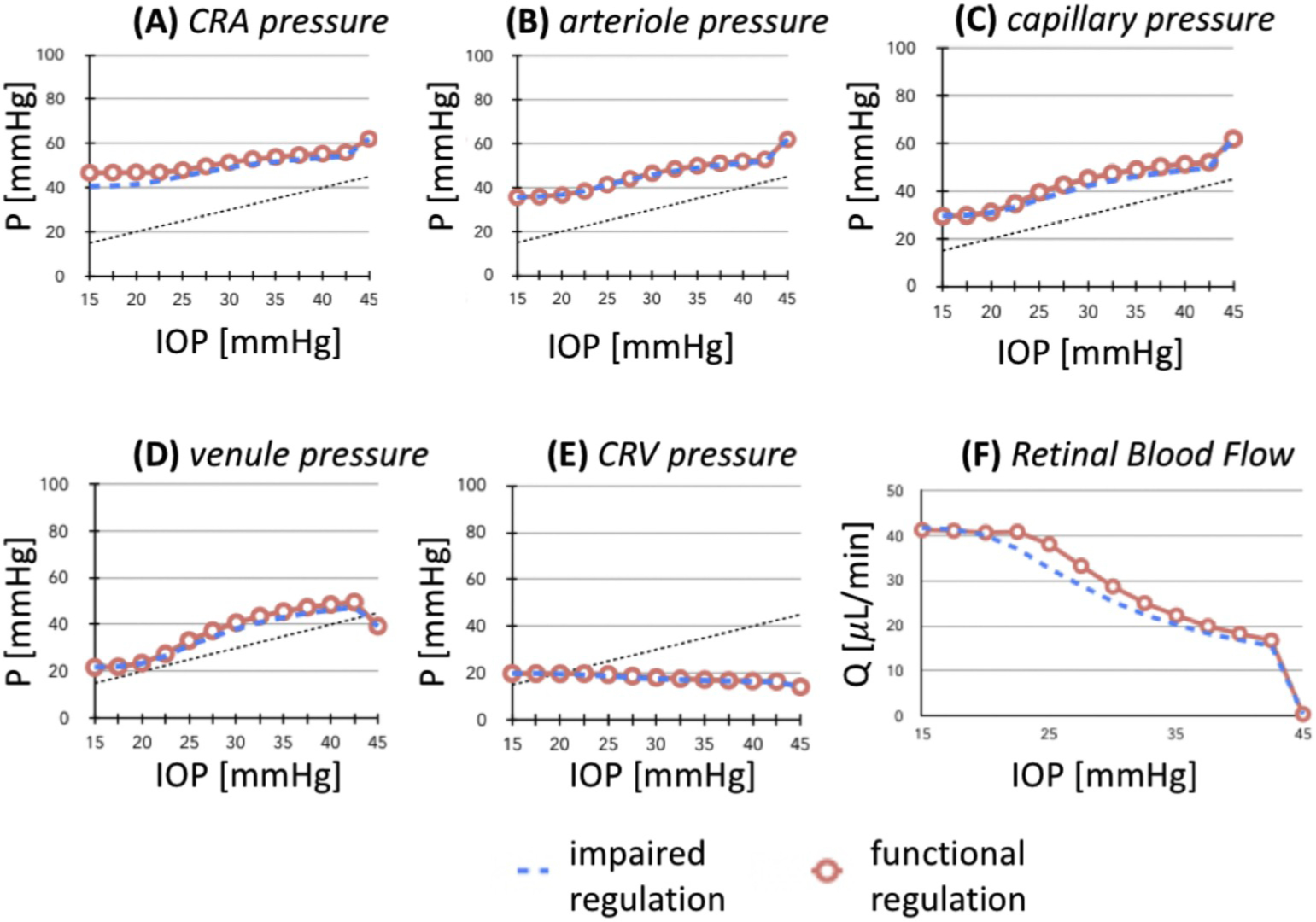
Simulation of hemodynamic variables predicted in the case of systolic and diastolic blood pressures equal to 120 mmHg and 80 mmHg, respectively, and intraocular pressure (IOP) varying between 15 mmHg and 45 mmHg. Image taken directly from (Chiaravalli, 2018), with permission. Intraluminal blood pressure (P) is predicted to increase with IOP in A) central retinal artery (CRA), B) arterioles, C) capillaries and D) venules. Panel E) shows that intraluminal pressure does not increase in the central retinal vein (CRV) located downstream of the lamina cribrosa. Predicted total retinal blood flow (Q) is portrayed in panel F). Results are reported in the case of functional active regulation (red circles) and impaired active regulation (blue lines). Overall, the results indicate the presence of a feedback hydraulic mechanism due to venous collapse that yields an intraluminal pressure increase upstream of the CRV, thereby aiding the retinal vasculature to better withstand IOP elevation.
Fig. 5.
Fig. 5.
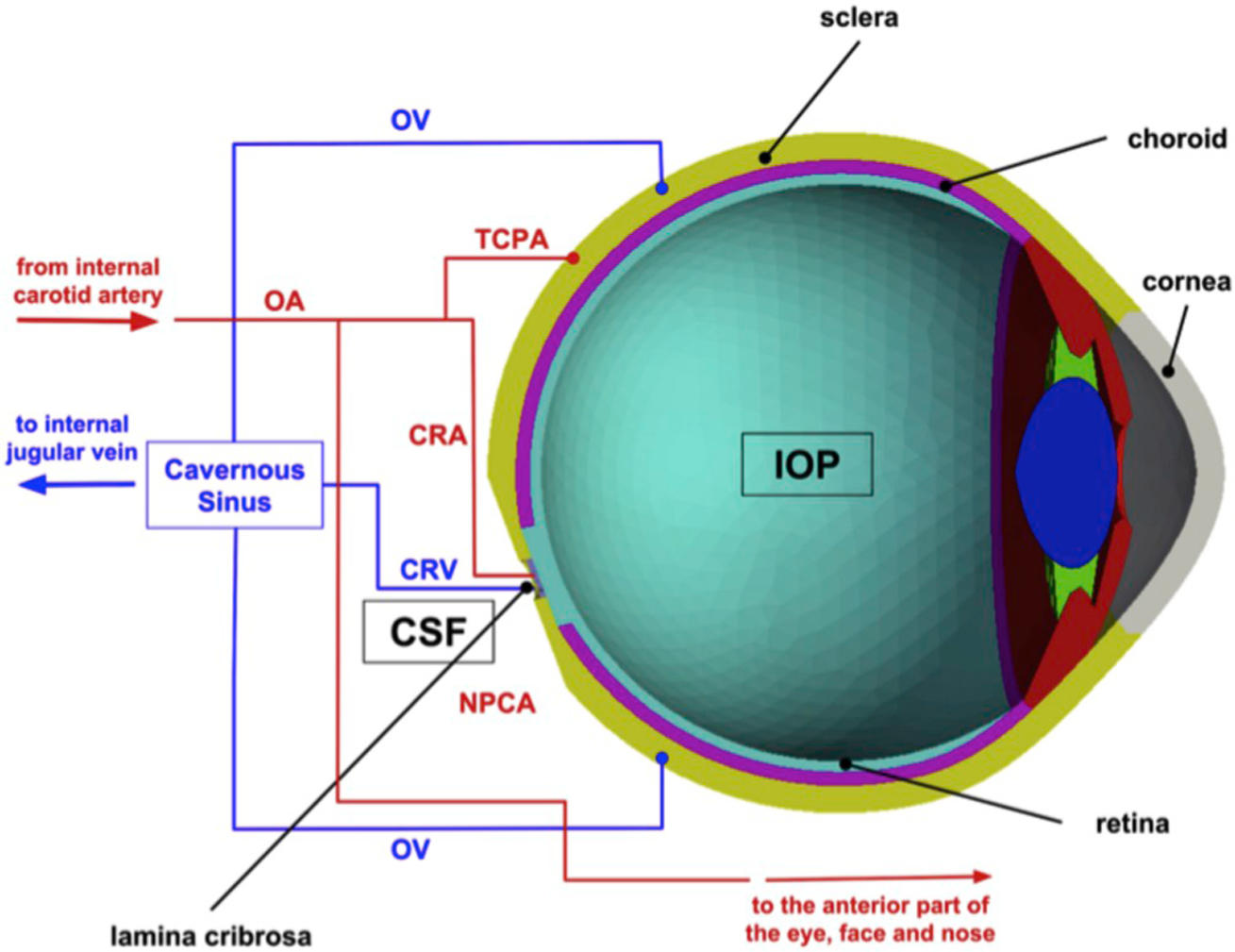
Schematic representation of an integrated mathematical model coupling the blood flow within the lamina cribrosa, described as a three-dimensional porous medium, with the blood flow in the retinal, choroid and retrobulbar circulation, described as a lumped parameter network. Image reproduced from (Sala et al., 2018b), with permission. The model is also available as a web-based app for training and research purposes (_S1_Reference281Sala et al. 2018b, 2019a; Sala, 2019b).
Fig. 6.
Fig. 6.
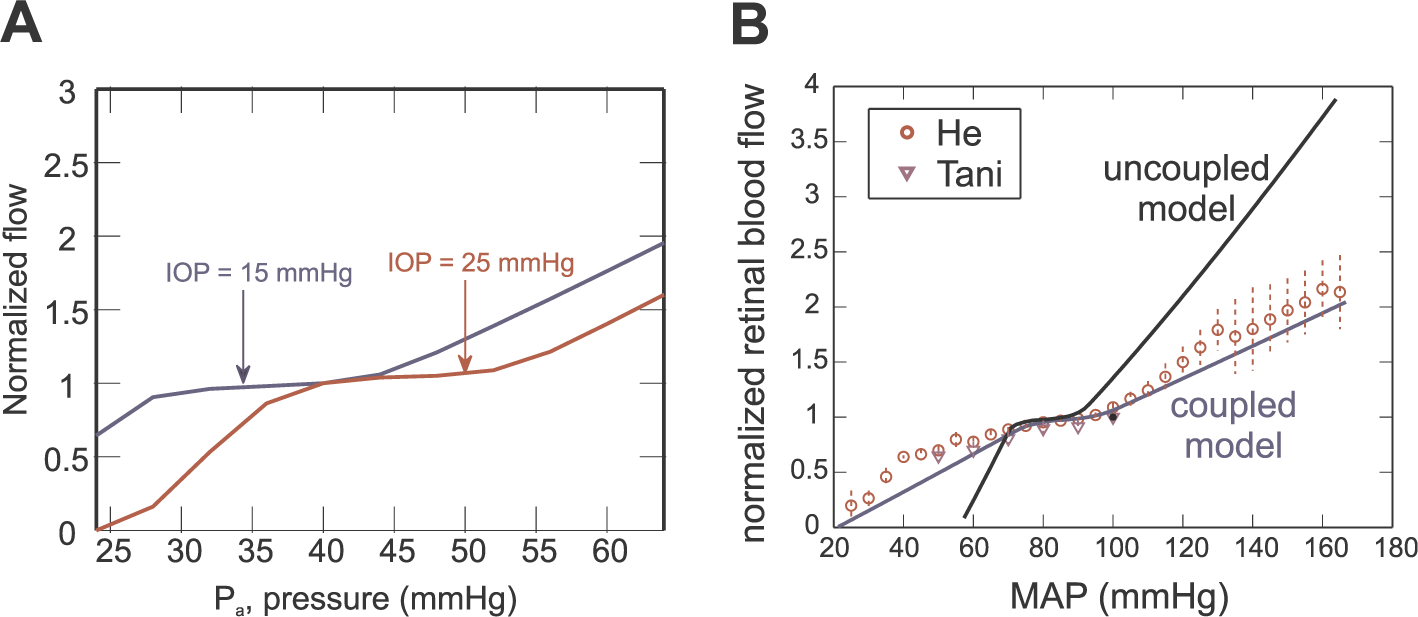
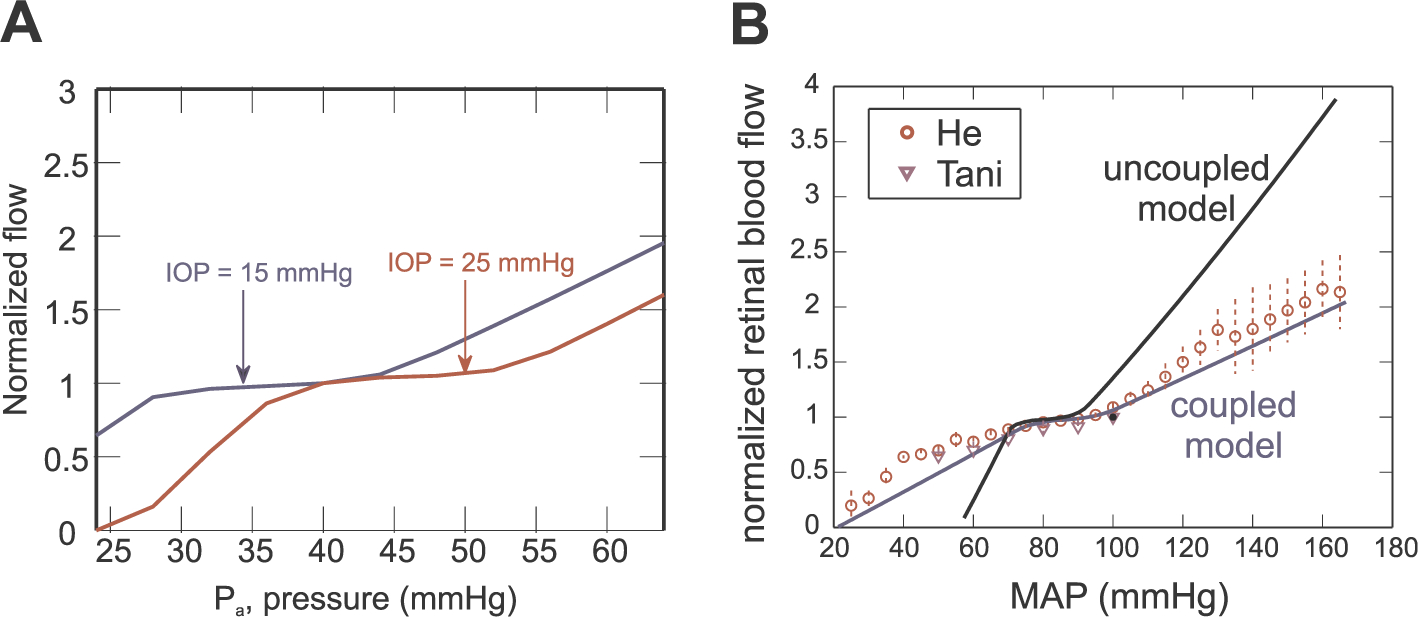
A) Model predicted autoregulation curves for IOP = 15 mmHg (control, blue) and IOP = 25 mmHg (elevated, red). Model predictions show autoregulation fails to operate over its expected pressure range when IOP is increased. Figure reproduced from (Arciero et al., 2013) with permission. B) Model predicted autoregulation curves predicted by the coupled model (blue) (Cassani et al., 2015) and the uncoupled model (black) (Arciero et al., 2013). Model predictions are compared with data from (He et al., 2012, 2013; Tani et al., 2014) as mean arterial pressure (MAP) is varied. Figure reproduced from (Cassani et al., 2015) with permission.
Fig. 6.
Fig. 6.
A) Model predicted autoregulation curves for IOP = 15 mmHg (control, blue) and IOP = 25 mmHg (elevated, red). Model predictions show autoregulation fails to operate over its expected pressure range when IOP is increased. Figure reproduced from (Arciero et al., 2013) with permission. B) Model predicted autoregulation curves predicted by the coupled model (blue) (Cassani et al., 2015) and the uncoupled model (black) (Arciero et al., 2013). Model predictions are compared with data from (He et al., 2012, 2013; Tani et al., 2014) as mean arterial pressure (MAP) is varied. Figure reproduced from (Cassani et al., 2015) with permission.
Fig. 7.
Fig. 7.
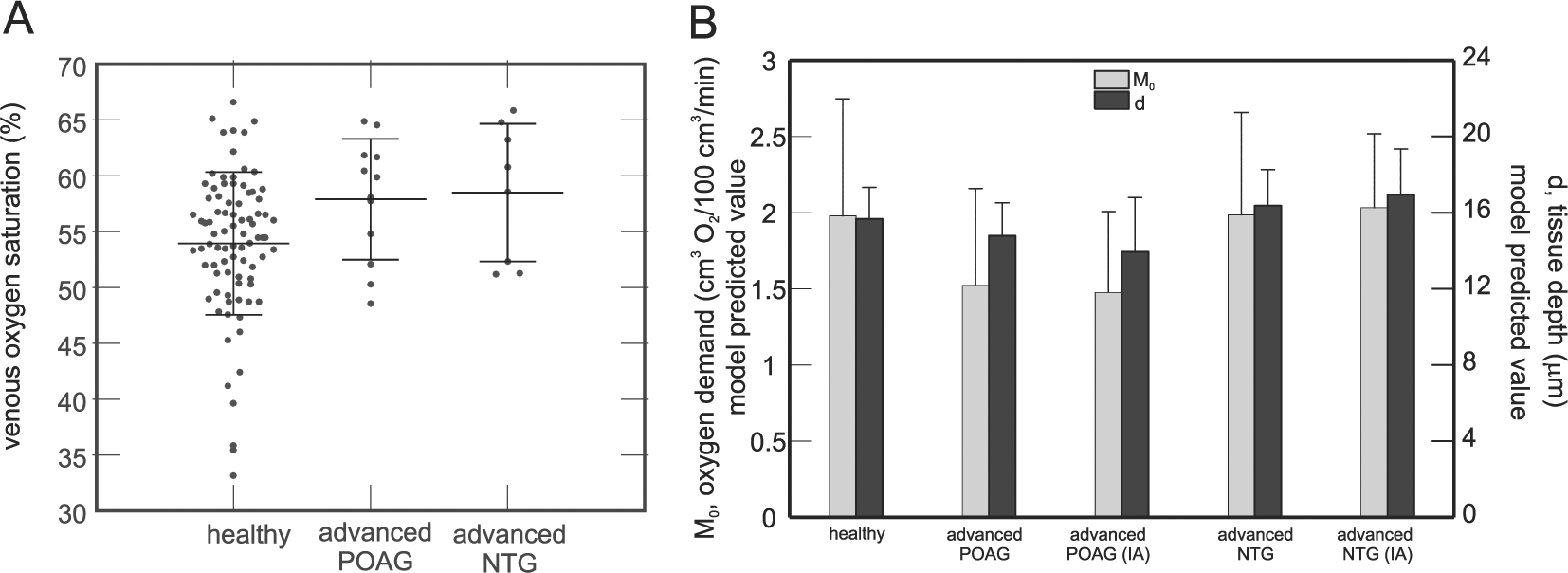
A) Clinical data showing increased venous O

References

    1. Aizawa N, Nitta F, Kunikata H, Sugiyama T, Ikeda T, Araie M, Nakazawa T, 2014. Laser speckle and hydrogen gas clearance measurements of optic nerve circulation in albino and pigmented rabbits with or without optic disc atrophy. Invest. Ophthalmol. Vis. Sci 55 (12), 7991–7996. - PubMed
    1. Akarsu C, Yilmaz S, Taner P, Ergin A, 2004. Effect of bimatoprost on ocular circulation in patients with open-angle glaucoma or ocular hypertension. Graefes Arch. Clin. Exp. Ophthalmol 242, 814–818. - PubMed
    1. Alagoz G, Gurel K, Bayer A, Serin D, Celebi S, Kukner S, 2008. A comparative study of bimatoprost and travoprost: effect on intraocular pressure and ocular circulation in newly diagnosed glaucoma patients. Ophthalmologica 222, 88–95. - PubMed
    1. Albert DM, Miller JW, Azar DT, Blodi BA, 2008. Albert & Jakobiec’s Principles & Practice of Ophthalmology, third ed. Saunders Elsevier, Pennsylvania.
    1. Alshawa L, Harris A, Gross J, Snyder A, Rao A, Siesky B, 2017. Primary open-angle glaucoma in patients of Middle Eastern descent. Saudi J. Ophthalmol 31 (4), 209–210. 10.1016/j.sjopt.2017.11.004. - DOI - PMC - PubMed