Review
. 2019 Sep 18;5(1):e10142.
doi: 10.1002/btm2.10142. eCollection 2020 Jan.

Phage display as a tool for vaccine and immunotherapy development

Affiliations
Review

Phage display as a tool for vaccine and immunotherapy development

Krystina L Hess et al. Bioeng Transl Med. .

Abstract

Bacteriophages, or phages, are viruses that specifically infect bacteria and coopt the cellular machinery to create more phage proteins, eventually resulting in the release of new phage particles. Phages are heavily utilized in bioengineering for applications ranging from tissue engineering scaffolds to immune signal delivery. Of specific interest to vaccines and immunotherapies, phages have demonstrated an ability to activate both the innate and adaptive immune systems. The genome of these viral particles can be harnessed for DNA vaccination, or the surface proteins can be exploited for antigen display. More specifically, genes that encode an antigen of interest can be spliced into the phage genome, allowing antigenic proteins or peptides to be displayed by fusion to phage capsid proteins. Phages therefore present antigens to immune cells in a highly ordered and repetitive manner. This review discusses the use of phage with adjuvanting activity as antigen delivery vehicles for vaccination against infectious disease and cancer.

Keywords: bacteriophage; biomaterials; drug delivery; immunology; nanotechnology; phage display; vaccine.


Conflict of interest statement

K.L.H. is an employee of the U.S. Army. The views reported in this paper do not reflect the views of the Department of Defense or the United States Government. C.M.J. is an employee of the Maryland Veterans Affairs (VA) Health Care System at the Baltimore VA Medical Center. The views reported in this paper do not reflect the views of the Department of Veterans Affairs or the United States Government. C.M.J. holds an equity position in Cellth LLC.

Figures
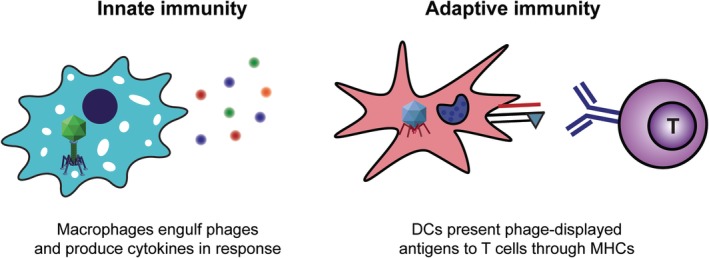
Figure 1
Figure 1
Phages interact with phagocytic and antigen‐presenting cells to activate both innate and adaptive immune responses to antigens displayed on their surface
Figure 2
Figure 2
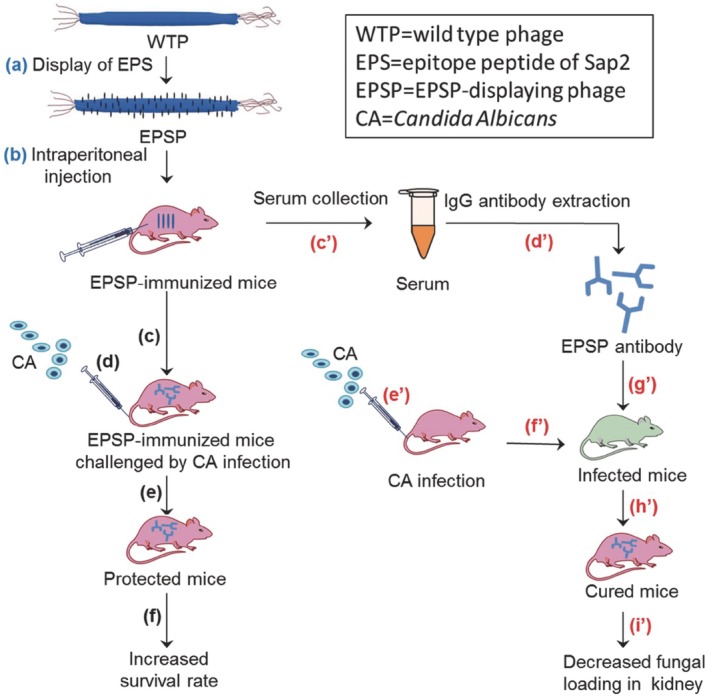
Filamentous phages displaying the EPS peptide of Sap2 were injected into mice that were then challenged with CA infection. This resulted in a decreased fungal load in the kidneys and increased survival to lethal challenge. Reprinted with permission from Huai Y, Dong S, Zhu T, Li X, Cao B, Gao X, Yang M, Wang L, Mao C. Genetically engineered virus nanofibers as an efficient vaccine for preventing fungal infection. Adv Healthcare Mater. 2016;5(7):786–79460
Figure 3
Figure 3
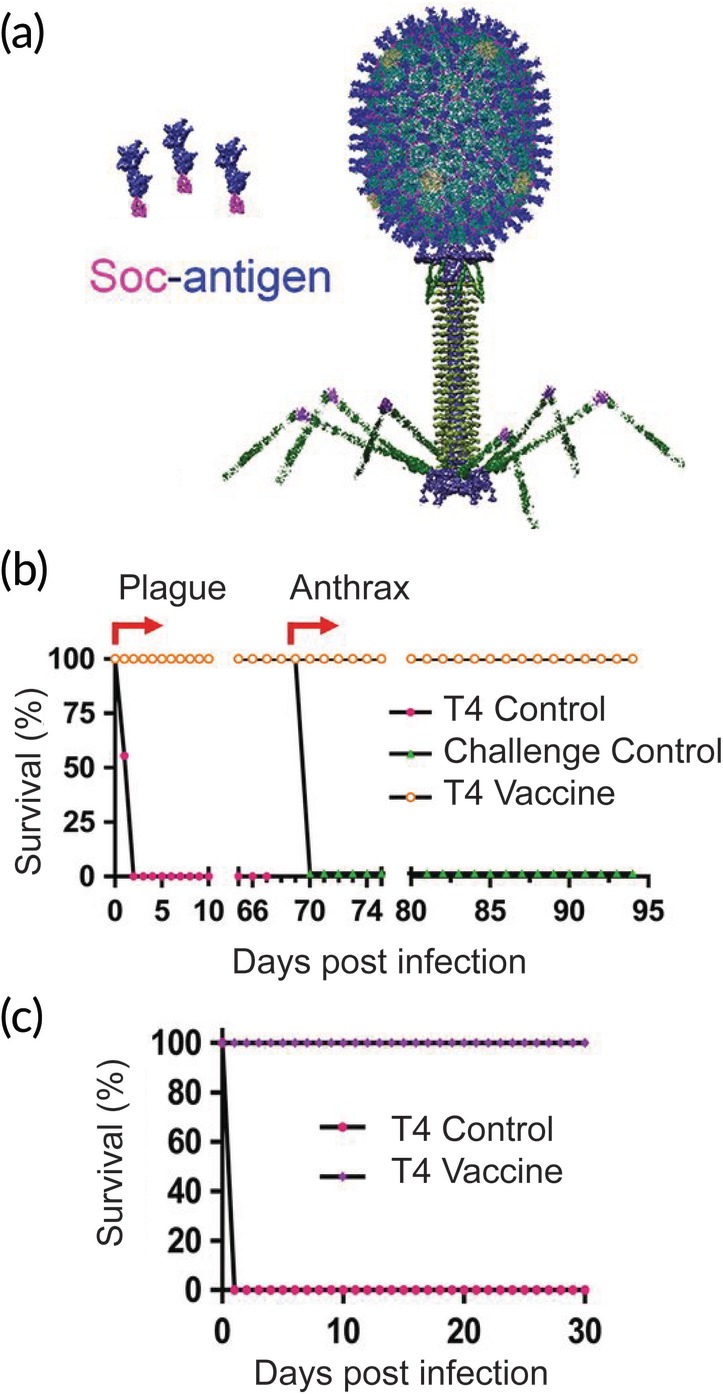
T4 phages expressing antigens from plague and anthrax protect rats from challenge. (a) PA from B. anthracis and F1 and V from Y. pestis were fused to the Soc protein on the T4 phage head. (b) When immunized rats were challenged with Y. pestis, 100% survived. LF and PA challenge of these same rats also resulted in 100% protection. (c) In a simultaneous challenge model, 100% of immunized rats survived. Adapted with permission67
Figure 4
Figure 4
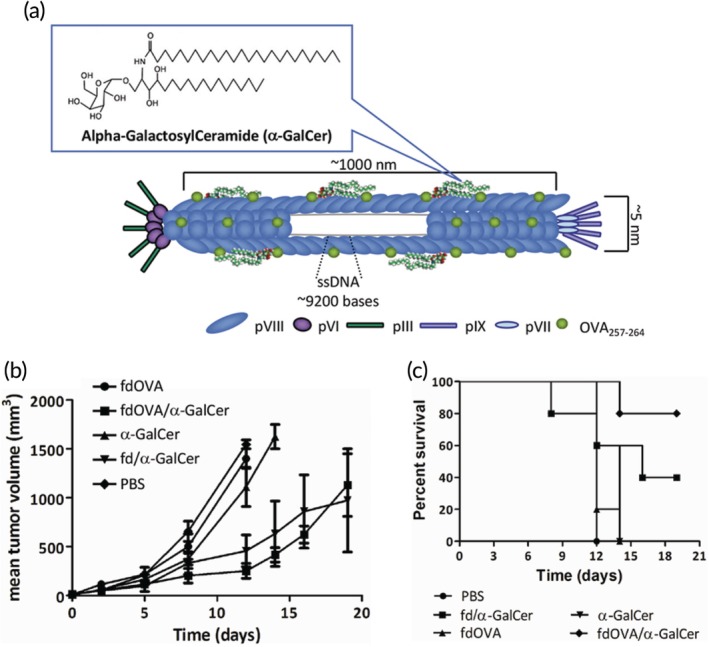
Phages delivering an immunostimulatory (glyco)lipid convey antitumor effects. (a) alpha‐GalactosylCeramide was conjugated to the pVIII coat protein of fd phage. Therapeutic treatment in a mouse melanoma model resulted in delayed tumor growth (b) and increased survival (c). Adapted with permission87
Figure 5
Figure 5
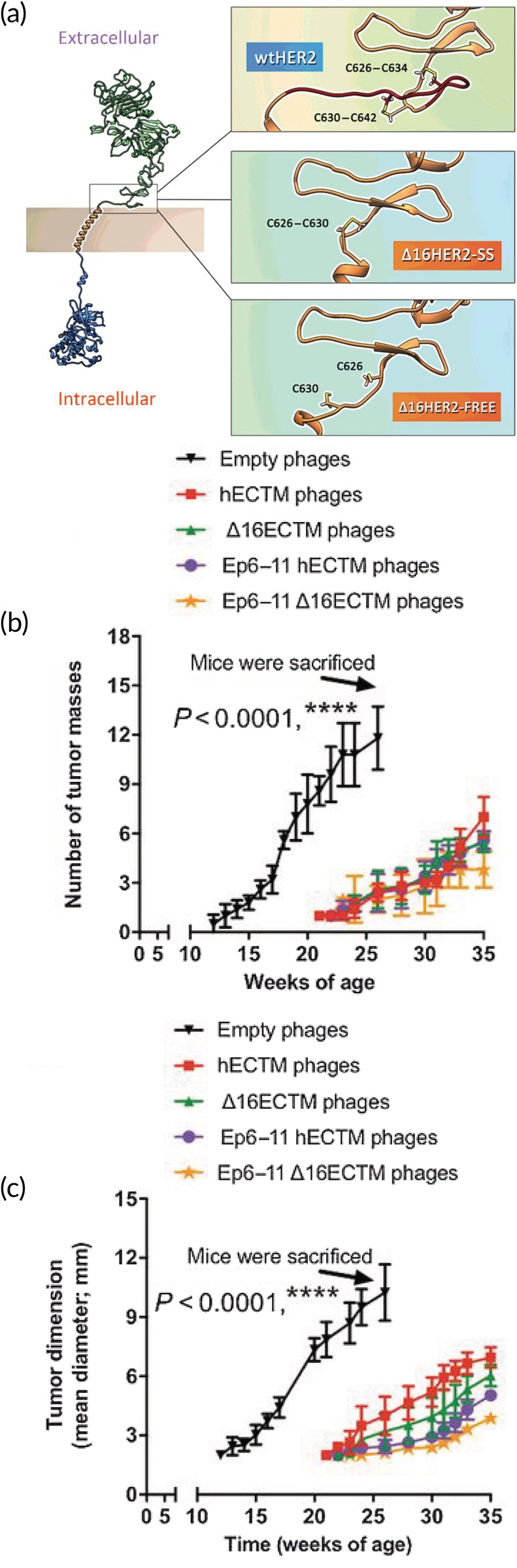
Vaccination of transgenic mice that spontaneously develop breast cancer with a phage‐displayed HER2 variant (a) thought to be associated with oncogenesis results in decreased tumor frequency (b) and volume (c). Reprinted by permission from the American Association for Cancer Research: Bartolacci C, Andreani C, Curcio C, et al., Phage‐based anti‐HER2 vaccination can circumvent immune tolerance against breast cancer. Cancer Immunol Res. December 2018;6(12):1486–1498. doi:10.1158/2326‐6,066.CIR‐18‐017997
Figure 6
Figure 6
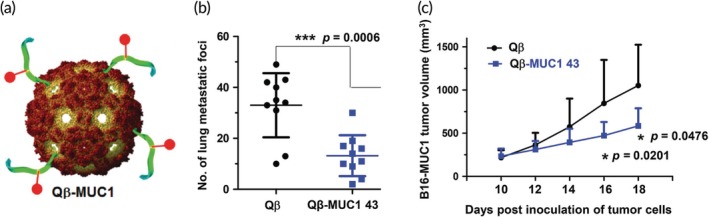
A MUC1 epitope displayed on Qβ phage reduces tumor load in mice. (a) A peptide of MUC1 selected through phage‐mediated epitope discovery was conjugated to the surface of Qβ phage and injected into MUC1 transgenic mice. (b) When the mice were also challenged with B16‐MUC1 cells, lung metastases were significantly reduced in immunized mice. (c) Qβ‐MUC1 administered along with a checkpoint blockade resulted in reduced growth of solid tumors. Adapted with permission from Wu X, Yin Z, McKay C, et al. Protective epitope discovery and design of MUC1‐based vaccine for effective tumor protections in immunotolerant mice. J Am Chem Soc. 2018;140(48):16596–16609. Copyright 2018 American Chemical Society100

References

    1. Bao Q, Li X, Han G, Zhu Y, Mao C, Yang M. Phage‐based vaccines. Adv Drug Deliv Rev. 2018. 10.1016/j.addr.2018.12.013. - DOI - PubMed
    1. Lin DM, Koskella B, Lin HC. Phage therapy: an alternative to antibiotics in the age of multi‐drug resistance. World J Gastrointest Pharmacol Ther. 2017;8(3):162‐173. 10.4292/wjgpt.v8.i3.162. - DOI - PMC - PubMed
    1. Deng X, Wang L, You X, Dai P, Zeng Y. Advances in the T7 phage display system (review). Mol Med Rep. 2018;17(1):714‐720. 10.3892/mmr.2017.7994. - DOI - PubMed
    1. Ghosh D, Kohli AG, Moser F, Endy D, Belcher AM. Refactored M13 bacteriophage as a platform for tumor cell imaging and drug delivery. ACS Synth Biol. 2012;1(12):576‐582. 10.1021/sb300052u. - DOI - PMC - PubMed
    1. Lee YJ, Yi H, Kim W‐J, et al. Fabricating genetically engineered high‐power lithium‐ion batteries using multiple virus genes. Science. 2009;324(5930):1051‐1055. 10.1126/science.1171541. - DOI - PubMed

LinkOut - more resources