


Association between dietary calcium intake and BMD in children and adolescents
- PMID: 31990673
- PMCID: PMC7040863
- DOI: 10.1530/EC-19-0534
Association between dietary calcium intake and BMD in children and adolescents
Abstract
Aim: Ensuring adequate calcium (Ca) intake during childhood and adolescence is critical to acquire good peak bone mass to prevent osteoporosis during older age. As one of the primary strategies to build and maintain healthy bones, we aimed to determine whether dietary Ca intake has an influence on bone mineral density (BMD) in children and adolescents.
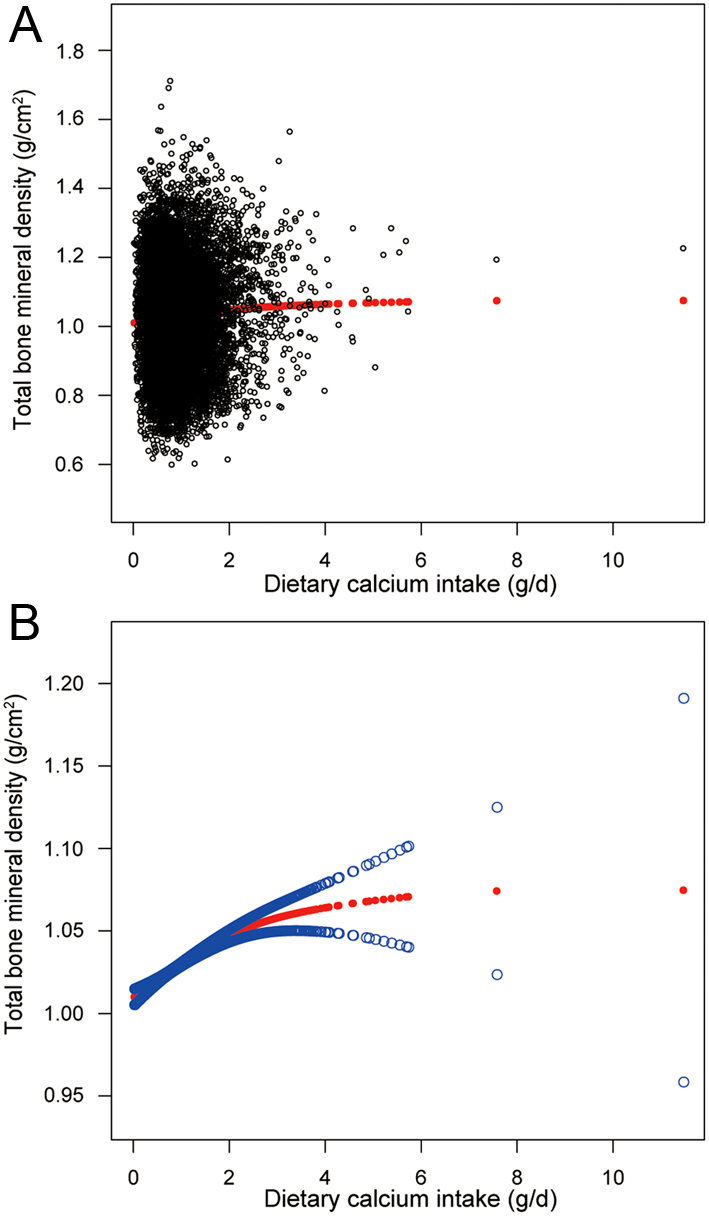
Methods: We conducted a cross-sectional study composed of 10,092 individuals from the National Health and Nutrition Examination Survey (NHANES). Dietary Ca intake and total BMD were taken as independent and dependent variables, respectively. To evaluate the association between them, we conducted weighted multivariate linear regression models and smooth curve fittings.
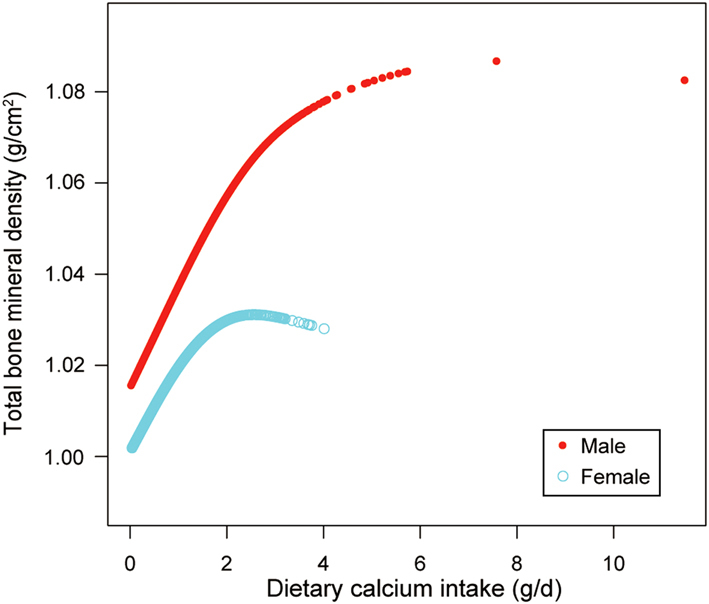
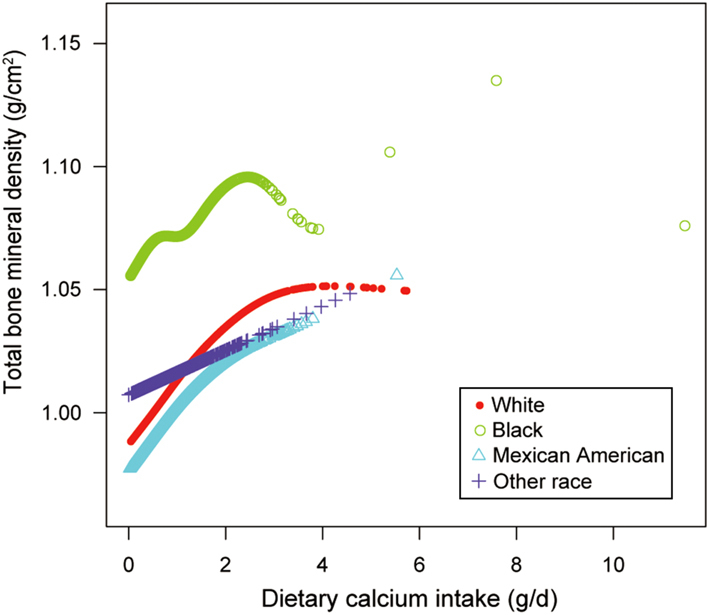
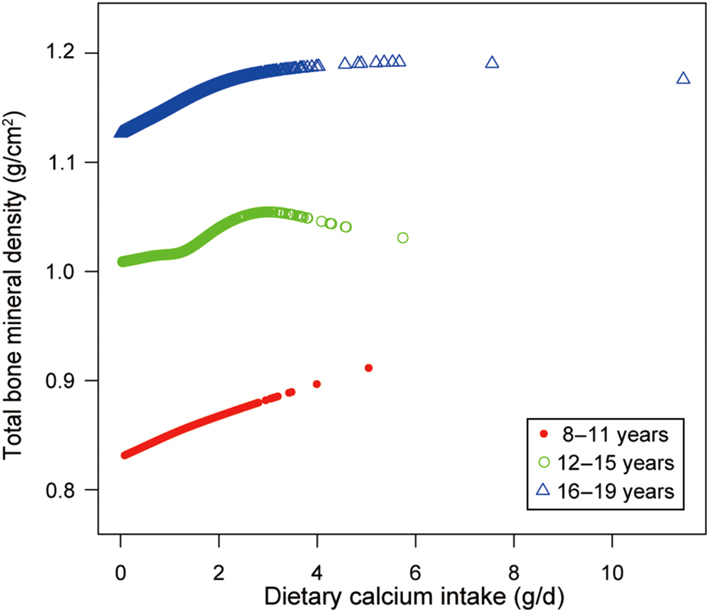
Results: There was a significantly positive association between dietary Ca intake and total BMD. The strongest association was observed in 12-15 year old whites, 8-11 year old and 16-19 year old Mexican Americans, and 16-19 year old individuals from other race/ethnicity, in whom each quintile of Ca intake was increased. We also found that there were significant inflection points in females, blacks, and 12-15 year old adolescents group, which means that their total BMD would decrease when the dietary Ca intake was more than 2.6-2.8 g/d.
Conclusions: This cross-sectional study indicated that a considerable proportion of children and adolescents aged 8-19 years would attain greater total BMD if they increased their dietary Ca intake. However, higher dietary Ca intake (more than 2.6-2.8 g/d) is associated with lower total BMD in females, blacks, and 12-15 year old adolescents group.
Keywords: NHANES; adolescent; bone mineral density; child; dietary calcium.
Figures
References
-
- Ross AC, Manson JE, Abrams SA, Aloia JF, Brannon PM, Clinton SK, Durazo-Arvizu RA, Gallagher JC, Gallo RL, Jones G, et al The 2011 report on dietary reference intakes for calcium and vitamin D from the Institute of Medicine: what clinicians need to know. Journal of Clinical Endocrinology and Metabolism 2011. 96 53–58. ( 10.1210/jc.2010-2704) - DOI - PMC - PubMed
LinkOut - more resources
Full Text Sources
Research Materials
