


Fragmentation mediates thermal habitat choice in ciliate microcosms
- PMID: 31992166
- PMCID: PMC7015339
- DOI: 10.1098/rspb.2019.2818
Fragmentation mediates thermal habitat choice in ciliate microcosms
Abstract
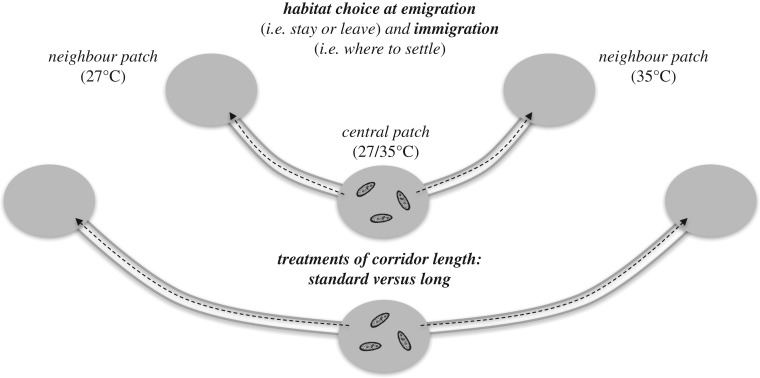
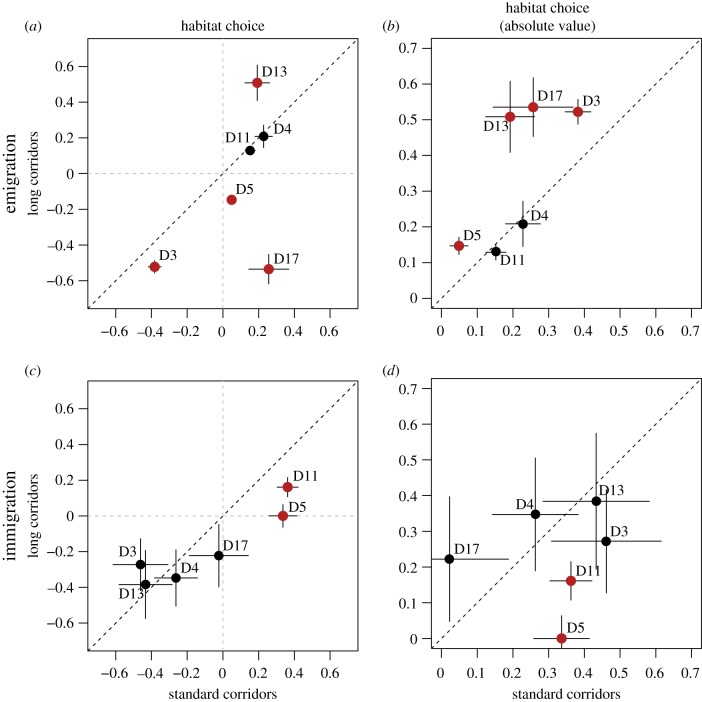
Habitat fragmentation is expected to reduce dispersal movements among patches as a result of increased inter-patch distances. Furthermore, since habitat fragmentation is expected to raise the costs of moving among patches in the landscape, it should hamper the ability or tendency of organisms to perform informed dispersal decisions. Here, we used microcosms of the ciliate Tetrahymena thermophila to test experimentally whether habitat fragmentation, manipulated through the length of corridors connecting patches differing in temperature, affects habitat choice. We showed that a twofold increase of inter-patch distance can as expected hamper the ability of organisms to choose their habitat at immigration. Interestingly, it also increased their habitat choice at emigration, suggesting that organisms become choosier in their decision to either stay or leave their patch when obtaining information about neighbouring patches gets harder. This study points out that habitat fragmentation might affect not only dispersal rate but also the level of non-randomness of dispersal, with emigration and immigration decisions differently affected. These consequences of fragmentation might considerably modify ecological and evolutionary dynamics of populations facing environmental changes.
Keywords: dispersal; fragmentation; informed decision; phenotypic plasticity; temperature; thermal niche.
Conflict of interest statement
We declare we have no competing interests.
Figures
References
-
- Fahrig L. 2003. Effects of habitat fragmentation on biodiversity. Annu. Rev. Ecol. Evol. Syst. 34, 487–515. ( 10.1146/annurev.ecolsys.34.011802.132419) - DOI
-
- Cote J, Bestion E, Jacob S, Travis J, Legrand D, Baguette M. 2017. Evolution of dispersal strategies and dispersal syndromes in fragmented landscapes. Ecography 40, 56–73. ( 10.1111/ecog.02538) - DOI
Publication types
MeSH terms
Associated data
LinkOut - more resources
Full Text Sources
