


The future of the amputees with osseointegration: A systematic review of literature
- PMID: 31992935
- PMCID: PMC6977164
- DOI: 10.1016/j.jcot.2019.05.025
The future of the amputees with osseointegration: A systematic review of literature
Abstract
Objective: Socket prosthesis attachment is the current gold standard for limb amputees. Osseointegrated implantation is a novel technique that has many proposed advantages over the current gold standard. Clear advantages for its use over socket prosthetic attachment has been well established in literature. It decreases socket problems as pinching, pressure points, chronic skin problems and frequent socket change due to atrophy of muscles.
Methods: We reviewed primary research articles documenting complication rates and outcome measures in patients with osseointegrated prosthesis implantation after limb amputation.
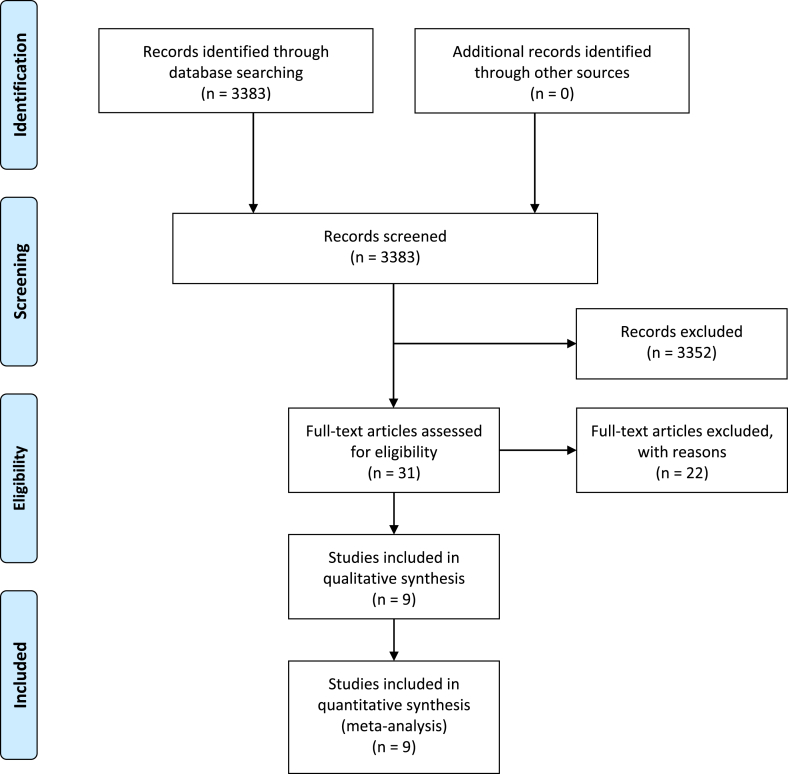
Results: Nine studies were identified with a total of 211-242 patients. Clinical, radiographic, and functional outcomes, as well as complications were considered. The mean duration of follow-up was greater than 12 months in all studies.
Conclusions: Osseointegration is an effective alternative to socket prosthesis in transfemoral amputees. Transtibial and upper extremity implants are underreported in the literature and clear indication for their effectiveness over socket prosthesis does not exist. Minor complications are most common, such as soft tissue infections, and may be mitigated in the future by improvements in surgical technique and implant design.The level of evidence is 3.
Keywords: Amputation; Osseointegration; Transfemoral; Transtibial.
© 2019 Delhi Orthopedic Association. All rights reserved.
Figures
References
-
- Livingston D.H., Keenan D., Kim D., Elcavage J., Malangoni M.A. Extent of disability following traumatic extremity amputation. J Trauma. 1994;37(3):495–499. - PubMed
-
- Ephraim P.L., MacKenzie E.J., Wegener S.T., Dillingham T.R., Pezzin L.E. Environmental barriers experienced by amputees: the craig hospital inventory of environmental factors-short Form. Arch Phys Med Rehabil. 2006;87(3):328–333. - PubMed
-
- Dillingham T.R., Pezzin L.E., MacKenzie E.J., Burgess A.R. Use and satisfaction with prosthetic devices among persons with trauma-related amputations: a long-term outcome study. Am J Phys Med Rehabil. 2001;80(8):563–571. - PubMed
-
- Hagberg K., Branemark R. Consequences of non-vascular trans-femoral amputation: a survey of quality of life, prosthetic use and problems. Prosthet Orthot Int. 2001;25(3):186–194. - PubMed
-
- Lyon C.C., Kulkarni J., Zimerson E., Van Ross E., Beck M.H. Skin disorders in amputees. J Am Acad Dermatol. 2000;42(3):501–507. - PubMed
LinkOut - more resources
Full Text Sources
Medical
