


The role of contextual signal TGF-β1 inducer of epithelial mesenchymal transition in metastatic lung adenocarcinoma patients with brain metastases: an update on its pathological significance and therapeutic potential
- PMID: 31992949
- PMCID: PMC6978756
- DOI: 10.5114/wo.2019.91543
The role of contextual signal TGF-β1 inducer of epithelial mesenchymal transition in metastatic lung adenocarcinoma patients with brain metastases: an update on its pathological significance and therapeutic potential
Abstract
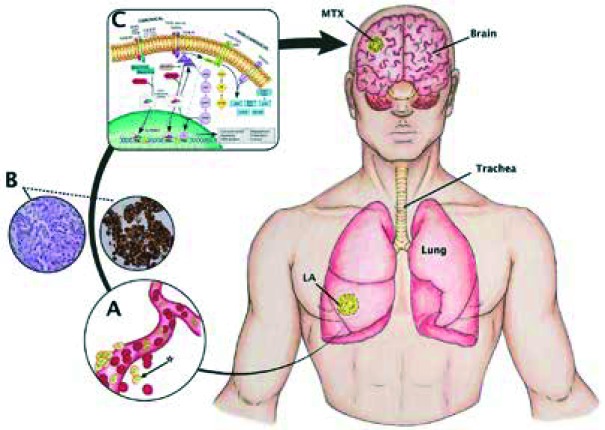
Lung adenocarcinoma (LA) is the most common cause of cancer-related death worldwide. Despite the advances over last decade in new targeted therapies, cancer genetics, diagnostics, staging, and surgical techniques as well as new chemotherapy and radiotherapy protocols, the death rate from LA remains high. The tumour microenvironment is composed of several cytokines, one of which is transforming growth factor β1 (TGF-β1), which modulates and mediates the expression of epithelial-mesenchymal transition (EMT), correlated with invasive growth in LAs, and exhibits its pleiotropic effects through binding to transmembrane receptors TβR-1 (also termed activin receptor-like kinases - ALKs) and TβR-2. Accordingly, there is an urgent need to elucidate the molecular mechanisms associated with the tumoural spreading process and therapeutic resistance of this serious pathology. In this review, we briefly discuss the current role of contextual signal TGF-β1 inducer of epithelial mesenchymal transition in metastatic lung adenocarcinoma patients with brain metastases, and give an overview of our current mechanistic understanding of the TGF-β1-related pathways in brain metastases progression, TGF-β1 pathway inhibitors that could be used for clinical treatment, and examination of models used to study these processes. Finally, we summarise the current progress in the therapeutic approaches targeting TGF-β1.
Keywords: EMT; TGF-β1; brain metastasis; lung adenocarcinoma; pathology.
Copyright © 2019 Termedia.
Conflict of interest statement
The authors declare no conflict of interest.
Figures
References
-
- Sierra A, Price JE, García-Ramirez M, Méndez O, López L, Fabra A. Astrocyte-derived cytokines contribute to the metastatic brain specificity of breast cancer cells. Lab Invest 1997; 77: 357-368. - PubMed
-
- Tong B, Wang M. Circulating tumor cells in patients with lung cancer: developments and applications for precision medicine. Future Oncol 2019; 15: 2531-2542. - PubMed
Publication types
LinkOut - more resources
Full Text Sources
