


Autophagy and inflammation in ischemic stroke
- PMID: 31997797
- PMCID: PMC7059569
- DOI: 10.4103/1673-5374.274331
Autophagy and inflammation in ischemic stroke
Abstract
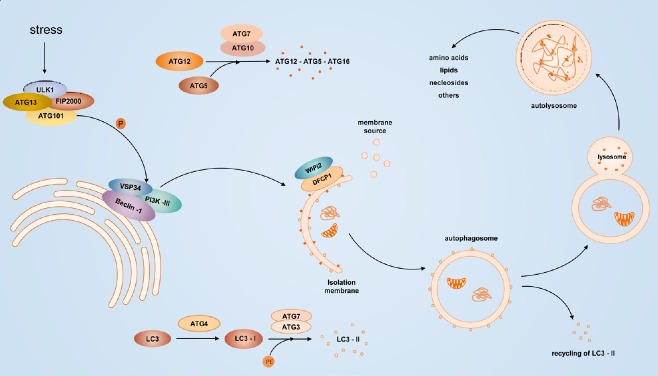
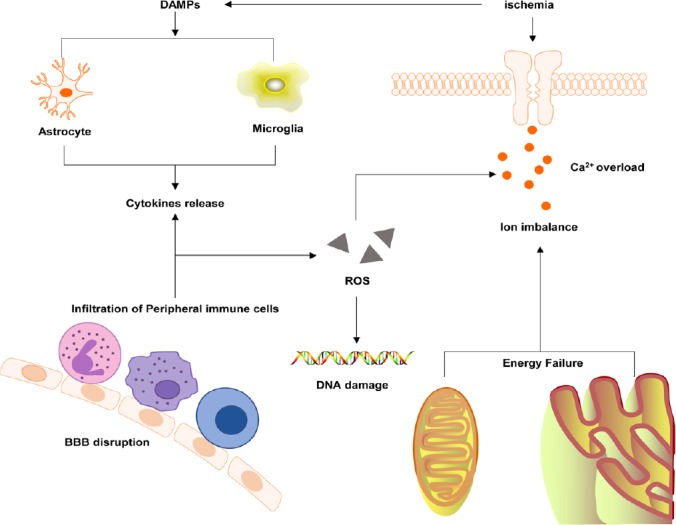
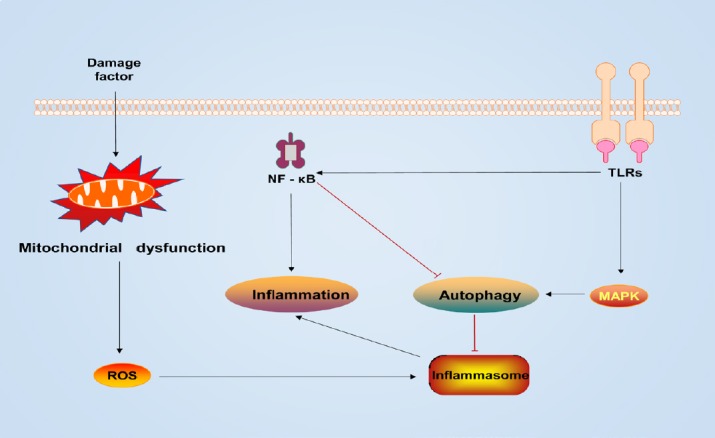
Appropriate autophagy has protective effects on ischemic nerve tissue, while excessive autophagy may cause cell death. The inflammatory response plays an important role in the survival of nerve cells and the recovery of neural tissue after ischemia. Many studies have found an interaction between autophagy and inflammation in the pathogenesis of ischemic stroke. This study outlines recent advances regarding the role of autophagy in the post-stroke inflammatory response as follows. (1) Autophagy inhibits inflammatory responses caused by ischemic stimulation through mTOR, the AMPK pathway, and inhibition of inflammasome activation. (2) Activation of inflammation triggers the formation of autophagosomes, and the upregulation of autophagy levels is marked by a significant increase in the autophagy-forming markers LC3-II and Beclin-1. Lipopolysaccharide stimulates microglia and inhibits ULK1 activity by direct phosphorylation of p38 MAPK, reducing the flux and autophagy level, thereby inducing inflammatory activity. (3) By blocking the activation of autophagy, the activation of inflammasomes can alleviate cerebral ischemic injury. Autophagy can also regulate the phenotypic alternation of microglia through the nuclear factor-κB pathway, which is beneficial to the recovery of neural tissue after ischemia. Studies have shown that some drugs such as resveratrol can exert neuroprotective effects by regulating the autophagy-inflammatory pathway. These studies suggest that the autophagy-inflammatory pathway may provide a new direction for the treatment of ischemic stroke.
Keywords: autophagy; cerebral ischemia; function; inflammasome; inflammation; ischemia/refusion; ischemic stroke; macroautophagy; neuroinflammation; oxygen glucose deprivation.
Conflict of interest statement
None
Figures
References
-
- Buck BH, Liebeskind DS, Saver JL, Bang OY, Yun SW, Starkman S, Ali LK, Kim D, Villablanca JP, Salamon N, Razinia T, Ovbiagele B. Early neutrophilia is associated with volume of ischemic tissue in acute stroke. Stroke. 2008;39:355–360. - PubMed
-
- Chen CM, Wu CT, Yang TH, Chang YA, Sheu ML, Liu SH. Green tea catechin prevents hypoxia/reperfusion-evoked oxidative stress-regulated autophagy-activated apoptosis and cell death in microglial cells. J Agric Food Chem. 2016;64:4078–4085. - PubMed
-
- Chen ML, Yi L, Jin X, Liang XY, Zhou Y, Zhang T, Xie Q, Zhou X, Chang H, Fu YJ, Zhu JD, Zhang QY, Mi MT. Resveratrol attenuates vascular endothelial inflammation by inducing autophagy through the cAMP signaling pathway. Autophagy. 2013;9:2033–2045. - PubMed
Publication types
LinkOut - more resources
Full Text Sources
Miscellaneous
