Review
. 2020 Aug;15(8):1460-1470.
doi: 10.4103/1673-5374.274328.

Role of the metabolism of branched-chain amino acids in the development of Alzheimer's disease and other metabolic disorders

Affiliations
Review

Role of the metabolism of branched-chain amino acids in the development of Alzheimer's disease and other metabolic disorders

Baruh Polis et al. Neural Regen Res. 2020 Aug.

Abstract

Alzheimer's disease is an incurable chronic neurodegenerative disorder and the leading cause of dementia, imposing a growing economic burden upon society. The disease progression is associated with gradual deposition of amyloid plaques and the formation of neurofibrillary tangles within the brain parenchyma, yet severe dementia is the culminating phase of the enduring pathology. Converging evidence suggests that Alzheimer's disease-related cognitive decline is the outcome of an extremely complex and persistent pathophysiological process. The disease is characterized by distinctive abnormalities apparent at systemic, histological, macromolecular, and biochemical levels. Moreover, besides the well-defined and self-evident characteristic profuse neurofibrillary tangles, dystrophic neurites, and amyloid-beta deposits, the Alzheimer's disease-associated pathology includes neuroinflammation, substantial neuronal loss, apoptosis, extensive DNA damage, considerable mitochondrial malfunction, compromised energy metabolism, and chronic oxidative stress. Likewise, distinctive metabolic dysfunction has been named a leading cause and a hallmark of Alzheimer's disease that is apparent decades prior to disease manifestation. State-of-the-art metabolomics studies demonstrate that altered branched-chain amino acids (BCAAs) metabolism accompanies Alzheimer's disease development. Lower plasma valine levels are correlated with accelerated cognitive decline, and, conversely, an increase in valine concentration is associated with reduced risk of Alzheimer's disease. Additionally, a clear BCAAs-related metabolic signature has been identified in subjects with obesity, diabetes, and atherosclerosis. Also, arginine metabolism is dramatically altered in Alzheimer's disease human brains and animal models. Accordingly, a potential role of the urea cycle in the Alzheimer's disease development has been hypothesized, and preclinical studies utilizing intervention in the urea cycle and/or BCAAs metabolism have demonstrated clinical potential. Continual failures to offer a competent treatment strategy directed against amyloid-beta or Tau proteins-related lesions, which could face all challenges of the multifaceted Alzheimer's disease pathology, led to the hypothesis that hyperphosphorylated Tau and deposited amyloid-beta proteins are just hallmarks or epiphenomena, but not the ultimate causes of Alzheimer's disease. Therefore, approaches targeting amyloid-beta or Tau are not adequate to cure the disease. Accordingly, the modern scientific vision of Alzheimer's disease etiology and pathogenesis must reach beyond the hallmarks, and look for alternative strategies and areas of research.

Keywords: BCAAs; arginase; arginine; branched-chain aminotransferase; dementia; mTOR; norvaline; urea cycle; valine.


Conflict of interest statement

None

Figures
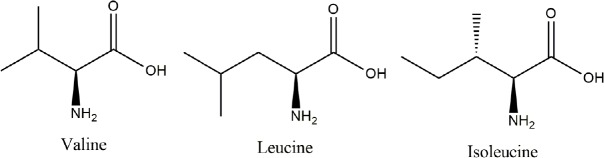
Figure 1
Figure 1
Chemical structures of branched-chain amino acids.
Figure 2
Figure 2
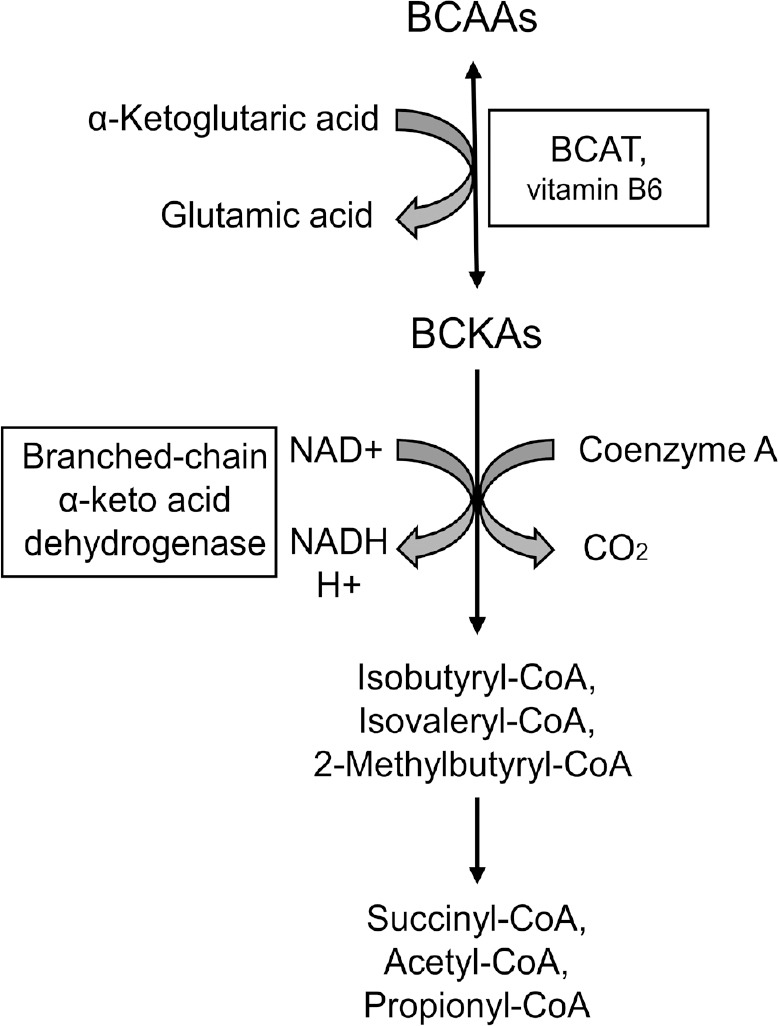
A simplified schematic representation of branched-chain amino acids (BCAAs) metabolism. BCAAs catabolism initiates with a reversible reaction catalyzed by common for all three BCAAs branched-chain aminotransferases (BCATs) producing branched-chain α-ketoacids (BCKAs). A mitochondrial multienzyme complex of branched-chain α-keto acid dehydrogenase catalyzes a series of irreversible reactions, which yield Isobutyryl-CoA, Isovaleryl-CoA, 2-Methylbutyryl-CoA for valine, leucine, and isoleucine respectively. The final products acetyl coenzyme A (Acetyl-CoA), Propionyl-CoA, and Succinyl-CoA are bioactive molecules, which participate in various vital biochemical processes (including protein, carbohydrate, and lipid metabolism). NAD: Nicotinamide adenine dinucleotide.
Figure 3
Figure 3
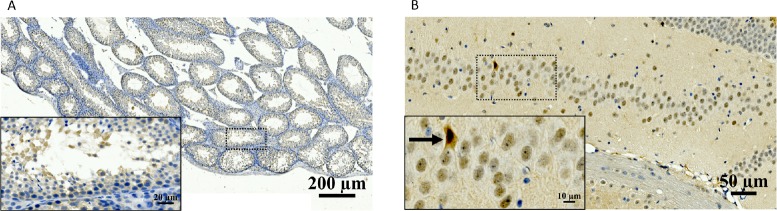
Immunolocalization of mouse cytosolic branched-chain aminotransferase (BCATc). Hematoxylin and BCATc staining of paraffin-embedded C57BL/6 mouse tissues. (A) Histology of the testes from 6-month-old mice. A representative bright-field 40× micrograph with an inset at 100× magnification showing strong expression of BCATc in the epithelium of seminiferous tubule. (B) A representative hippocampal bright-field 40× micrograph with an inset at × 100 magnification indicating expression of BCATc in the neurons of CA4 area and a glial cell (arrow).
Figure 4
Figure 4
A simplified model of branched-chain amino acids (BCAAs) transport to the brain via the luminal membrane of an endothelial cell. LAT1 is sodium-independent transmembrane transporter, which forms a complex with 4F2hc glycoprotein to import large neutral amino acids in exchange for glutamine. LAT3 is a Na+-independent neutral l-amino acid transporter that facilitates transport of BCAAs with a low affinity and has no binding partner. LAT3 delivers a limited number of amino acids into cells, including leucine, isoleucine, and valine (Wang and Holst, 2015). Facilitative transport of valine is mediated by system y+ and is sodium-dependent (Hawkins et al., 2006).
Figure 5
Figure 5
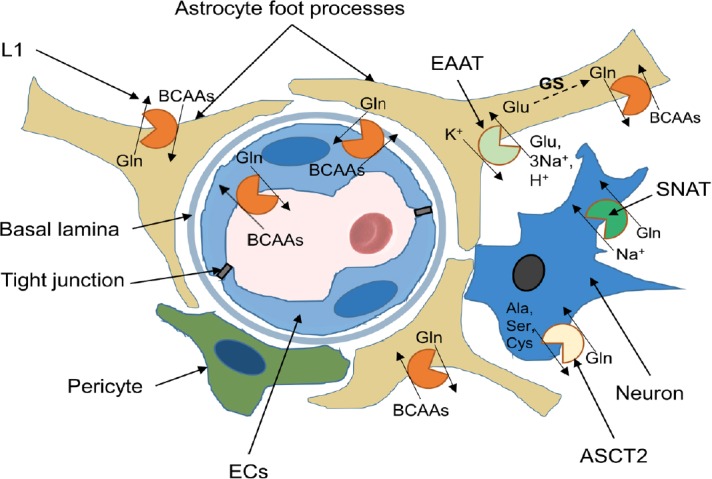
Localization and function of amino acid exchangers (with emphasize on branched-chain amino acids, BCAAs) ) in cell membranes of the neurovascular unit. Endothelial cells (ECs) line the blood vessels lumen. They are connected via transmembrane tight junction proteins, which provide tight adhesion and facilitate communication between ECs. The endothelium is separated from other cells by basal lamina. Astrocyte end-feet ensheath the vessel walls. The L1 system transporters possess a critical role in maintaining physiological levels of BCAAs and present in luminal and abluminal membrane of endothelial cells. Additionally, these glutamine (Gln) exchangers are highly expressed in astrocytes and neurons. Alanine (Ala), Serine (Ser), Cysteine (Cys) Transporter 2 (ASCT2) and SNAT transporters are responsible for glutamine influx and present in neurons. Glutamate (Glu) is released from neurons to the synaptic cleft during excitatory neurotransmission. The excitatory amino acid transporters (EAAT) is expressed in astrocytes and responsible for glutamate removal from the synaptic cleft. Glutamate undergoes amidation by glutamine synthetase (GS) in astrocytes to form glutamine, which is released to extracellular space and uptaken by neurons.
Figure 6
Figure 6
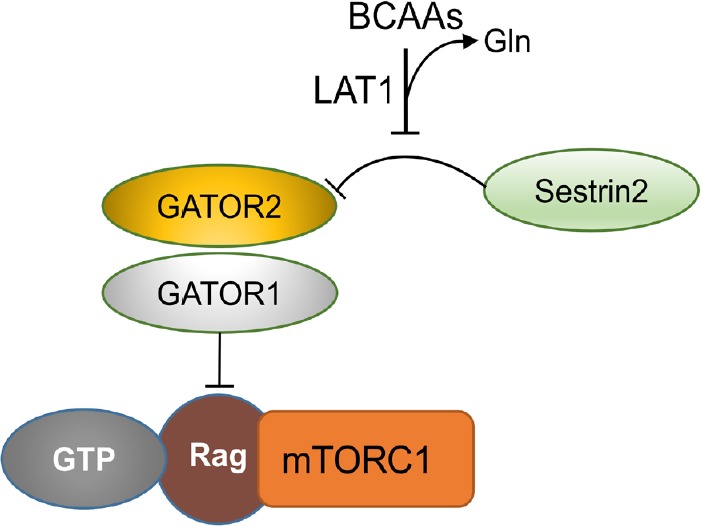
Branched-chain amino acids (BCAAs) regulate mechanistic target of rapamycin complex 1 (mTORC1) activation. BCAAs enter the cell via LAT1, which performs an efficient bidirectional exchange with glutamine. Imported BCAAs bind to Sestrin 2, which disrupts the Sestrin 2-GATOR2 interaction. GAP activity toward Rag (GATOR) is a multiprotein complex regulating mTOR signaling via interacting with the Ras-related GTPases (Rag).
Figure 7
Figure 7
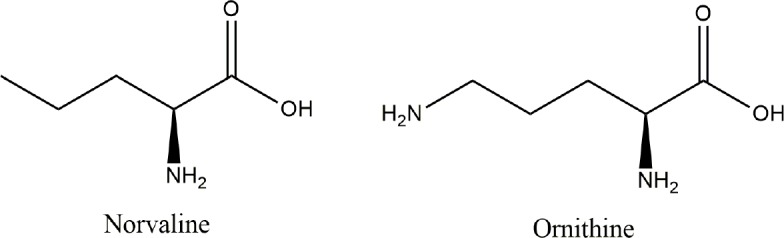
The chemical structures of norvaline and ornithine.

References

    1. Ahtiluoto S, Polvikoski T, Peltonen M, Solomon A, Tuomilehto J, Winblad B, Sulkava R, Kivipelto M. Diabetes, Alzheimer disease, and vascular dementia: A population-based neuropathologic study. Neurology. 2010;75:1195–1202. - PubMed
    1. Aisen PS, Schneider LS, Sano M, Diaz-Arrastia R, Van Dyck CH, Weiner MF, Bottiglieri T, Jin S, Stokes KT, Thomas RG, Thal LJ. High-dose B vitamin supplementation and cognitive decline in Alzheimer disease: A randomized controlled trial. JAMA. 2008;300:1774–1783. - PMC - PubMed
    1. Albrecht J, Zielińska M. Exchange-mode glutamine transport across CNS cell membranes. Neuropharmacology. 2019 doi: 101016/jneuropharm201903003. - PubMed
    1. Alford S, Patel D, Perakakis N, Mantzoros CS. Obesity as a risk factor for Alzheimer’s disease: weighing the evidence. Obes Rev. 2018;19:269–280. - PubMed
    1. Alzheimer’s Association 2016. Alzheimer’s disease facts and figures. Alzheimers Dement. 2016;12:459–509. - PubMed