


Serum sphingolipid level in psoriatic patients with obesity
- PMID: 31998000
- PMCID: PMC6986291
- DOI: 10.5114/ada.2019.91422
Serum sphingolipid level in psoriatic patients with obesity
Abstract
Introduction: Psoriasis is a chronic inflammatory disease associated with metabolic syndrome, including obesity. Ceramides (CER) and sphingosine-1-phosphate (S1P), which belongs to sphingolipids, have both biological and structural functions in the human epidermis.
Aim: To evaluate serum concentrations of selected CER in psoriatic patients in different weight ranges, the impact of obesity on the concentration of circulating CERs, their association with the course of psoriasis and selected inflammatory markers.
Material and methods: Eigthy-five patients with active plaque-type psoriasis and 32 healthy controls were enrolled in the study. Patients were divided into 3 groups: normal weight, overweight and obese. Serum concentrations of 14 ceramides were measured by gas-liquid chromatography. The results were correlated with the Psoriasis Area and Severity Index (PASI), serum lipid profile and inflammatory markers.
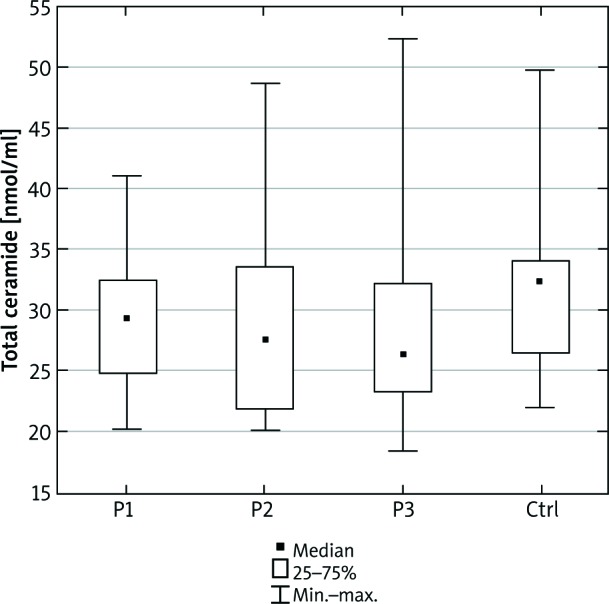
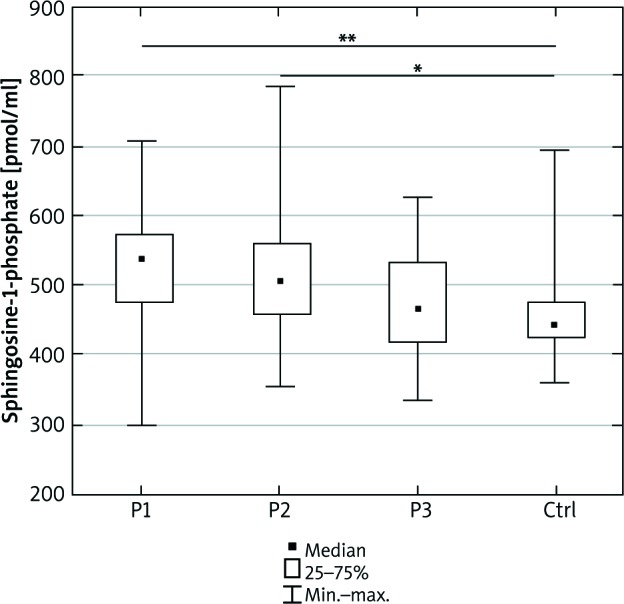
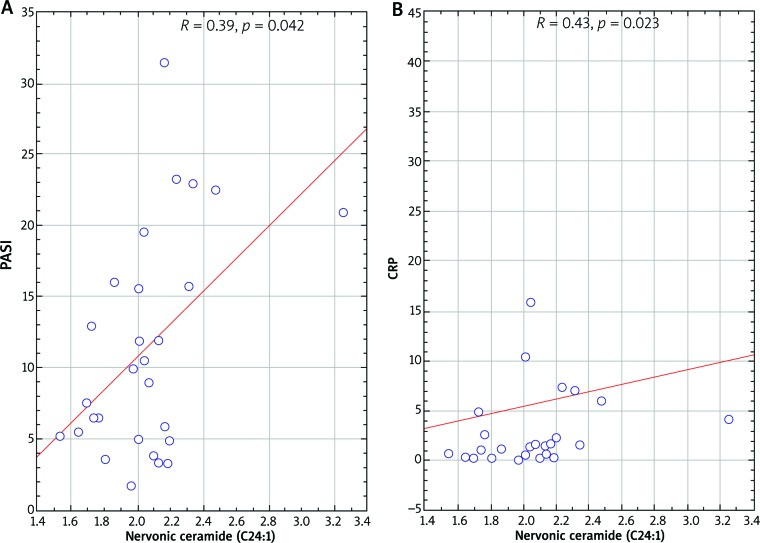
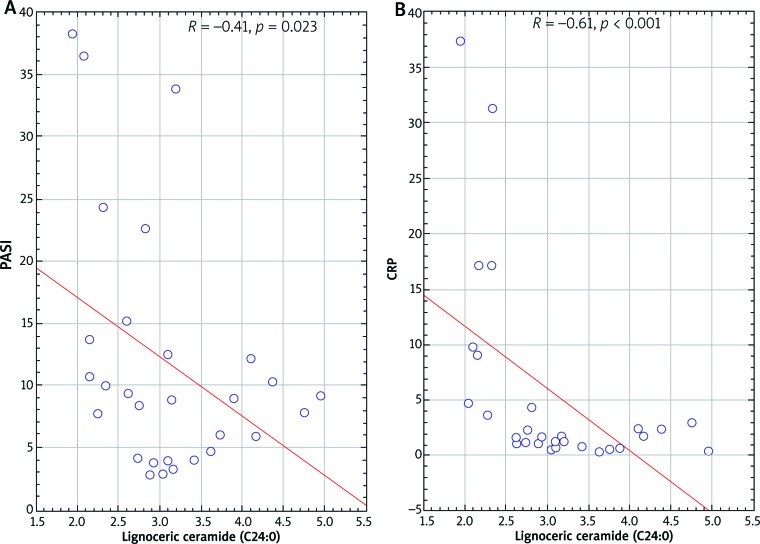
Results: There were no significant differences in total serum CER concentration between psoriatic groups of patients. The S1P concentration was higher in psoriatic patients with normal body weight and overweight than in the control group (p = 0.002 and p = 0.04, respectively). In psoriatic patients with normal body weight, nervonic ceramide (C24:1) correlated with PASI (r = 0.38; p = 0.042) and CRP (C-reactive protein) (r = 0.42; p = 0.023). In overweight patients, the concentration of lignoceric ceramide (C24:0) correlated inversely with the severity of the disease (r = -0.41; p = 0.022) and CRP (r = -0.6; p = 0.0004).
Conclusions: We have demonstrated an abnormal sphingolipid profile in psoriatic patients in different weight groups. Selected CER might be the biomarkers of psoriasis severity and inflammation, may reflect lipid disturbances and contribute to the development of metabolic syndrome.
Keywords: ceramide; metabolic syndrome; psoriasis; sphingosine-1-phosphate.
Copyright © 2019 Termedia.
Conflict of interest statement
The authors declare no conflict of interest.
Figures
References
LinkOut - more resources
Full Text Sources
Research Materials
Miscellaneous
