


doi: 10.3389/fnint.2019.00073.
eCollection 2019.
Measuring the Brain-Gut Axis in Psychological Sciences: A Necessary Challenge
Affiliations
- PMID: 31998086
- PMCID: PMC6962305
- DOI: 10.3389/fnint.2019.00073
Item in Clipboard
Measuring the Brain-Gut Axis in Psychological Sciences: A Necessary Challenge
Front Integr Neurosci.
.
No abstract available
Keywords: 4E-cognition; brain; gastrointestinal system; microbiota; neuroscience; psychology.
Figures
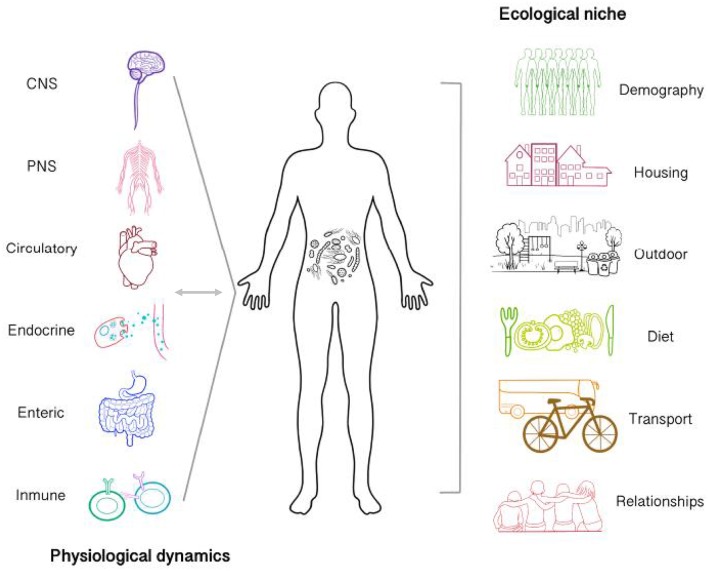
Microbiota establishes bi-directional relationships with physiological processes of the body and is affected by the ecological niche of which an agent participates. Gut microbiota interacts with other systems via neural and humoral pathways (Central, enteric and peripheral nervous system, immunoendocrine pathways, etc.). Possible communication mechanisms involve the regulation of neurotransmitter metabolism, gut permeability, nutrient processing and absorption, inflammatory cytokines release, the stress response, etc. Therefore, internal microbiota dynamics are actively affecting body dynamics in a process which in turn is also affecting microbiota. Microbiota in not only affected by internal processes but also by the agent's ecological niche. The features of the environment at different levels might be limited for the colonization and establishment of specific microbiological communities. Some environmental features which could be relevant includes the amount of people, the presence of the urban green space, urban hygiene, etc. Additionally, the ways by which the subject interact with it such as transportation, diet, and interpersonal relationships would also provide relevant information to take into account at the moment of carrying out interdisciplinary microbiota research.
References
LinkOut - more resources
Full Text Sources
