


The Base Rate Study: Developing Base Rates for Risk Factors and Indicators for Engagement in Violent Extremism
- PMID: 31999360
- PMCID: PMC7318282
- DOI: 10.1111/1556-4029.14282
The Base Rate Study: Developing Base Rates for Risk Factors and Indicators for Engagement in Violent Extremism
Abstract
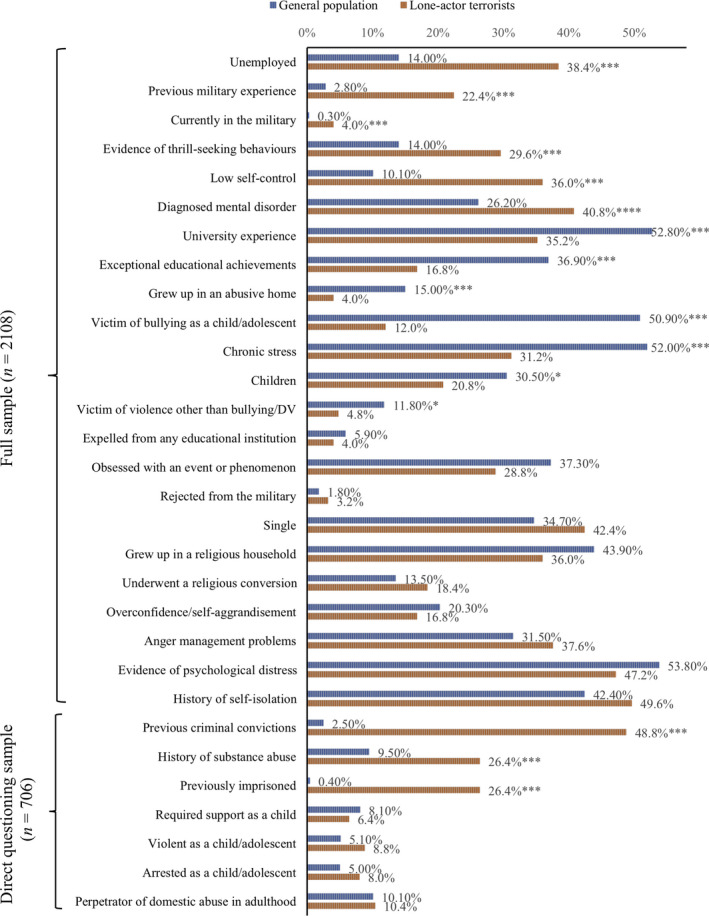
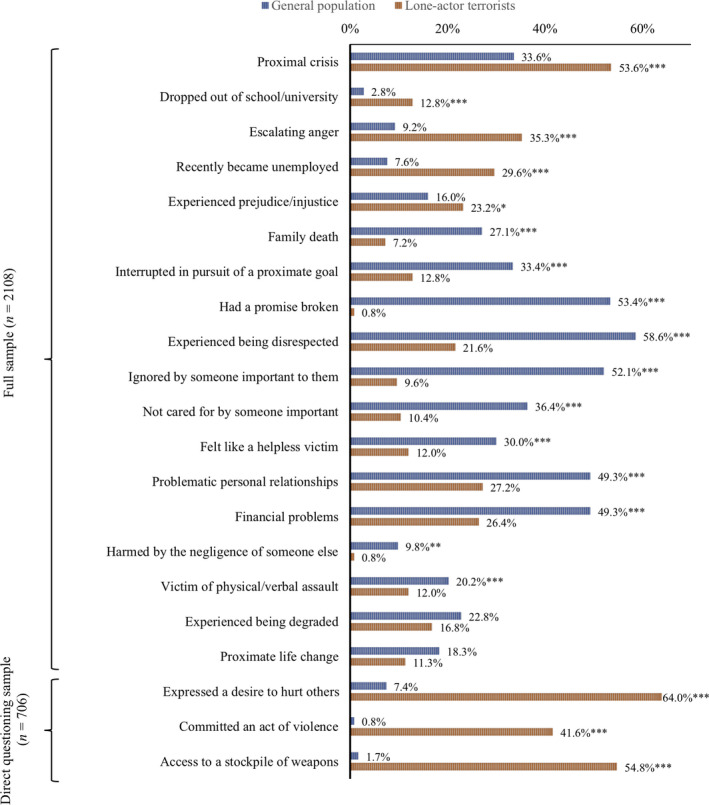
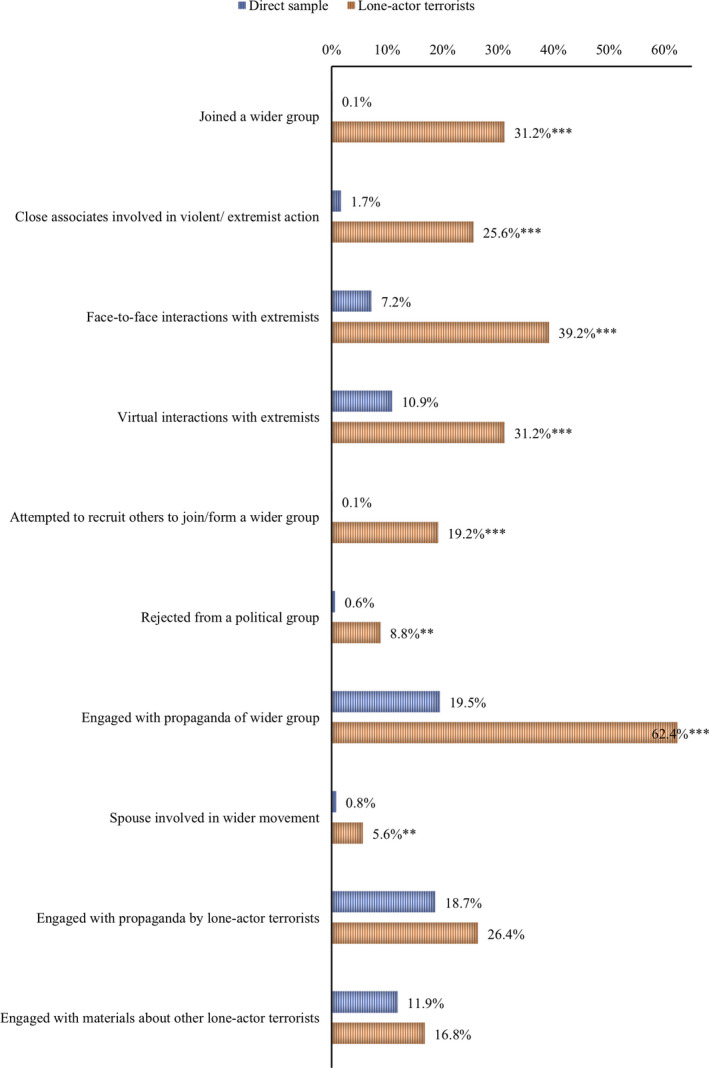
Improvements have been made in identifying the prevalence of risk factors/indicators for violent extremism. A consistent problem is the lack of base rates. How to develop base rates is of equal concern. This study has two aims: (i) compare two methods for developing base rates; the Unmatched Count Technique (UCT) and direct questioning, (ii) generate base rates in a general population sample and compare these to a sample of lone-actor terrorists (n = 125). We surveyed 2108 subjects from the general population. Participants were recruited from an online access panel and randomly assigned to one of three conditions; direct survey, control, or UCT. Survey items were based on a lone-actor terrorist codebook developed from the wider literature. Direct questioning was more suitable under our study conditions where UCT resulted in deflation effects. Comparing the base rates identified a number of significant differences: (i) lone-actor terrorists demonstrated propensity indicators related to a cognitive susceptibility, and a crime- and/or violence-supportive morality more often; the general sample demonstrated protective factors more often, (ii) lone-actor terrorists demonstrated situational indicators related to a crime- and/or violence-supportive morality more often, whereas the general sample experienced situational stressors more often, (iii) lone-actor terrorists demonstrated indicators related to exposure to extremism more often. Results suggest there are measurable differences in the prevalence of risk factors between lone-actor terrorists and the general population. However, no single factor "predicts" violent extremism. This bears implications for our understanding of the interrelation of risk and protective factors, and for the risk assessment of violent extremism.
Keywords: Prolific; base rates; lone-actor terrorism; online survey methods; risk assessment; terrorism; threat assessment; unmatched count technique; violent extremism.
© 2020 The Authors. Journal of Forensic Sciences published by Wiley Periodicals, Inc. on behalf of American Academy of Forensic Sciences.
Figures
References
-
- Schuurman B. Research on terrorism, 2007–2016: a review of data, methods, and authorship. Terror Polit Violence 2018:1–16.
-
- Desmarais SL, Simons‐Rudolph J, Brugh CS, Schilling E, Hoggan C. The state of scientific knowledge regarding factors associated with terrorism. J Threat Assess Manag 2017;4(4):180–209.
-
- Logan C, Lloyd M. Violent extremism: a comparison of approaches to assessing and managing risk. Legal Criminol Psychol 2019;24(1):141–61.
-
- Gill P. Toward a scientific approach to identifying and understanding indicators of radicalization and terrorist intent: eight key problems. J Threat Assess Manag 2015;2(3–4):187–91.
-
- Scurich N, John RS. Prescriptive approaches to communicating the risk of violence in actuarial risk assessment. Psychol Public Policy Law 2012;18(1):50–78.
MeSH terms
Grants and funding
LinkOut - more resources
Full Text Sources
