


Neurocognitive reorganization between crystallized intelligence, fluid intelligence and white matter microstructure in two age-heterogeneous developmental cohorts
- PMID: 31999564
- PMCID: PMC6983934
- DOI: 10.1016/j.dcn.2019.100743
Neurocognitive reorganization between crystallized intelligence, fluid intelligence and white matter microstructure in two age-heterogeneous developmental cohorts
Erratum in
-
Erratum to "Neurocognitive reorganization between crystallized intelligence, fluid intelligence and white matter microstructure in two age-heterogeneous developmental cohorts" [Dev. Cogn. Neurosci. 41 (2020) 100743].Dev Cogn Neurosci. 2020 Apr;42:100769. doi: 10.1016/j.dcn.2020.100769. Epub 2020 Feb 12. Dev Cogn Neurosci. 2020. PMID: 32072935 Free PMC article. No abstract available.
Abstract
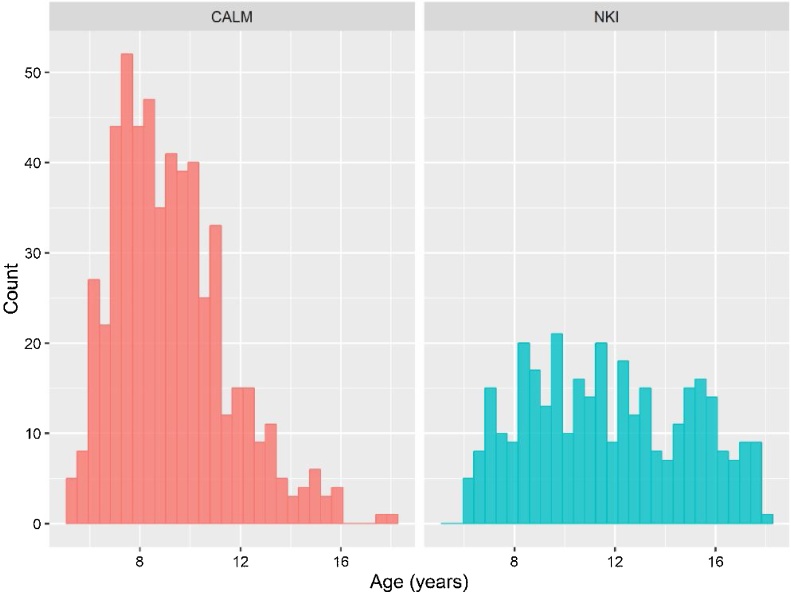
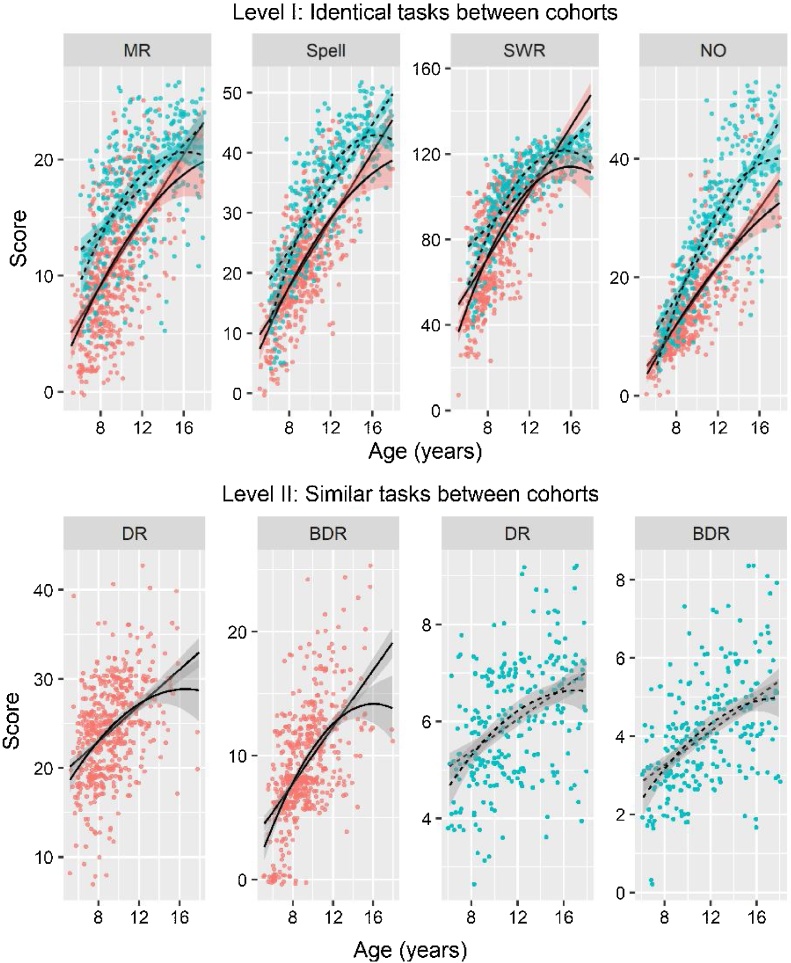
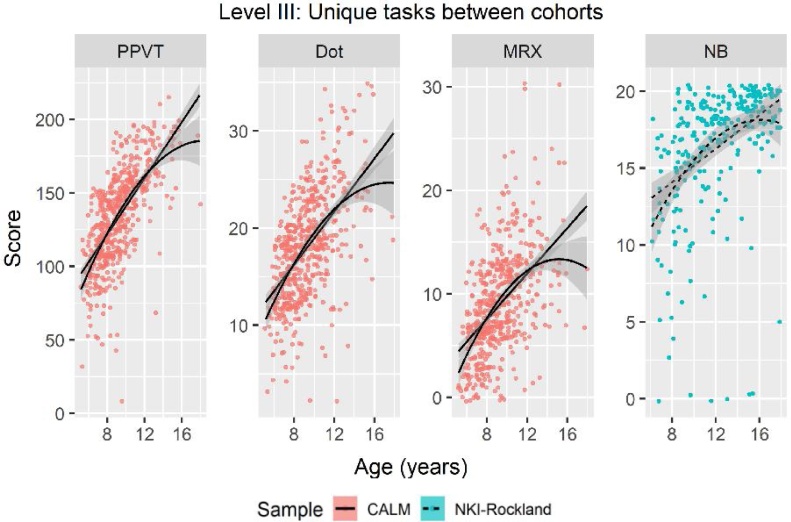
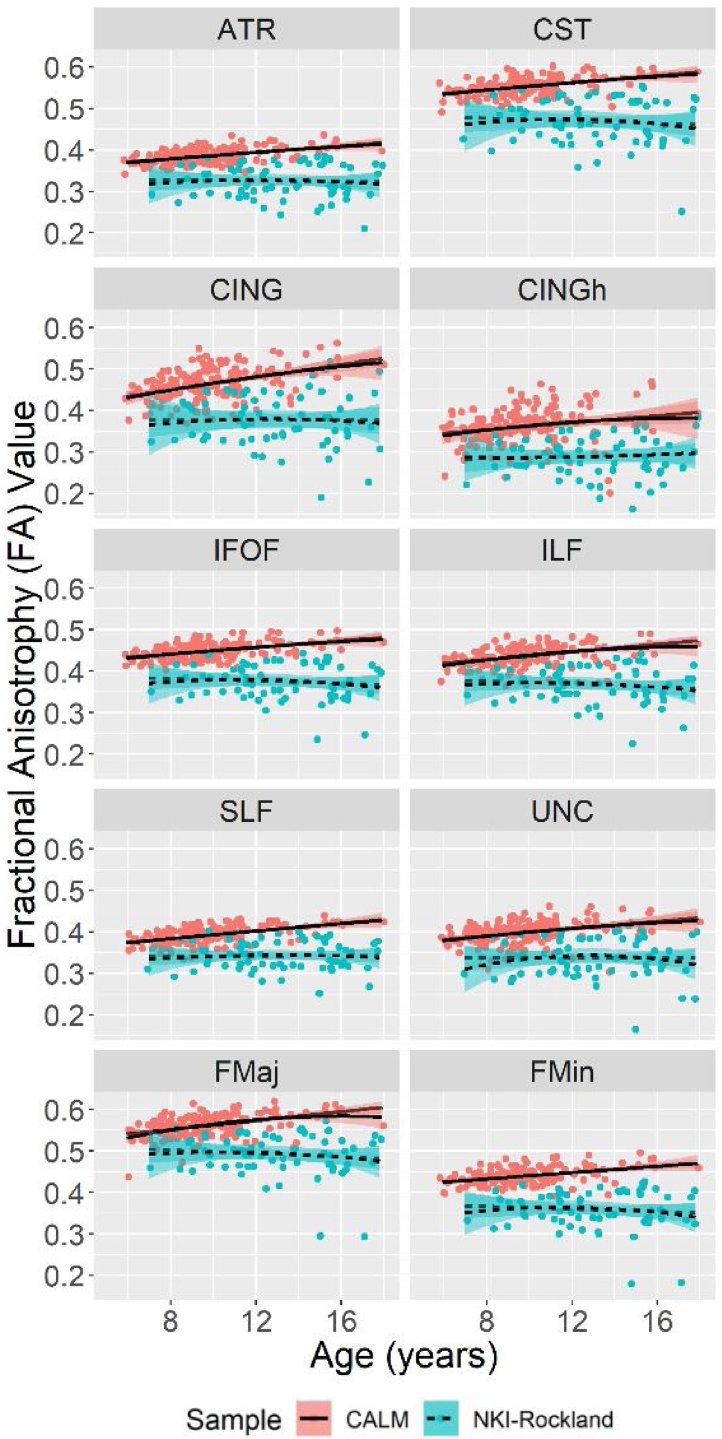
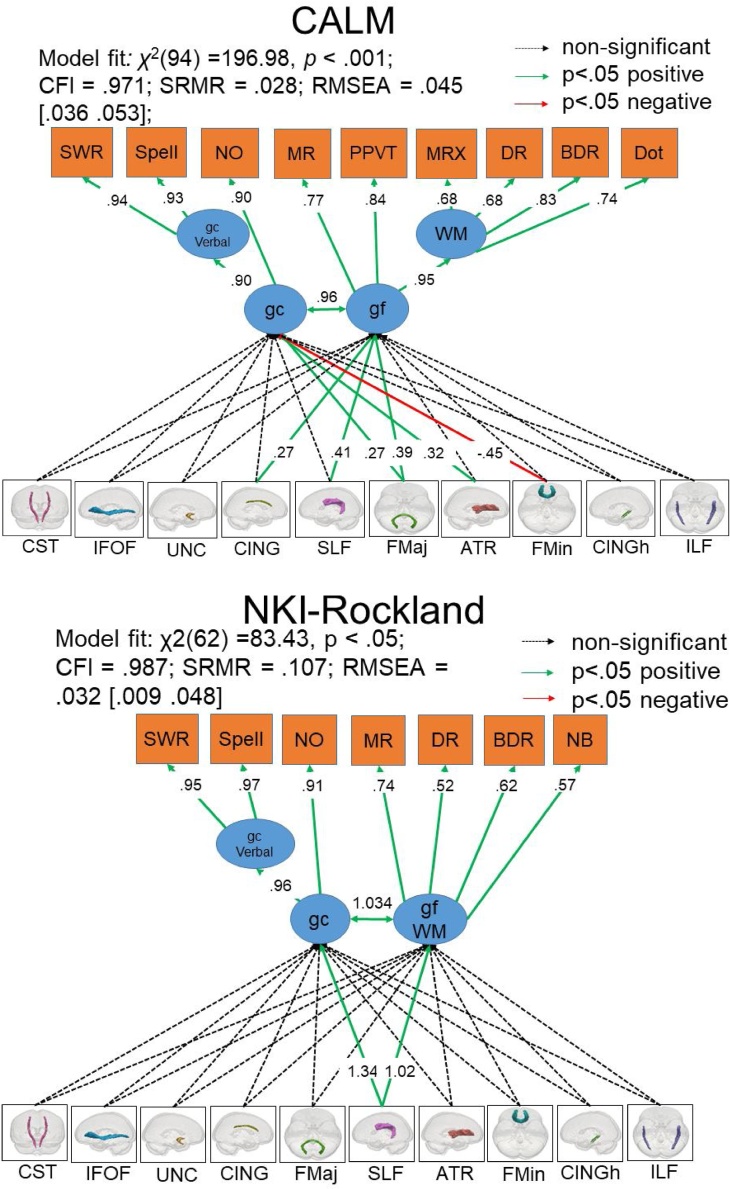
Despite the reliability of intelligence measures in predicting important life outcomes such as educational achievement and mortality, the exact configuration and neural correlates of cognitive abilities remain poorly understood, especially in childhood and adolescence. Therefore, we sought to elucidate the factorial structure and neural substrates of child and adolescent intelligence using two cross-sectional, developmental samples (CALM: N = 551 (N = 165 imaging), age range: 5-18 years, NKI-Rockland: N = 337 (N = 65 imaging), age range: 6-18 years). In a preregistered analysis, we used structural equation modelling (SEM) to examine the neurocognitive architecture of individual differences in childhood and adolescent cognitive ability. In both samples, we found that cognitive ability in lower and typical-ability cohorts is best understood as two separable constructs, crystallized and fluid intelligence, which became more distinct across development, in line with the age differentiation hypothesis. Further analyses revealed that white matter microstructure, most prominently the superior longitudinal fasciculus, was strongly associated with crystallized (gc) and fluid (gf) abilities. Finally, we used SEM trees to demonstrate evidence for developmental reorganization of gc and gf and their white matter substrates such that the relationships among these factors dropped between 7-8 years before increasing around age 10. Together, our results suggest that shortly before puberty marks a pivotal phase of change in the neurocognitive architecture of intelligence.
Keywords: Crystallized intelligence; Fluid intelligence; Neurocognitive reorganization; Structural equation modelling; White matter.
Copyright © 2019 The Author(s). Published by Elsevier Ltd.. All rights reserved.
Conflict of interest statement
Declarations of Competing Interest None.
Figures
References
-
- Alloway T.P. 2007. Automated Working Memory Assessment (AWMA)
-
- Alloway T.P., Gathercole S.E., Kirkwood H., Elliott J. Evaluating the validity of the Automated Working Memory Assessment. Educ. Psychol. 2008;28:725–734.
-
- Avants B.B., Epstein C.L., Grossman M., Gee J.C. Symmetric diffeomorphic image registration with cross-correlation: evaluating automated labeling of elderly and neurodegenerative brain. Medical Image Analysis, Special Issue on The Third International Workshop on Biomedical Image Registration – WBIR 2006 12. 2008:26–41. - PMC - PubMed
-
- Bickley P.G., Keith T.Z., Wolfle L.M. The three-stratum theory of cognitive abilities: test of the structure of intelligence across the life span. Intelligence. 1995;20:309–328.
Publication types
MeSH terms
Grants and funding
LinkOut - more resources
Full Text Sources
Miscellaneous
