


Clinical characteristics of peripheral venous catheter-associated gram-negative bloodstream infection among patients with malignancy
- PMID: 31999762
- PMCID: PMC6992193
- DOI: 10.1371/journal.pone.0228396
Clinical characteristics of peripheral venous catheter-associated gram-negative bloodstream infection among patients with malignancy
Abstract
Purpose: Previous studies have suggested that peripheral venous catheter is a significant source of gram-negative bacteraemia in patients with malignancy. We aimed to identify risk factors and develop a clinical prediction rule for the involvement of gram-negative organisms in peripheral venous catheter-associated bloodstream infections (PVC-BSIs) among patients with malignancy.
Methods: This retrospective cohort study was conducted at a 700-bed cancer hospital in Japan. Consecutive patients diagnosed with PVC-BSI based on clinical and microbiological criteria were included in this study. Based on clinical and microbiological characteristics of PVC-BSIs in cancer patients, a logistic regression model for predicting gram-negative organisms as causative organisms in PVC-BSIs was then developed.
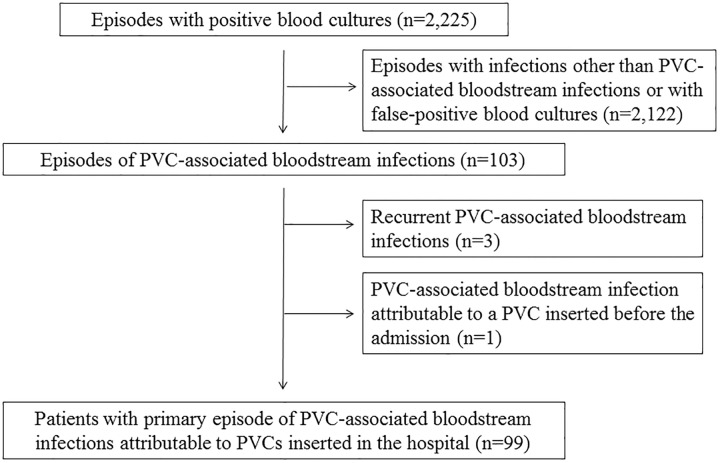
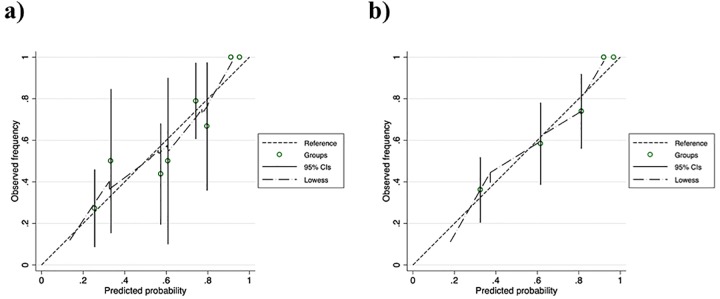
Results: Of the 99 patients included in our cohort, 60 patients (60.6%) had gram-negative PVC-BSIs. The median age of patients with PVC-BSIs was 67 years (interquartile range [IQR], 59-74 years), and the median Pitt bactearemia score was 1 (IQR, 0-3). The median duration of catherization was 5 days (IQR, 4-7 days) and 70 patients (70.7%) received peripheral parenteral nutrition that contained amino acids. On multivariable analysis, age ≥65 years (odds ratio [OR], 3.07; 95% confidence interval [CI], 1.10-8.62), showering (OR, 3.15; 95% CI, 1.07-9.26), Pitt bacteraemia score ≥2 points (OR, 6.96; 95% CI, 2.52-19.2), and use of peripheral parenteral nutrition (OR, 0.31; 95% CI, 0.10-0.98) were independent predictors for gram-negative PVC-BSIs among all PVC-BSIs. The simplified PVC-GN scores established to predict gram-negative PVC-BSIs had a optimism-corrected c-index of 0.775.
Conclusion: Gram-negative bacteria were more commonly responsible for PVC-BSI than Gram-positive bacteria among cancer patients in this cohort. Involvement of Gram-negative bacteria in PVC-BSIs could be predicted with readily available clinical variables.
Conflict of interest statement
The authors have declared that no competing interests exist.
Figures
References
-
- van der Mee-Marquet NL, Blanc DS, Gbaguidi-Haore H, Dos Santos Borges S, Viboud Q, Bertrand X, et al. Marked increase in incidence for bloodstream infections due to Escherichia coli, a side effect of previous antibiotic therapy in the elderly. Front Microbiol. 2015; 6: 646 10.3389/fmicb.2015.00646 - DOI - PMC - PubMed
MeSH terms
LinkOut - more resources
Full Text Sources
Medical
