


Targeting p53 and histone methyltransferases restores exhausted CD8+ T cells in HCV infection
- PMID: 32001678
- PMCID: PMC6992697
- DOI: 10.1038/s41467-019-14137-7
Targeting p53 and histone methyltransferases restores exhausted CD8+ T cells in HCV infection
Abstract
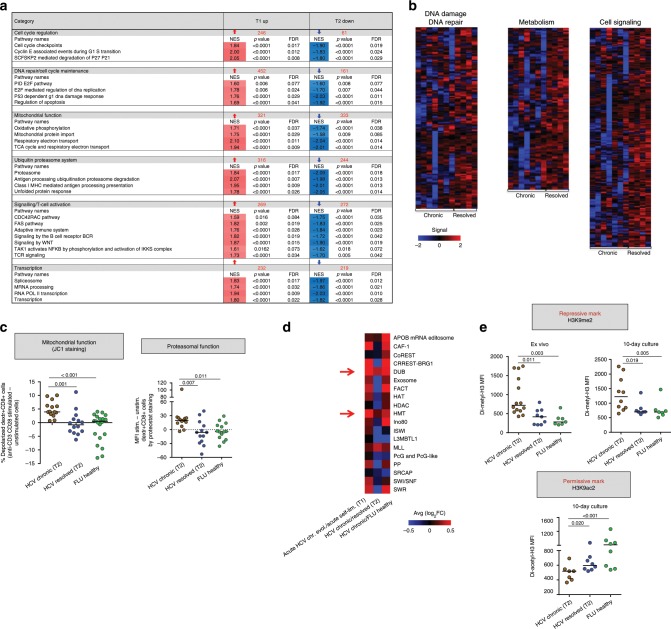
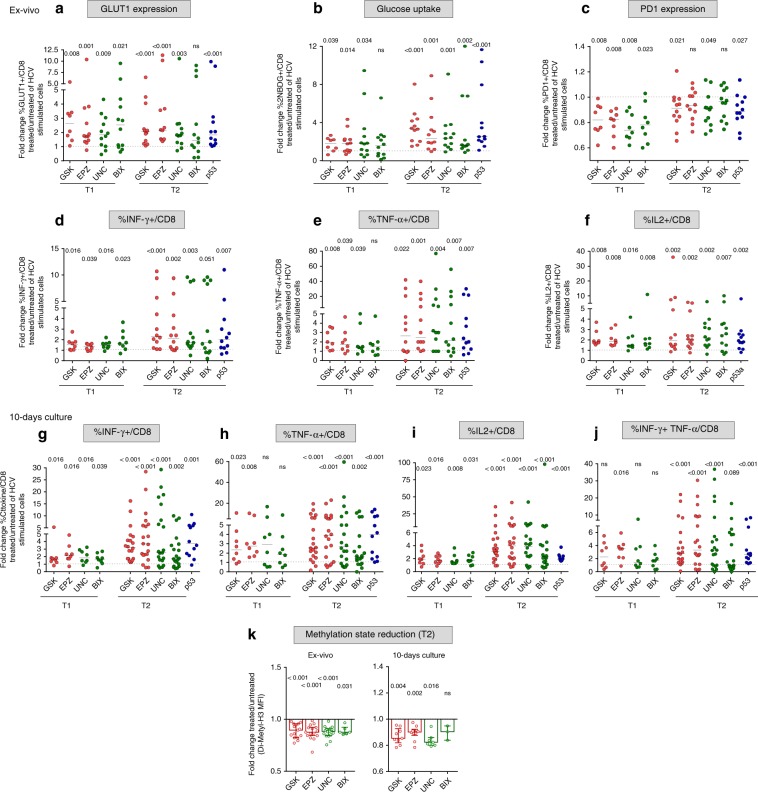
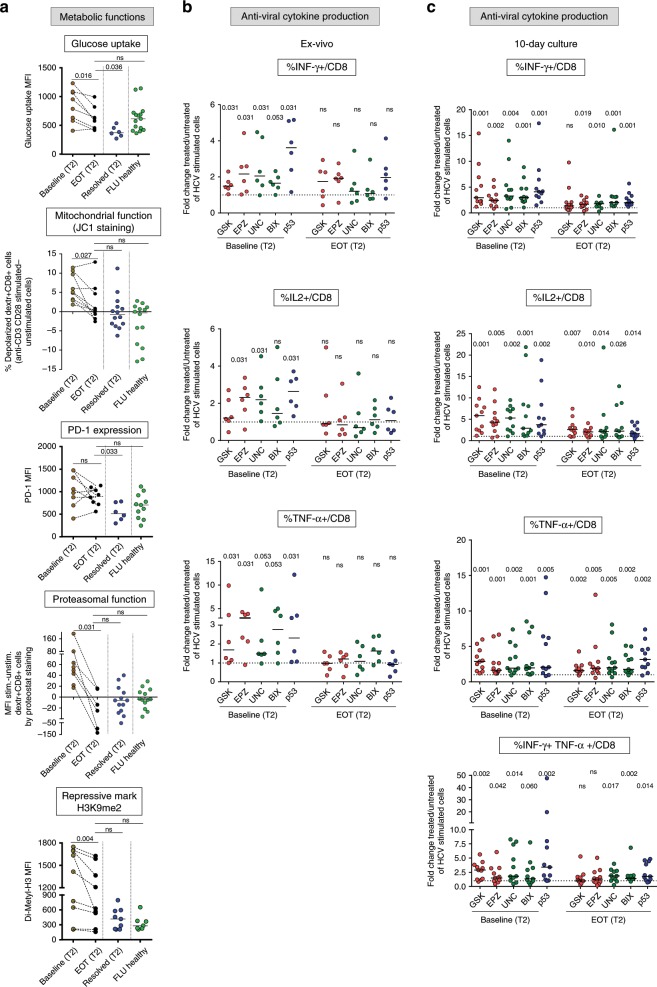
Hepatitis C virus infection (HCV) represents a unique model to characterize, from early to late stages of infection, the T cell differentiation process leading to exhaustion of human CD8+ T cells. Here we show that in early HCV infection, exhaustion-committed virus-specific CD8+ T cells display a marked upregulation of transcription associated with impaired glycolytic and mitochondrial functions, that are linked to enhanced ataxia-telangiectasia mutated (ATM) and p53 signaling. After evolution to chronic infection, exhaustion of HCV-specific T cell responses is instead characterized by a broad gene downregulation associated with a wide metabolic and anti-viral function impairment, which can be rescued by histone methyltransferase inhibitors. These results have implications not only for treatment of HCV-positive patients not responding to last-generation antivirals, but also for other chronic pathologies associated with T cell dysfunction, including cancer.
Conflict of interest statement
M.L.: Consultant for Gilead, Jansen, BMS, Arbutus, Galapagos, Assembly Pharma, Sanofi/Aventis. C.F.: Consultant for Gilead Srl, Abbvie, Arrowhead, Humabs, Abivax, MSD; grants from Gilead Srl, Bristol Squibb, Roche Spa, Abbvie, Janssen Cilag.
Figures

References
Publication types
MeSH terms
Substances
LinkOut - more resources
Full Text Sources
Medical
Molecular Biology Databases
Research Materials
Miscellaneous
