


Severe metallosis-related osteolysis as a cause of failure after total knee replacement
- PMID: 32002007
- PMCID: PMC6985032
- DOI: 10.1016/j.jcot.2019.04.010
Severe metallosis-related osteolysis as a cause of failure after total knee replacement
Abstract
Background: Metallosis is a syndrome of metal-induced synovitis caused by friction between two metal surfaces. In contrast to the hip joint after resurfacing arthroplasty or metal-on-metal (MoM) total hip replacement, metallosis of the knee is extremely rare.
Materials: We describe 4 patients who underwent revision total knee replacement because of disabling pain and implant loosening after a mean time of 21 (range: 13-30) years of knee replacement surgery. They were all females with a mean age of 79 (range: 75-82) years. Septic loosening was excluded through microbiological examination and synovial fluid analysis.
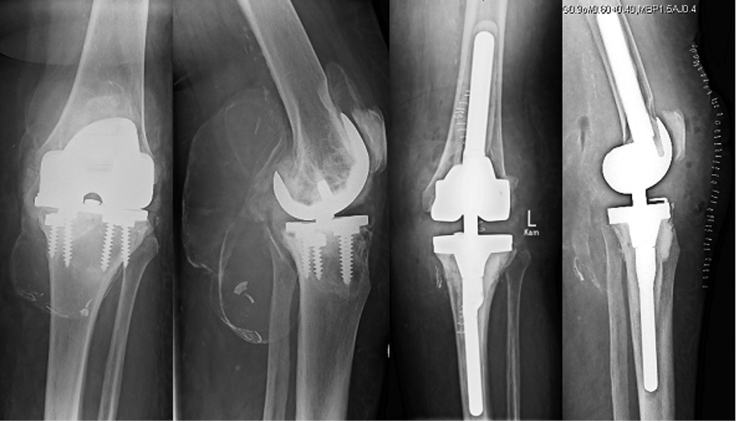
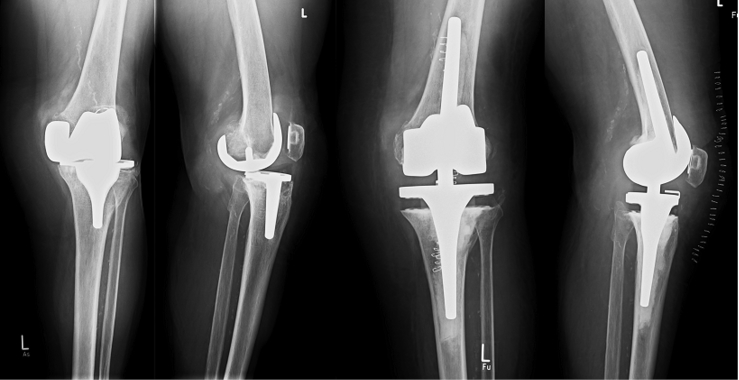
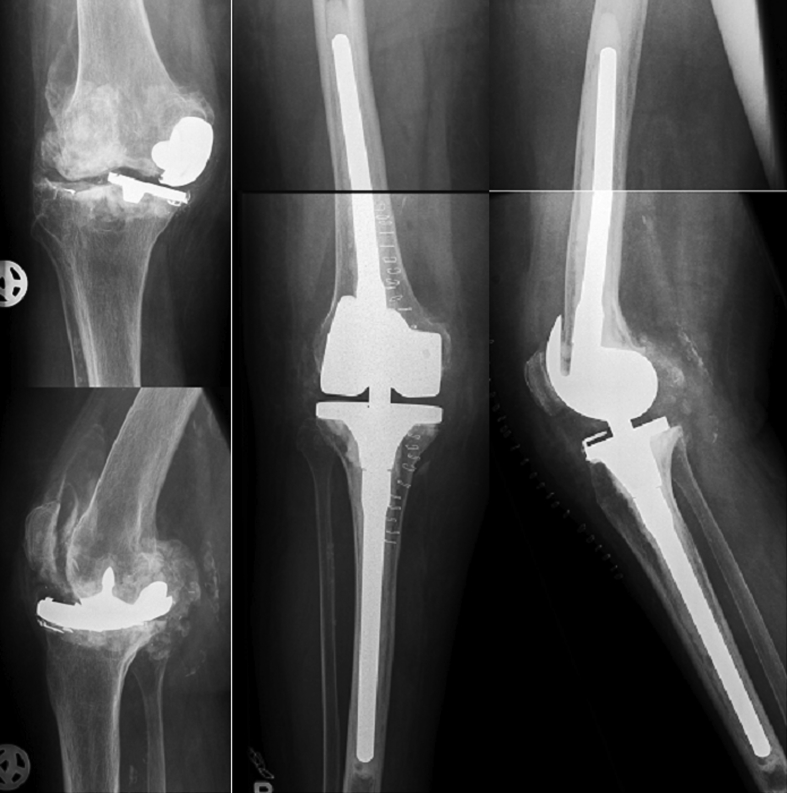
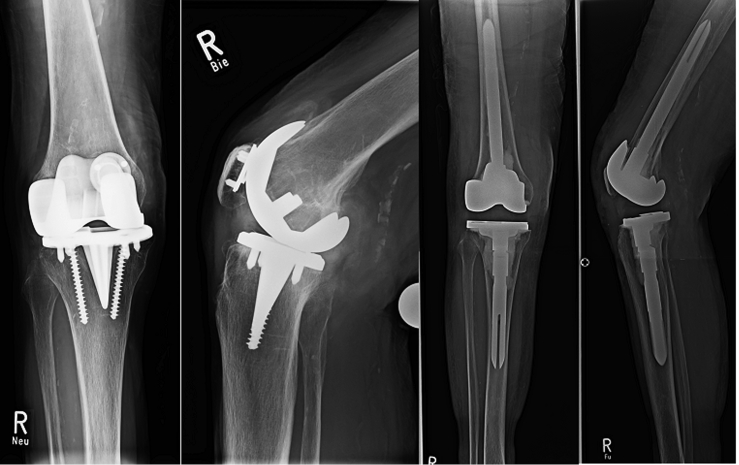
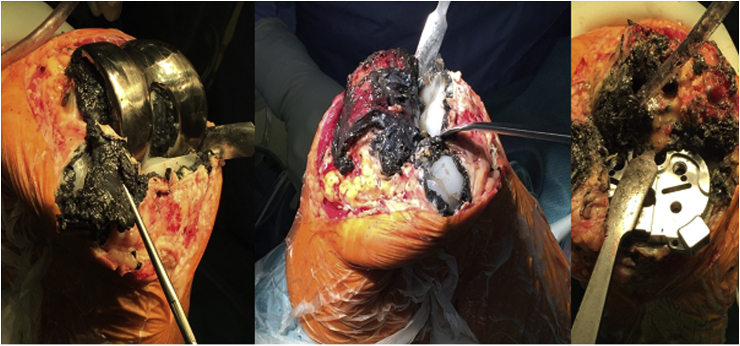
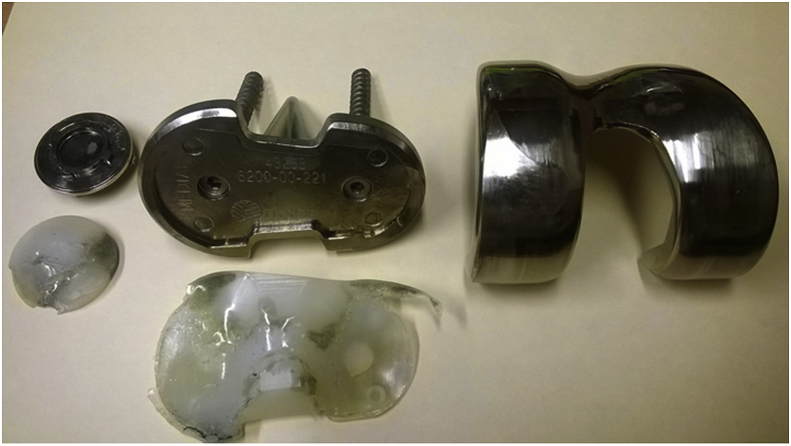
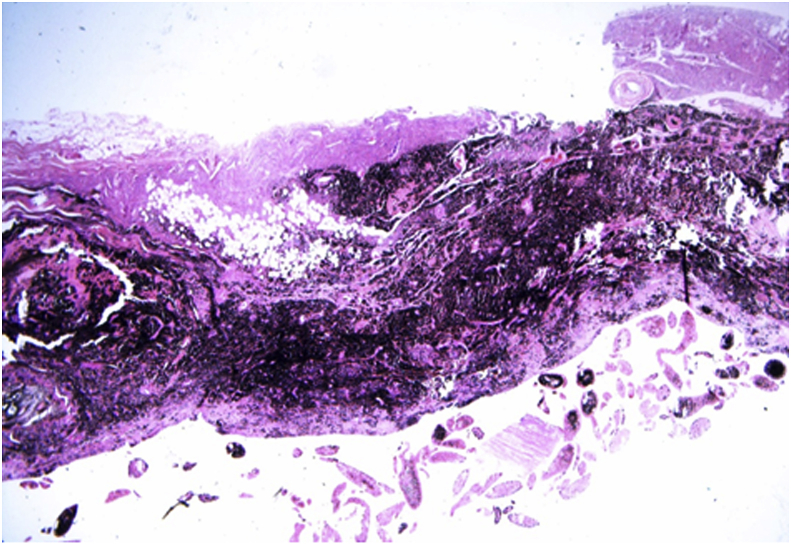
Results: Direct metal-on-metal contact at the tibiofemoral interface was confirmed intraoperatively in all cases. All knees showed severe metallosis with advanced osteolysis and pseudotumor formation. In one knee there was a complete fracture of the tibial tray. All patients had a one-stage revision surgery with implant removal, profound synovectomy and implantation of a constrained modular revision knee system. Long modular stems with offset adapters, wedges and/or blocks were used in all cases.
Conclusion: Metallosis-associated osteolysis should be suspected in cases with radiologically evident polyethylene wear after knee replacement. Recognizing that revision arthroplasty is very technically demanding in such cases, surgeons should have a back-up with modular revision components and a ready access to reconstructive options at this revision setting.
Keywords: Arthroplasty; Metal on metal; Metallosis; Polyethylene wear; Revision total knee replacement.
© 2019 Delhi Orthopedic Association. All rights reserved.
Figures
References
-
- Schiavone Panni A., Vasso M., Cerciello S., Maccauro G. Metallosis following knee arthroplasty: histological and immunohistochemical study. Int J Immunopathol Pharmacol. 2011;24(3):711–719. - PubMed
LinkOut - more resources
Full Text Sources
