


Prenatal maternal hair cortisol concentrations are related to maternal prenatal emotion dysregulation but not neurodevelopmental or birth outcomes
- PMID: 32002996
- PMCID: PMC7390660
- DOI: 10.1002/dev.21952
Prenatal maternal hair cortisol concentrations are related to maternal prenatal emotion dysregulation but not neurodevelopmental or birth outcomes
Abstract
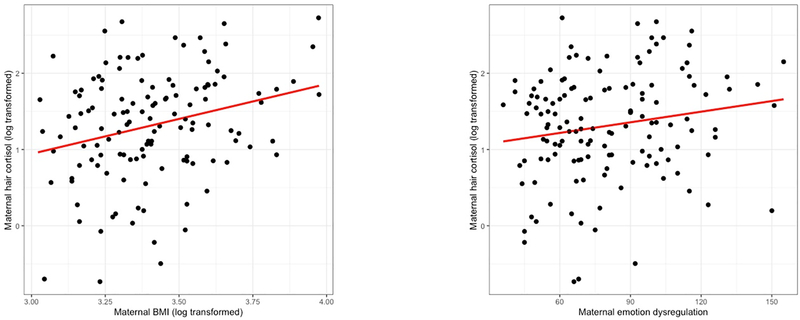
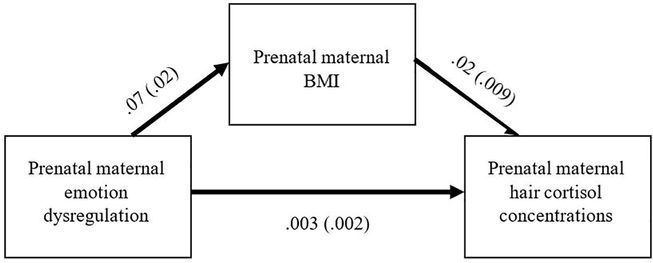
Hair cortisol concentrations measured during pregnancy have emerged as a novel biomarker for prenatal stress exposure. However, associations between prenatal stress and distress, broadly defined, and hair cortisol concentrations during pregnancy are inconsistent. We examined relations among hair cortisol concentrations during the third trimester with (a) emotion dysregulation and (b) detailed measures of maternal prenatal stress. We also examined the predictive validity of maternal hair cortisol during pregnancy for adverse newborn health outcomes. Cortisol concentrations were derived from 6 cm of hair during the third trimester of pregnancy. Mothers reported on their emotion dysregulation and stress at this time. A standardized newborn neurobehavioral exam was conducted shortly after birth and newborn birth weight and gestational age were assessed from medical records. All hypotheses were preregistered on the Open Science Framework (osf.io/279ng). High levels of emotion dysregulation, but not stress, were predictive of high hair cortisol concentrations. Maternal prenatal BMI mediated the relation between maternal prenatal emotion dysregulation and hair cortisol concentrations. There was no association between hair cortisol and infant birth outcomes. This research supports the notion that transdiagnostic markers of psychopathology are important correlates of hair cortisol concentrations during pregnancy.
© 2020 Wiley Periodicals, Inc.
Conflict of interest statement
Figures
References
Publication types
MeSH terms
Substances
Grants and funding
LinkOut - more resources
Full Text Sources
Medical
