


The National Ambulance Surveillance System: A novel method for monitoring acute alcohol, illicit and pharmaceutical drug related-harms using coded Australian ambulance clinical records
- PMID: 32004349
- PMCID: PMC6994147
- DOI: 10.1371/journal.pone.0228316
The National Ambulance Surveillance System: A novel method for monitoring acute alcohol, illicit and pharmaceutical drug related-harms using coded Australian ambulance clinical records
Abstract
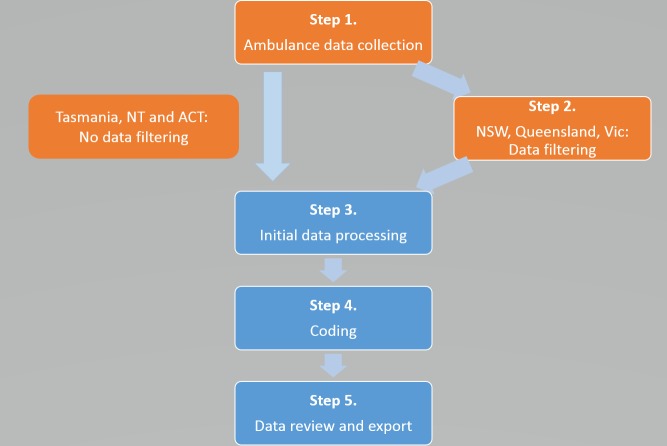
Although harmful consumption of alcohol and other drugs (both illicit and pharmaceutical) significantly contribute to global burden of disease, not all harms are captured within existing morbidity data sources. Indeed, harms occurring in the community may be missed or under-reported. This paper describes the National Ambulance Surveillance System, a unique Australian system for monitoring and mapping acute harms related to alcohol and other drug consumption. Data are sourced from paramedic electronic patient care records provided by ambulance services from across Australia. Coding occurs in a purpose-built system, by a team of specialised research assistants. Alcohol, and specific illicit and pharmaceutical drugs, rather than broad drug classes, are manually coded and the dataset is reviewed and cleaned prior to analysis. The National Ambulance Surveillance System is an ongoing, dynamic surveillance system of alcohol and other drug-related harms across Australia. The data includes more than 140 output variables per attendance, including individual substances, demographics, temporal, geospatial, and clinical data (e.g., Glasgow Coma Scale score, naloxone provision and response, outcome of attendance). The National Ambulance Surveillance System is an internationally unique population-level surveillance system of acute harms arising from alcohol and other drug consumption. Dissemination of National Ambulance Surveillance System data has been used to inform and evaluate policy approaches and potential points of intervention, as well as guide workforce development needs and clinical practice at the local and national level. This methodology could be replicated in other countries.
Conflict of interest statement
DL has received speaking honoraria from the following: Astra Zeneca, Camurus, Indivior, Janssen-Cilag, Lundbeck, Servier and Shire, and has participated on Advisory Boards for Indivior and Lundbeck. DL, DS, and RC are investigators on an untied educational grant from Seqirus, utilising data from the National Ambulance Surveillance System (NASS), but is unrelated to the development of this project. This does not alter our adherence to PLOS ONE policies on sharing data and materials.
Figures
References
-
- Degenhardt L, Whiteford H, Hall WD. The Global Burden of Disease projects: What have we learned about illicit drug use and dependence and their contribution to the global burden of disease? Drug Alc Rev. 2014;33:4–12. - PubMed
-
- World Health Organization. Management of Substance Abuse—Facts and Figures Geneva 2018 [cited 2018 21 May 2018]. Available from: http://www.who.int/substance_abuse/facts/en/.
-
- Australian Institute of Health and Welfare (AIHW). National Drug Strategy Household Survey (NDSHS) 2016—key findings Canberra: Australian Institute of Health and Welfare, 2017.
-
- United Nations Office on Drugs and Crime. World Drug Report 2017. Vienna: United Nations, 2017.
