


Updates on malaria incidence and profile in Malaysia from 2013 to 2017
- PMID: 32005228
- PMCID: PMC6995112
- DOI: 10.1186/s12936-020-3135-x
Updates on malaria incidence and profile in Malaysia from 2013 to 2017
Abstract
Background: To date, most of the recent publications on malaria in Malaysia were conducted in Sabah, East Malaysia focusing on the emergence of Plasmodium knowlesi. This analysis aims to describe the incidence, mortality and case fatality rate of malaria caused by all Plasmodium species between Peninsular Malaysia and East Malaysia (Sabah and Sarawak) over a 5-year period (2013-2017).
Methods: This is a secondary data review of all diagnosed and reported malaria confirmed cases notified to the Ministry of Health, Malaysia between January 2013 and December 2017.
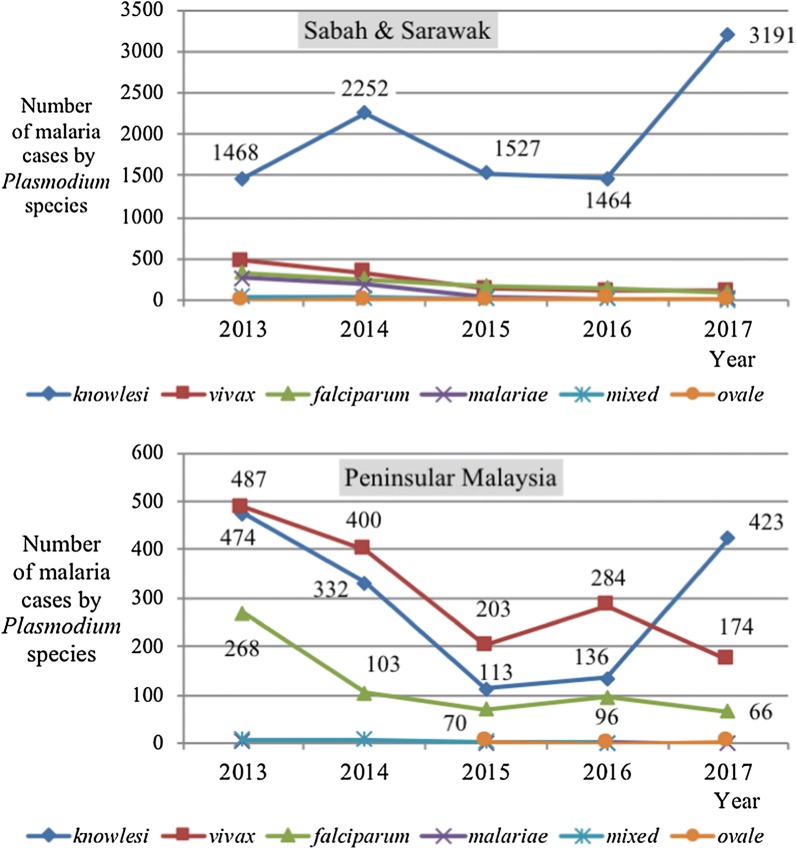
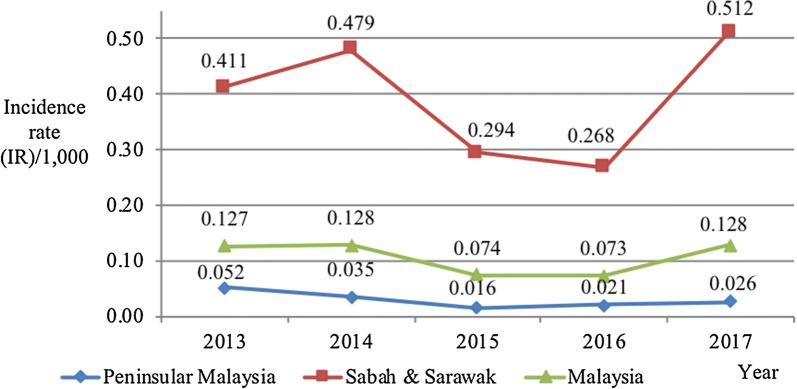
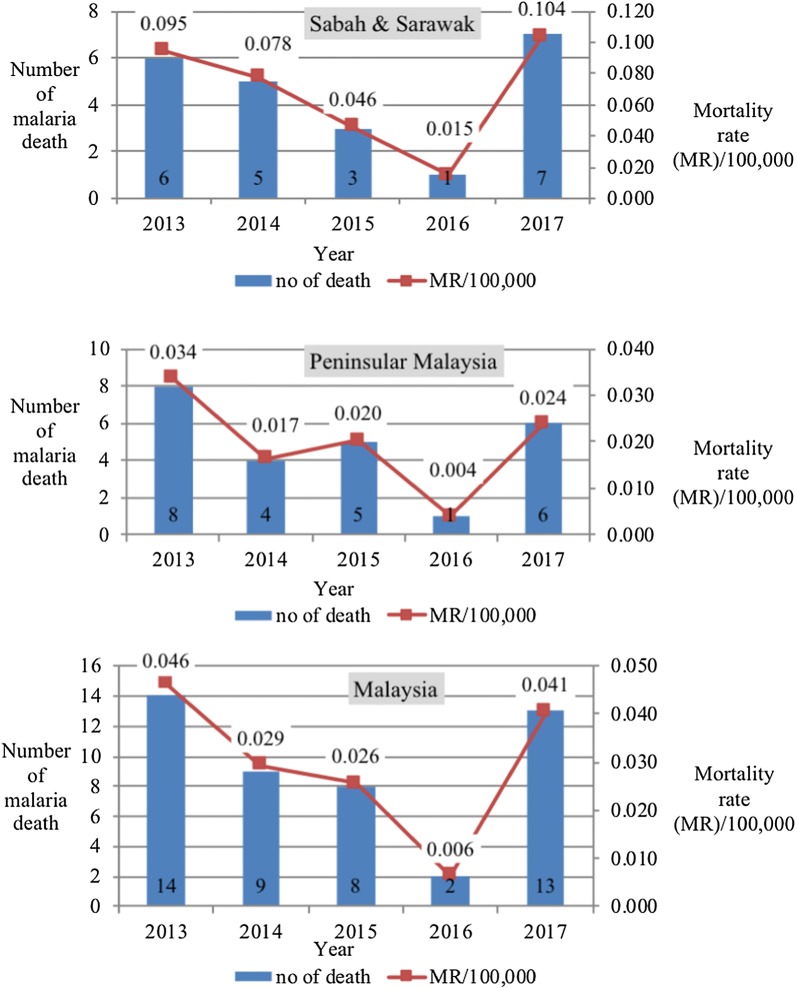
Results: From 2013 to 2017, a total of 16,500 malaria cases were notified in Malaysia. The cases were mainly contributed from Sabah (7150; 43.3%) and Sarawak (5684; 34.4%). Majority of the patients were male (13,552; 82.1%). The most common age group in Peninsular Malaysia was 20 to 29 years (1286; 35.1%), while Sabah and Sarawak reported highest number of malaria cases in age group of 30 to 39 years (2776; 21.6%). The top two races with malaria in Sabah and Sarawak were Bumiputera Sabah (5613; 43.7%) and Bumiputera Sarawak (4512; 35.1%), whereas other ethnic group (1232; 33.6%) and Malays (1025; 28.0%) were the two most common races in Peninsular Malaysia. Plasmodium knowlesi was the commonest species in Sabah and Sarawak (9902; 77.1%), while there were more Plasmodium vivax cases (1548; 42.2%) in Peninsular Malaysia. The overall average incidence rate, mortality rate and case fatality rates for malaria from 2013 to 2017 in Malaysia were 0.106/1000, 0.030/100,000 and 0.27%, respectively. Sarawak reported the highest average incidence rate of 0.420/1000 population followed by Sabah (0.383/1000). Other states in Peninsular Malaysia reported below the national average incidence rate with less than 0.100/1000.
Conclusions: There were different trends and characteristics of notified malaria cases in Peninsular Malaysia and Sabah and Sarawak. They provide useful information to modify current prevention and control measures so that they are customised to the peculiarities of disease patterns in the two regions in order to successfully achieve the pre-elimination of human-only species in the near future.
Keywords: Case fatality rate; Incidence; Malaria; Mortality; Peninsular Malaysia; Sabah and Sarawak.
Conflict of interest statement
The authors declare that they have no competing interests.
Figures
References
-
- WHO . World malaria report 2018. Geneva: World Health Organization; 2018.
-
- Mudin RN. Malaria: Battling old disease with new strategies. In: Presented during 5th Perak Health Conference. Ipoh, Perak, Malaysia. 2013.
-
- Sabah State Health Department. Annual report 2016. Vector Borne Disease Unit, Public Health Section.
-
- William T, Menon J. A review of malaria research in Malaysia. Med J Malaysia. 2014;69:82–87. - PubMed
-
- William T, Rahman HA, Jelip J, Ibrahim MY, Menon J, Grigg MJ, et al. Increasing incidence of Plasmodium knowlesi malaria following control of Plasmodium falciparum and Plasmodium vivax malaria in Sabah, Malaysia. PLoS Negl Trop Dis. 2013;7:e2026. doi: 10.1371/journal.pntd.0002026. - DOI - PMC - PubMed
MeSH terms
Grants and funding
LinkOut - more resources
Full Text Sources
Medical
