. 2020 Jun;40(6):922-927.
doi: 10.1038/s41372-020-0596-2. Epub 2020 Jan 31.

The role of absolute monocyte counts in predicting severity of necrotizing enterocolitis

Affiliations

The role of absolute monocyte counts in predicting severity of necrotizing enterocolitis

Suneetha Desiraju et al. J Perinatol. 2020 Jun.

Abstract

Objective: Necrotizing enterocolitis (NEC) is an inflammatory bowel disease of preterm infants marked by an absolute monocyte count (AMC) drop in peripheral blood. Our objective was to determine whether the degree of AMC drop at illness onset correlates with eventual severity of disease.

Study design: The percentage change in AMC was retrospectively calculated for each of 29 rule-out NEC and 76 NEC cases from baseline to illness onset, and then compared across stages.

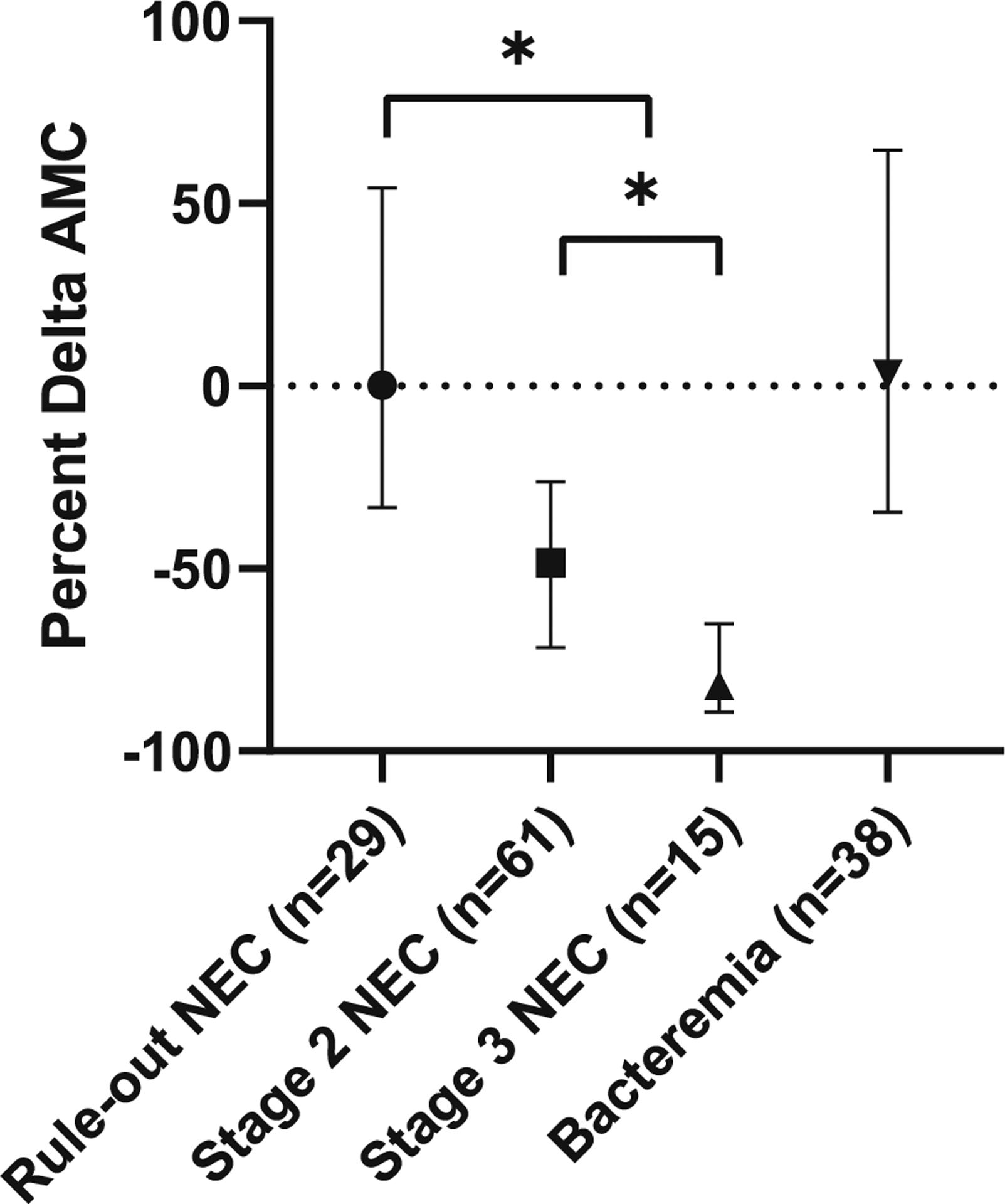
Results: Median AMC changes of +0.5% (p = 0.56) were found in rule-out NEC, compared with -44.5% (p < 0.0001) in Stage 2 and -81.9% (p < 0.0001) in Stage 3. An AMC change cutoff of -75% distinguishes Stages 2 and 3.

Conclusions: The severity of NEC correlated with the extent of AMC change in a dose-response fashion. Percent AMC change may be a useful marker for identifying NEC at onset and prognosticating disease severity.


Conflict of interest statement

Conflict of interest The authors declare that they have no conflict of interest.

Figures

Fig. 1
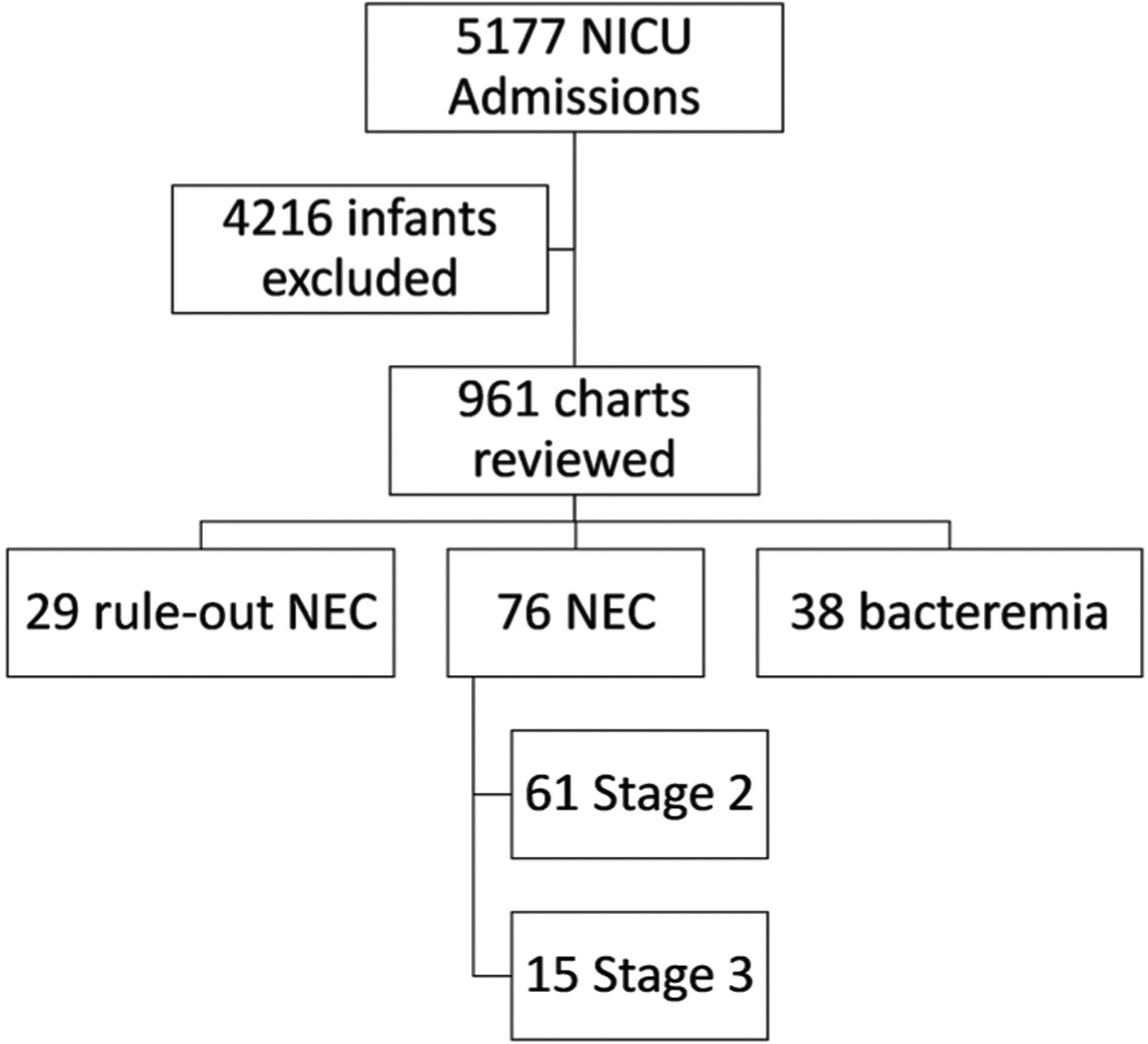
Fig. 1. CONSORT diagram.
5177 infants were admitted to the NICU, of which 4216 were excluded (3848 due to GA > 33 weeks, 139 outborns, 78 due to death prior to 1 week of life, 6 with early-onset sepsis, and 2 with congenital GI anomalies. Of the remaining 961 charts, 29 healthy NEC rule-outs were enrolled, 61 with Stage 2 NEC, 15 with Stage 3 NEC, and 38 with bacteremia.
Fig. 2
Fig. 2. Change in AMC from baseline to illness onset, expressed as a percentage, grouped by final diagnosis (*p < 0.001).
No significant AMC change from baseline is seen in infants with rule-out NEC or bacteremia without NEC. Infants with Stages 2 and 3 NEC show significant changes in AMC at the time of illness onset, relative to baseline (p < 0.001). Infants with Stage 3 NEC demonstrate a change in monocyte count that is significantly greater than the change seen in Stage 2 NEC, p < 0.001. There is a significant difference between the AMC change in rule-out NEC versus true NEC (Stages 2 or 3), p < 0.001.
Fig. 3
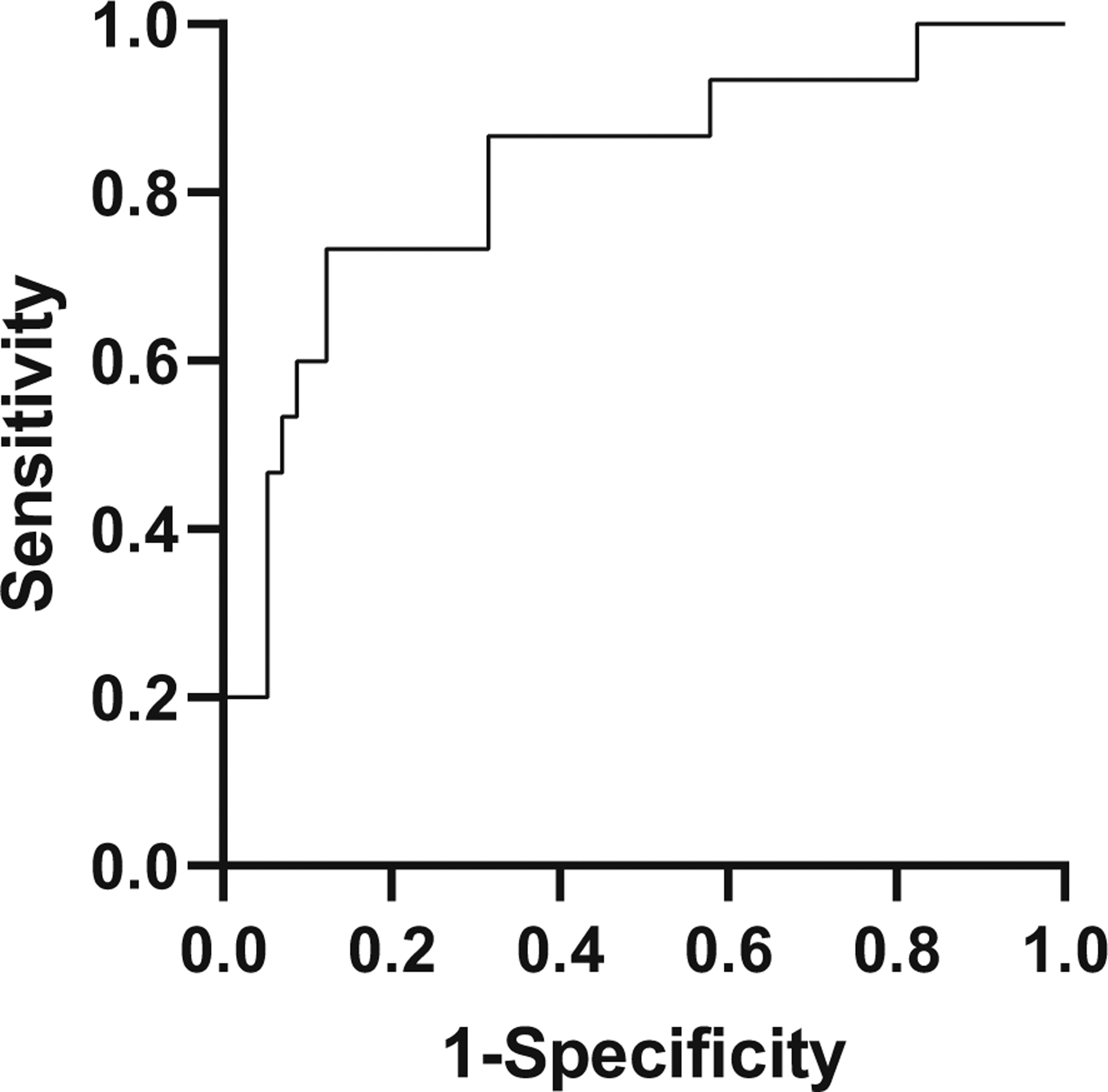
Fig. 3. Receiver–operator curve, to distinguish Stages 2 and 3 NEC.
With Stage 3 denoted as “positive” and Stage 2 as “negative,” sensitivity is plotted on the Y-axis and 1-specificity or false positive rate on the X-axis. These parameters are optimized at an AMC change of −75% from baseline, which is 73% sensitive and 87% specific in the diagnosis of Stage 3 NEC, with a positive likelihood ratio of 5.62.
Fig. 4
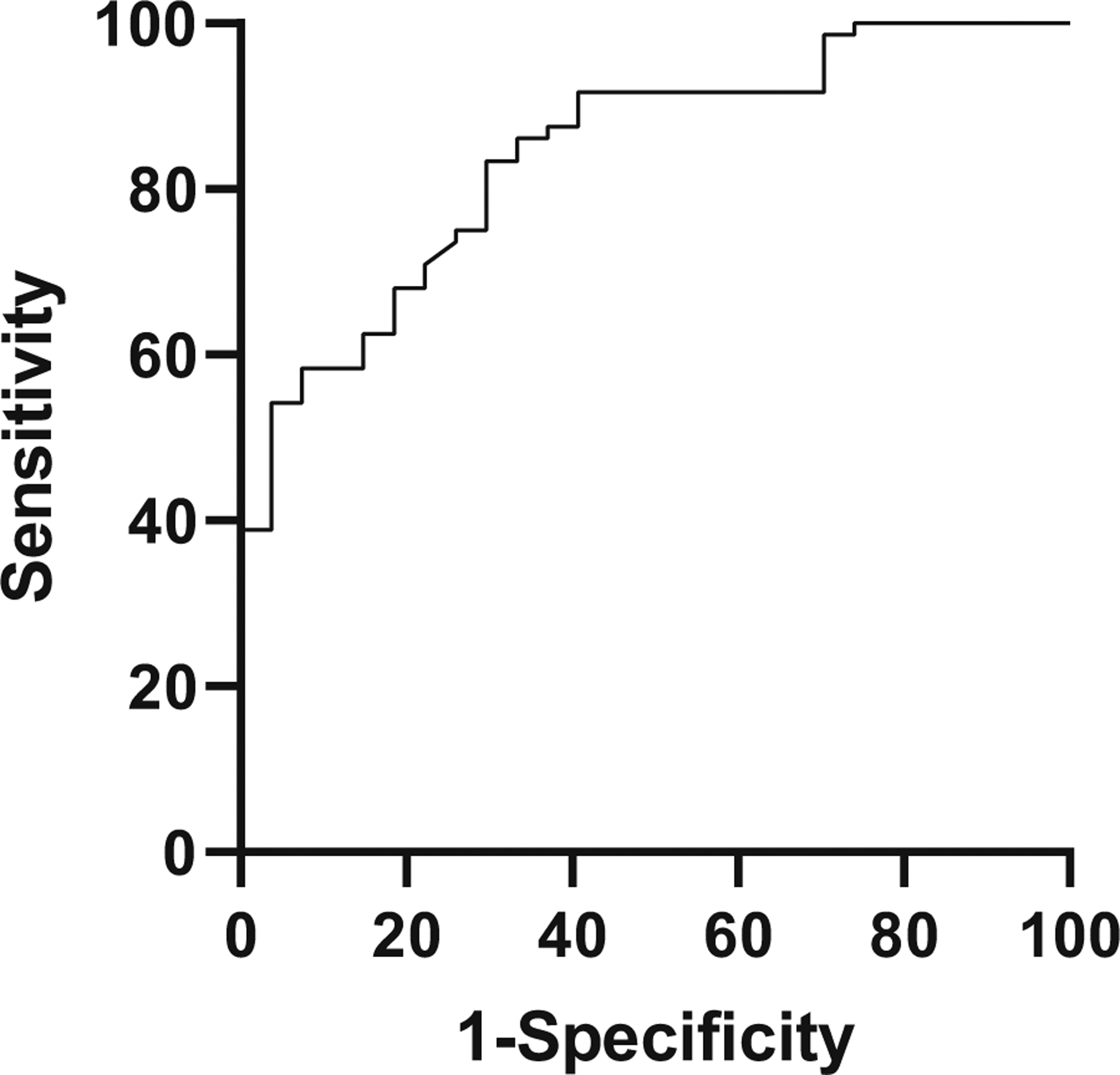
Fig. 4. Receiver–operator curve, to distinguish rule-out NEC from confirmed NEC.
With Stages 2 and 3 denoted as “positive” and rule-out NEC as “negative,” sensitivity is plotted on the Y-axis and 1-specificity or false positive rate on the X-axis. These parameters are optimized at an AMC change of −50% from baseline, which is 51% sensitive and 93% specific in the diagnosis of true NEC, with a positive likelihood ratio of 7.28.

References

    1. Patel RM, Kandefer S, Walsh MC, Bell EF, Carlo WA, Laptook AR, et al. Causes and timing of death in extremely premature infants from 2000 through 2011. N. Engl J Med 2015;372: 331–40. - PMC - PubMed
    1. Niño DF, Sodhi CP, Hackam DJ. Necrotizing enterocolitis: new insights into pathogenesis and mechanisms. Nat Rev Gastroenterol Hepatol. 2016;13:590–600. - PMC - PubMed
    1. Hackam D, Caplan M. Necrotizing enterocolitis: pathophysiology from a historical context. Semin Pediatr Surg. 2018;27:11–8. - PMC - PubMed
    1. Mara MA, Good M, Weitkamp J-H. Innate and adaptive immunity in necrotizing enterocolitis. Semin Fetal Neonatal Med. 2018;23: 394–9. - PMC - PubMed
    1. Neu J, Walker WA. Necrotizing enterocolitis. N Engl J Med. 2011;364:255–64 - PMC - PubMed