. 2020 Oct;88(4):629-636.
doi: 10.1038/s41390-020-0792-y. Epub 2020 Feb 1.

Dose-escalation trial of budesonide in surfactant for prevention of bronchopulmonary dysplasia in extremely low gestational age high-risk newborns (SASSIE)

Affiliations

Dose-escalation trial of budesonide in surfactant for prevention of bronchopulmonary dysplasia in extremely low gestational age high-risk newborns (SASSIE)

Cindy T McEvoy et al. Pediatr Res. 2020 Oct.

Abstract

Background: Initial trials of lung-targeted budesonide (0.25 mg/kg) in surfactant to prevent bronchopulmonary dysplasia (BPD) in premature infants have shown benefit; however, the optimal safe dose is unknown.

Methods: Dose-escalation study of budesonide (0.025, 0.05, 0.10 mg/kg) in calfactatant in extremely low gestational age neonates (ELGANs) requiring intubation at 3-14 days. Tracheal aspirate (TA) cytokines, blood budesonide concentrations, and untargeted blood metabolomics were measured. Outcomes were compared with matched infants receiving surfactant in the Trial Of Late SURFactant (TOLSURF).

Results: Twenty-four infants with mean gestational age 25.0 weeks and 743 g birth weight requiring mechanical ventilation were enrolled at mean age 6 days. Budesonide was detected in the blood of all infants with a half-life of 3.4 h. Of 11 infants with elevated TA cytokine levels at baseline, treatment was associated with sustained decrease (mean 65%) at all three dosing levels. There were time- and dose-dependent decreases in blood cortisol concentrations and changes in total blood metabolites. Respiratory outcomes did not differ from the historic controls.

Conclusions: Budesonide/surfactant had no clinical respiratory benefit at any dosing levels for intubated ELGANs. One-tenth the dose used in previous trials had minimal systemic metabolic effects and appeared effective for lung-targeted anti-inflammatory action.


Conflict of interest statement

The authors declare no competing interests.

Figures

Fig. 1
Fig. 1. Enrollment of study participants.
A total of 25 infants consented into the study (one set of twins). One parent withdrew consent in dosing level 3; therefore, eight infants were dosed at each dosing level. Dosing levels of budesonide in calfactant were: 0.025 mg/kg; 0.05 mg/kg; 0.10 mg/kg. ELGANs extremely low gestational age newborns.
Fig. 2
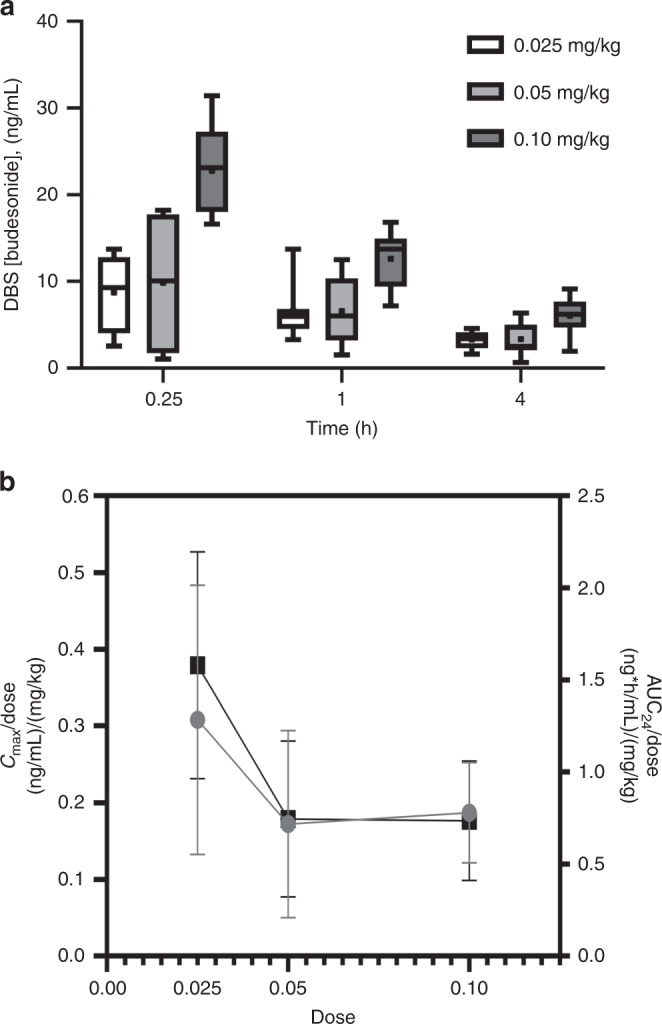
Fig. 2. Budesonide pharmokinetics in dried blood spots (DBS).
a Concentrations at 0.25, 1, and 4 h following the first dose in the 0.025 mg/kg (unfilled), 0.05 mg/kg (light gray filled), and 0.10 mg/kg (dark gray filled) dose cohorts. Whiskers represent minimum and maximum concentrations, boxes represent the 25th and 75th percentile, the central line represents the median, and the point represents the mean value. b Dose-normalized Cmax (gray) and AUC24 (black) for the three dosing cohorts. Relative to the administered dose, systemic budesonide exposure at the 0.025 mg/kg dose is greater than that observed for the other two dosing cohorts.
Fig. 3
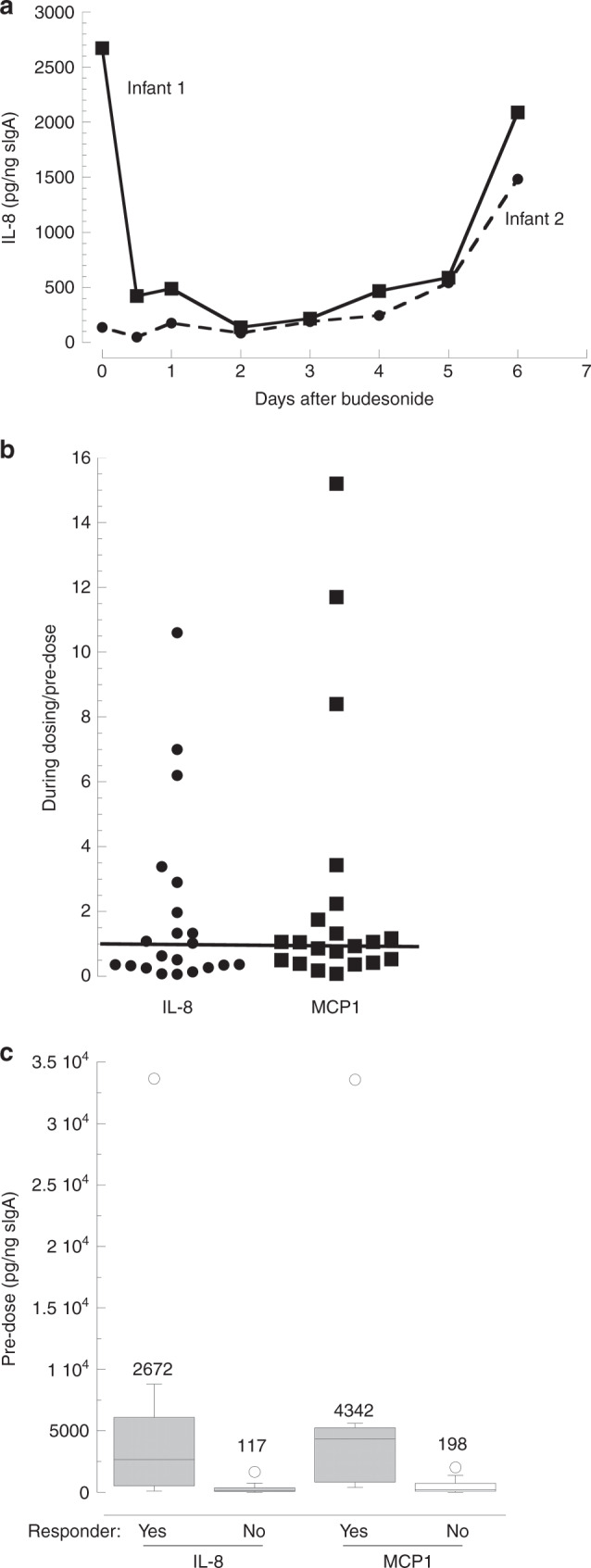
Fig. 3. Levels of IL-8 and MCP1 with budesonide treatment.
a Time course for tracheal aspirate (TA) IL-8 in two infants receiving five daily doses of 0.1 mg/kg budesonide. b Response of IL-8 and MCP1 to budesonide comparing TA levels during and before treatment. The post-treatment value is the mean for levels at 12 to 24 h after last dosing. The median values for all infants are 0.63 for IL-8 and 1.05 for MCP1 with 11/22 and 8/21 apparent responders (mean ratio <0.8), respectively. The line shows a ratio of 1.0. c Apparent responsiveness related to predosing levels of IL-8 and MCP1. Box plots with median values shown for each group of infants; p < 0.01 for yes vs. no for both chemokines by Mann−Whitney.
Fig. 4
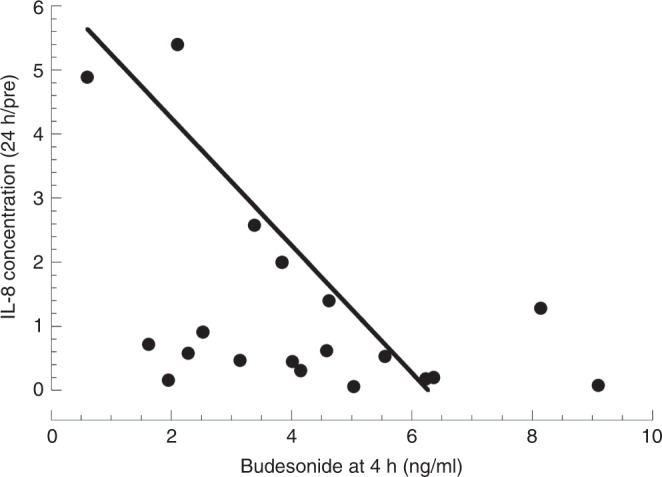
Fig. 4. IL-8 response and blood levels of budesonide.
The change in IL-8 at 24 h compared to the predose level is plotted against the blood level of budesonide at 4 h for 20 infants. R = 0.46, p = 0.04.
Fig. 5
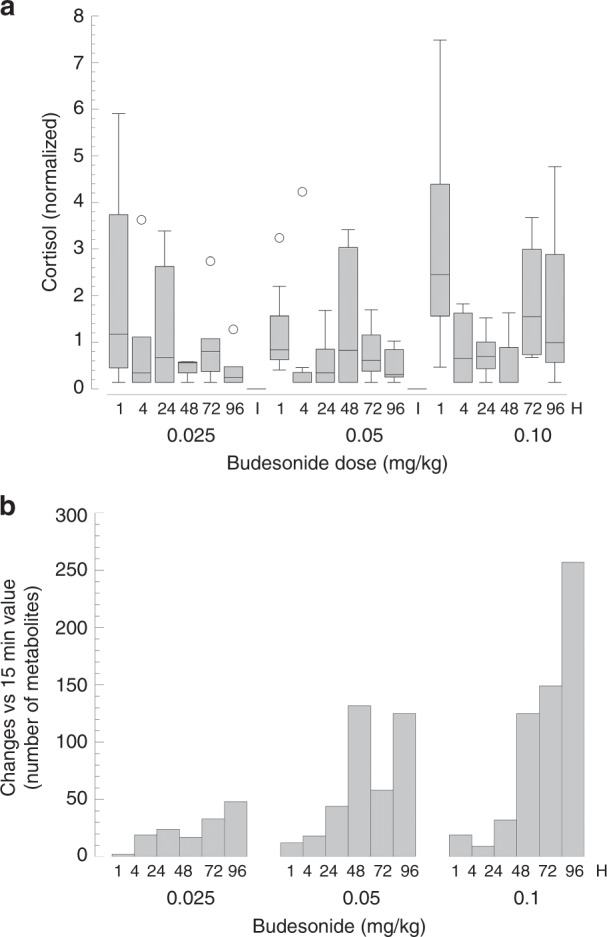
Fig. 5. Systemic effects of intratracheal budesonide treatment by MS:MS.
a Effect on blood cortisol by budesonide dose. Values at “1 h” combine results for both 15 min and 1 h, which were similar. Decreasing cortisol values with time was significant (p < 0.05 by two-way repeated measure ANOVA) for infants receiving 0.05 and 0.1 mg/kg budesonide. b Total number of significant changes in blood metabolites by budesonide dose over time. Data reflect increase or decrease with p < 0.05 compared to levels at 15 min using ANOVA. Total number of named metabolites was 829.

References

    1. Higgins RD, et al. Bronchopulmonary dysplasia: executive summary of a workshop. J. Pediatr. 2018;197:300–308. doi: 10.1016/j.jpeds.2018.01.043. - DOI - PMC - PubMed
    1. McEvoy CT, et al. Bronchopulmonary dysplasia: NHLBI Workshop on the Primary Prevention of Chronic Lung Diseases. Ann. Am. Thorac. Soc. 2014;11(Suppl 3):S146–S153. doi: 10.1513/AnnalsATS.201312-424LD. - DOI - PMC - PubMed
    1. Keller RL, et al. Bronchopulmonary dysplasia and perinatal characteristics predict 1-year respiratory outcomes in newborns born at extremely low gestational age: a prospective cohort study. J. Pediatr. 2017;187:89–97. doi: 10.1016/j.jpeds.2017.04.026. - DOI - PMC - PubMed
    1. Cheong JLY, Doyle LW. An update on pulmonary and neurodevelopmental outcomes of bronchopulmonary dysplasia. Semin. Perinatol. 2018;42:478–484. doi: 10.1053/j.semperi.2018.09.013. - DOI - PubMed
    1. Jobe AH, Bancalari E. Bronchopulmonary dysplasia. Am. J. Respir. Crit. Care Med. 2001;163:1723–1729. doi: 10.1164/ajrccm.163.7.2011060. - DOI - PubMed

Publication types