Alfuzosin and Its Effect on Ejaculatory Dysfunction: A Systematic Review
- PMID: 32009306
- PMCID: PMC7994660
- DOI: 10.5534/wjmh.180024
Alfuzosin and Its Effect on Ejaculatory Dysfunction: A Systematic Review
Abstract
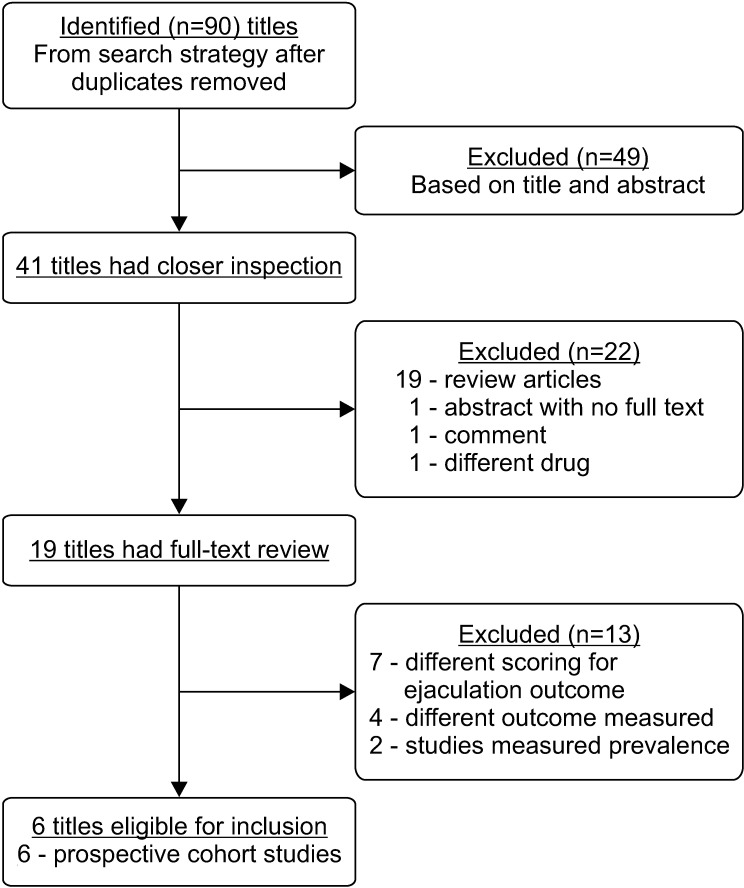
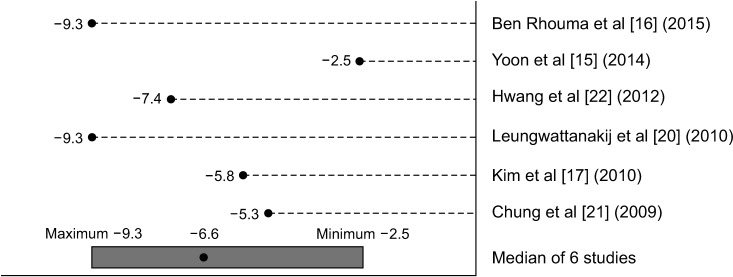
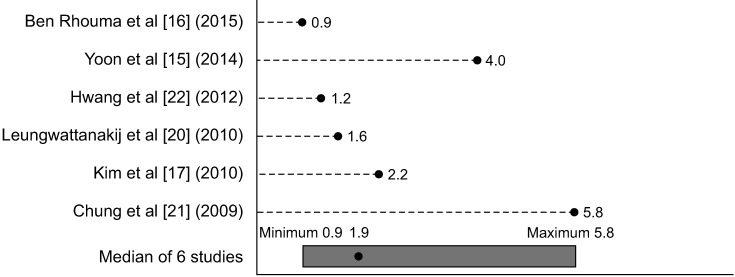
Studies have demonstrated that alfuzosin not only improves lower urinary tract symptoms (LUTS) but also appears to preserve ejaculatory dysfunction (EjD). The objective of this study was to evaluate the impact of alfuzosin on ejaculatory function using the 'Male Sexual Health Questionnaire (MSHQ)-EjD Short Form' - a validated, abridged-version of the 25-item MSHQ specifically assessing EjD. A systematic search of MEDLINE, PubMed, Scopus, Embase, and grey literature was performed in January 2017 to identify relevant cohort studies. Search terms were 'alfuzosin', 'benign prostatic hyperplasia', 'ejaculatory dysfunction' and their synonyms without exclusions. Six cohort studies conducted between 2008 to 2015 were selected for analysis. Three of these were conducted in Korea, one in Thailand, one in China, and one in Tunisia. Overall, 1,371 patients were enrolled in these studies with a median age of 62.3 years. All studies quantified patient LUTS and ejaculatory function using the International Prostate Symptom Score (IPSS) and MSHQ-EjD Short Form, respectively. IPSS had a median decrease of 6.6 while MSHQ-EjD had a median increase of 1.9. This review highlights the very real association between sexual function and LUTS. This systematic review confirms that alfuzosin may improve ejaculatory function in addition to LUTS and should be considered in men who are sexually active or who already complain of deteriorating ejaculation.
Keywords: Alfuzosin; Benign prostatic hyperplasia; Ejaculation; Lower urinary tract symptoms; Sexual dysfunction, Physiological.
Copyright © 2021 Korean Society for Sexual Medicine and Andrology.
Conflict of interest statement
Henry H. Woo has served on advisory boards for Astellas. The anothor authors have no potential conflicts of interest to disclose.
Figures
References
-
- Berry SJ, Coffey DS, Walsh PC, Ewing LL. The development of human benign prostatic hyperplasia with age. J Urol. 1984;132:474–479. - PubMed
-
- Jacobsen SJ, Jacobson DJ, Girman CJ, Roberts RO, Rhodes T, Guess HA, et al. Treatment for benign prostatic hyperplasia among community dwelling men: the Olmsted County study of urinary symptoms and health status. J Urol. 1999;162:1301–1306. - PubMed
-
- McConnell JD, Bruskewitz R, Walsh P, Andriole G, Lieber M, Holtgrewe HL, et al. The effect of finasteride on the risk of acute urinary retention and the need for surgical treatment among men with benign prostatic hyperplasia. Finasteride Long-Term Efficacy and Safety Study Group. N Engl J Med. 1998;338:557–563. - PubMed
-
- Roehrborn CG, McConnell JD, Lieber M, Kaplan S, Geller J, Malek GH, et al. Serum prostate-specific antigen concentration is a powerful predictor of acute urinary retention and need for surgery in men with clinical benign prostatic hyperplasia. PLESS Study Group. Urology. 1999;53:473–480. - PubMed
-
- Rosen R, Altwein J, Boyle P, Kirby RS, Lukacs B, Meuleman E, et al. Lower urinary tract symptoms and male sexual dysfunction: the multinational survey of the aging male (MSAM-7) Eur Urol. 2003;44:637–649. - PubMed
Publication types
LinkOut - more resources
Full Text Sources
Other Literature Sources