


Intrathecal nusinersen administration in adult spinal muscular atrophy patients with complex spinal anatomy
- PMID: 32010224
- PMCID: PMC6974755
- DOI: 10.1177/1756286419887616
Intrathecal nusinersen administration in adult spinal muscular atrophy patients with complex spinal anatomy
Abstract
Background: Intrathecal administration of nusinersen in adult spinal muscular atrophy (SMA) patients presents challenges owing to severe scoliosis and previous spinal surgery with metal implantation. In patients with a complex spinal situation, the potential risks of the intrathecal administration may lead to delayed treatment initiation.
Methods: In this study, we analyzed 53 CT-guided lumbar punctures of 11 adult nonambulatory SMA type 2 and 3 patients. All patients had scoliosis and six patients had previously undergone metal implantation.
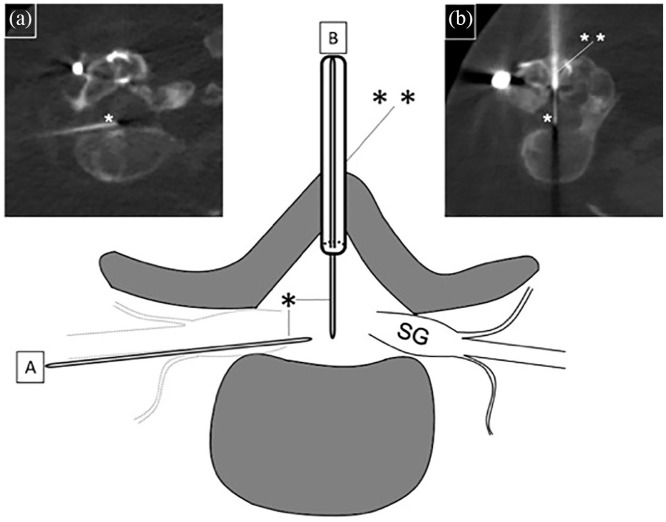
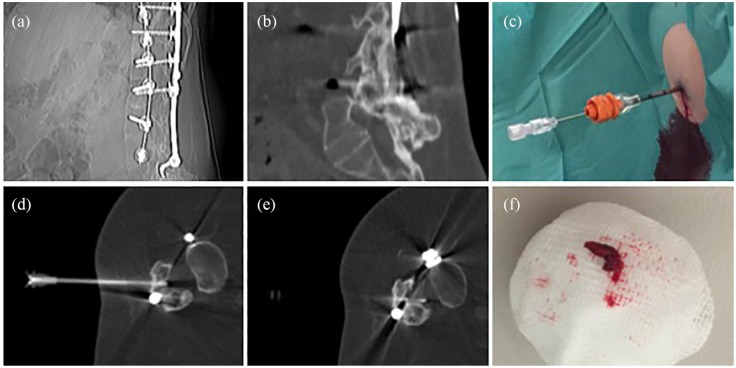
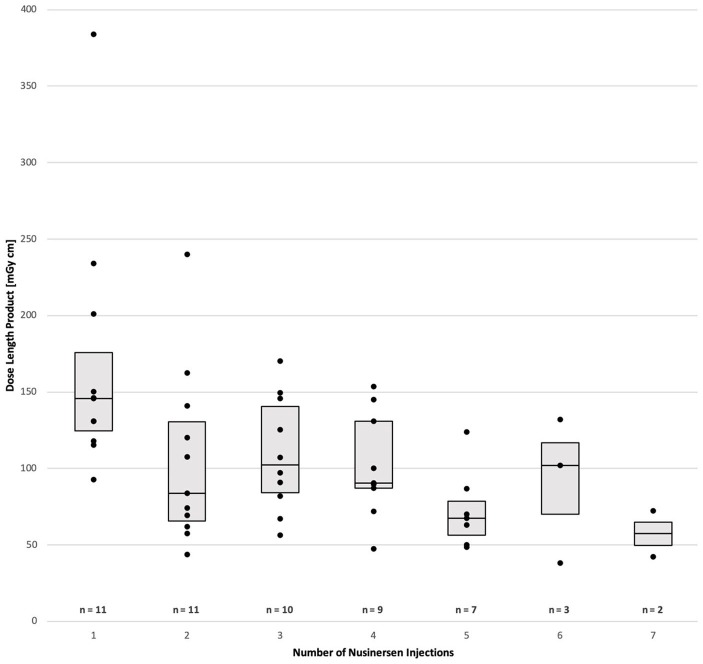
Results: Drug administration was successful in 100% of the patients and none of the patients opted for treatment discontinuation. Complete osseous fusion precluded conventional posterior interlaminar access in eight lumbar punctures in four patients, which required alternative routes including transforaminal punctures and translaminar drilling. Median duration of all lumbar punctures was 9 min and median radiation exposure was 100 mGy* cm. The most common adverse event was post-lumbar puncture syndrome that occurred in five lumbar punctures (9.4%).
Conclusions: Our data demonstrate that nusinersen can be successfully, safely, and rapidly administered in adult SMA patients with complex spinal conditions and suggest the translaminar drilling technique as an alternative delivery route. Therefore, intrathecal nusinersen treatment should not be withheld from patients because of severe spine deformities, however, drug efficacy in adult SMA patients needs to be investigated in further studies.
Keywords: computed tomography; radiation exposure; scoliosis; transforaminal; translaminar drill.
© The Author(s), 2020.
Conflict of interest statement
Conflict of interest statement: IC and MD received a travel grant from Biogen. PL received support for the organization of an independent symposium from Biogen. BF, VP, CZ, and CM report no disclosures.
Figures
References
-
- Lefebvre S, Bürglen L, Reboullet S, et al. Identification and characterization of a spinal muscular atrophy-determining gene. Cell 1995; 80: 155–165. - PubMed
-
- Finkel RS, Mercuri E, Darras BT, et al. Nusinersen versus sham control in infantile-onset spinal muscular atrophy. N Engl J Med 2017; 377: 1723–1732. - PubMed
-
- Mercuri E, Darras BT, Chiriboga CA, et al. Nusinersen versus sham control in later-onset spinal muscular atrophy. N Engl J Med 2018; 378: 625–635. - PubMed
-
- Wurster CD, Winter B, Wollinsky K, et al. Intrathecal administration of nusinersen in adolescent and adult SMA type 2 and 3 patients. J Neurol 2019; 266: 183–194. - PubMed
LinkOut - more resources
Full Text Sources
