Biosimilar candidate IBI305 plus paclitaxel/carboplatin for the treatment of non-squamous non-small cell lung cancer
- PMID: 32010577
- PMCID: PMC6976344
- DOI: 10.21037/tlcr.2019.12.23
Biosimilar candidate IBI305 plus paclitaxel/carboplatin for the treatment of non-squamous non-small cell lung cancer
Abstract
Background: Bevacizumab is a monoclonal antibody (mAb) against vascular endothelial growth factor (VEGF) and used for treatments of various cancers. Due to the high costs of bevacizumab treatments, a biosimilar provides an affordable alternative therapy for cancer patients.
Methods: In this randomized, double-blind, multicenter, phase 3 study, locally advanced, metastatic or recurrent non-squamous non-small cell lung cancer (NSCLC) patients with wild-type epidermal growth factor receptor were enrolled and randomized (1:1) into IBI305 or bevacizumab groups. Patients received 6 cycles of paclitaxel/carboplatin plus IBI305 or bevacizumab 15 mg/kg intravenously followed by IBI305 or bevacizumab 7.5 mg/kg maintenance until disease progression, unacceptable toxicity or death. The primary endpoint was confirmed objective response rate (ORR) by an independent radiological review committee (IRRC) and secondary endpoints included disease control rate (DCR), progression-free survival (PFS), duration of response (DOR), overall survival (OS) and safety.
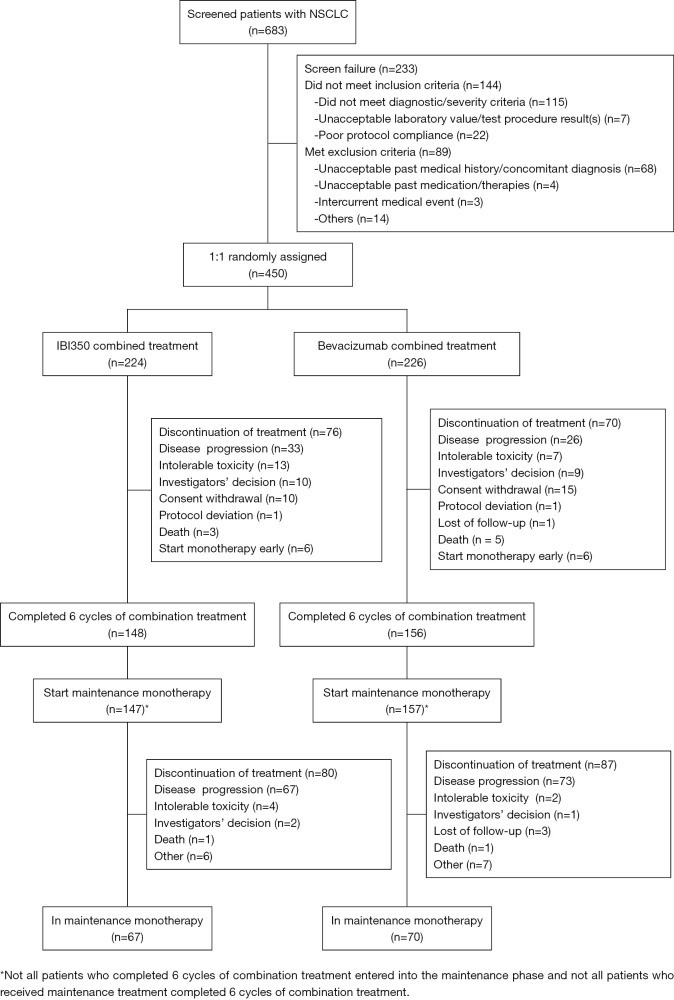
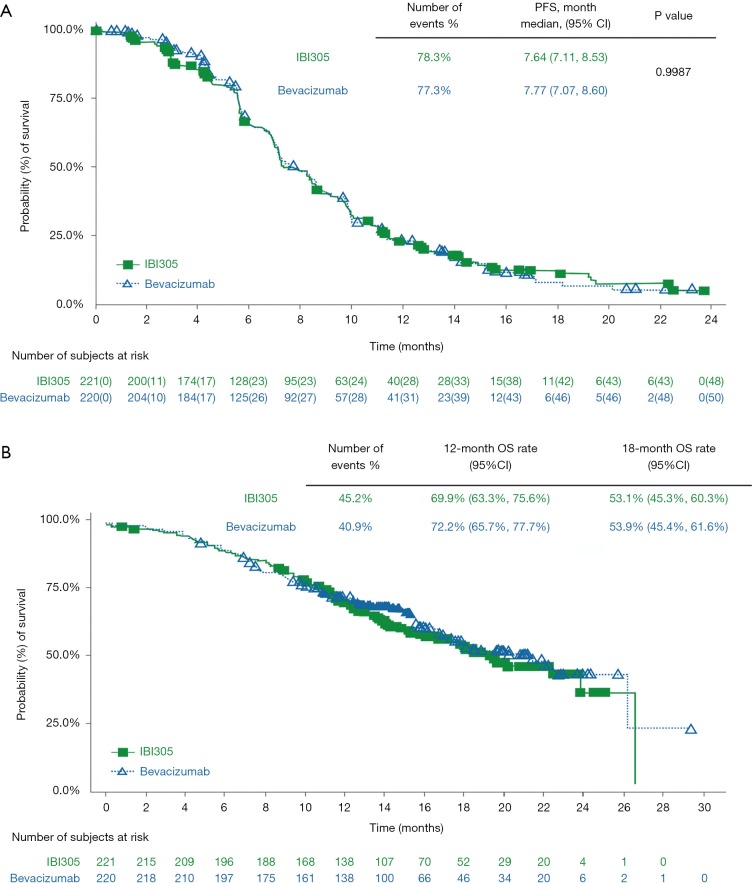
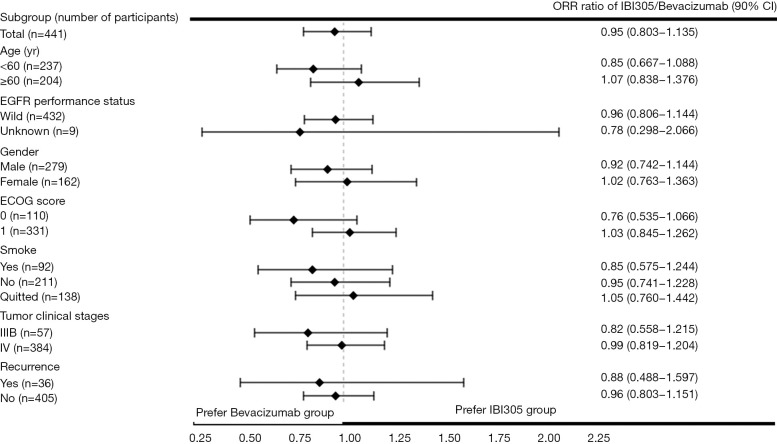
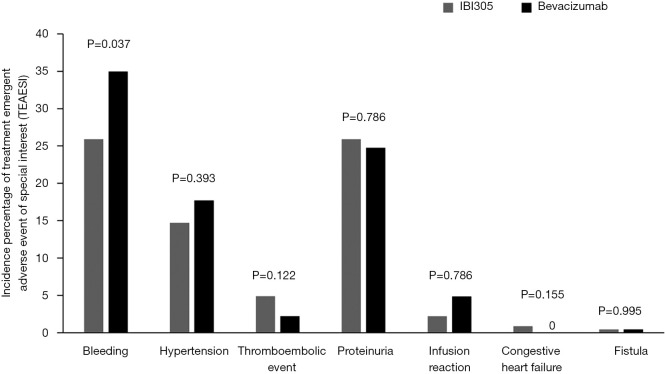
Results: A total of 450 NSCLC patients were enrolled (224 in IBI305 group and 226 in bevacizumab group). ORRs were 44.3% for IBI305 and 46.4% for bevacizumab, and the ORR ratio was 0.95 (90% CI: 0.803 to 1.135), within the predefined equivalence margin of 0.75 to 1.33. No significant difference in PFS (7.64 vs. 7.77 m, P=0.9987) was observed between the 2 groups. Serious adverse events (AEs) occurred in 33.5% (75/224) of patients in the IBI305 group and 37.6% (85/226) in the bevacizumab group. AEs ≥ grade 3 were similar in the IBI305 and bevacizumab groups [84.4% (189/224) vs. 89.8% (203/226), P=0.085].
Conclusions: IBI305 is similar to bevacizumab in terms of efficacy and safety.
Trial registration: Clinicaltrials.org Identifier: NCT02954172. Registered on 3 November 2016. Https://clinicaltrials.gov/.
Keywords: Bevacizumab; IBI305; biosimilar; non-small cell lung cancer (NSCLC); vascular endothelial growth factor (VEGF).
2019 Translational Lung Cancer Research. All rights reserved.
Conflict of interest statement
Conflicts of Interest: L Zhang received research grants from Eli Lily and Pfizer. H Zhou, J Yu and X Sun are staff of Innovent Biologics, Inc. The other authors have no conflicts of interest to declare.
Figures
References
-
- Ahmadizar F, Onland-Moret NC, de Boer A, et al. Efficacy and Safety Assessment of the Addition of Bevacizumab to Adjuvant Therapy Agents in Cancer Patients: A Systematic Review and Meta-Analysis of Randomized Controlled Trials. PLoS One 2015;10:e0136324. 10.1371/journal.pone.0136324 - DOI - PMC - PubMed
-
- Avastin (bevacizumab) Prescribing Information. Available online: https://www.accessdata.fda.gov/drugsatfda_docs/label/2016/125085s317lbl.pdf
-
- Agency EM. Avastin (Summary of Product Characteristics). 2018.
Associated data
LinkOut - more resources
Full Text Sources
Medical
Research Materials