Predicting physical activity among cancer survivors: Meta-analytic path modeling of longitudinal studies
- PMID: 32011152
- PMCID: PMC7203971
- DOI: 10.1037/hea0000845
Predicting physical activity among cancer survivors: Meta-analytic path modeling of longitudinal studies
Abstract
Objective: We conducted meta-analyses and meta-analytic structural equation modeling of longitudinal studies among cancer survivors to (a) quantify associations between psychosocial predictors and physical activity, (b) test how psychosocial predictors combine to influence physical activity, and (c) identify study, demographic, and clinical characteristics that moderate associations.
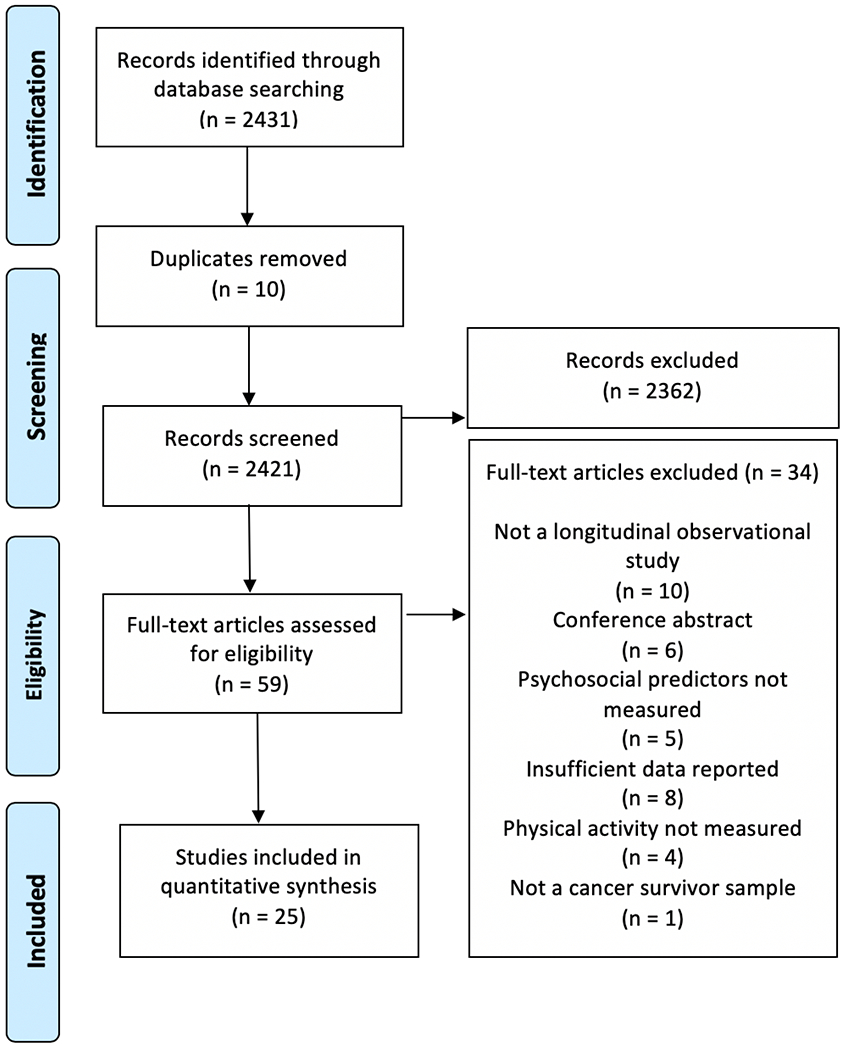
Method: Eligible studies used a longitudinal, observational design, included a sample of cancer survivors, and measured both a psychosocial predictor at baseline and physical activity at a later time-point. Of 2,431 records located through computerized searches, 25 independent tests (N = 5,897) met the inclusion criteria for the review. Random effects meta-analyses and meta-analytic structural equation modeling were conducted.
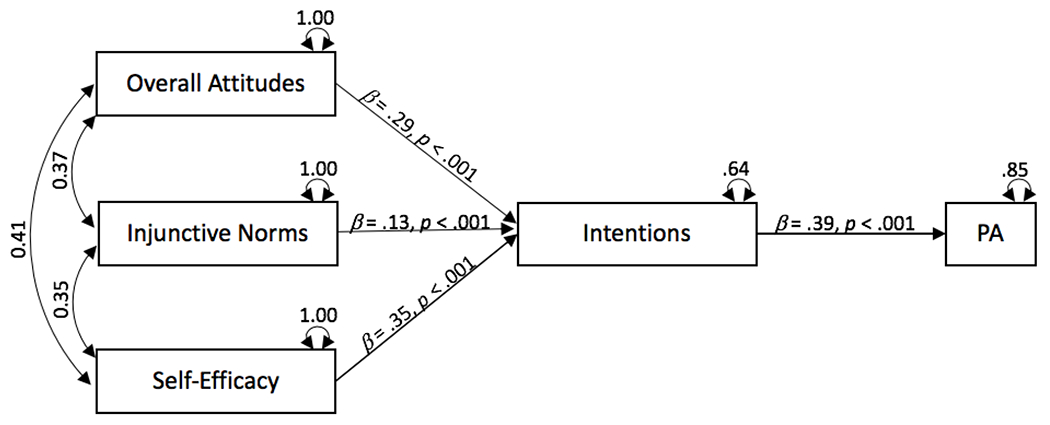
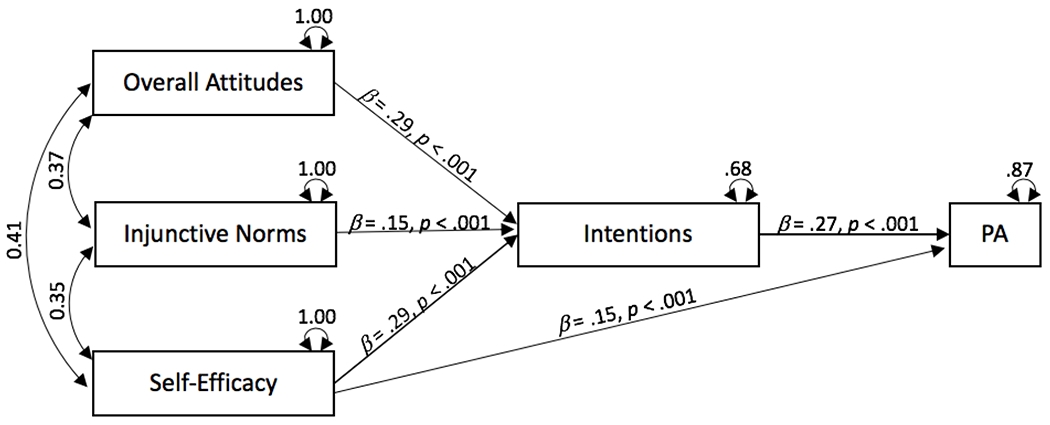
Results: Eight psychosocial predictors of physical activity were identified. Self-efficacy (r+ = 0.26) and intentions (r+ = 0.33) were the strongest predictors in bivariate analyses. The structural equation models included attitudes, injunctive norms, self-efficacy, intentions, and physical activity (k = 22, N = 4,385). The model with the best fit, χ2(2) = 0.11, p = .95, root mean square error of approximation = .00, comparative fit index = 1.00, Tucker-Lewis index = 1.00, indicated that all specified paths were significant. Intentions were the strongest predictor of physical activity (β = 0.27, p < .001), and attitudes and self-efficacy were strong predictors of intentions (both βs = 0.29, ps < .001). Few significant moderators were observed.
Conclusion: This review indicates that self-efficacy and intentions are direct predictors of physical activity in cancer survivors. Further, attitudes and norms predict physical activity through intentions. Findings inform intervention development to increase physical activity engagement among cancer survivors. (PsycINFO Database Record (c) 2020 APA, all rights reserved).
Figures
References
-
- *Ajzen I (1991). The Theory of Planned Behavior. Organizational Behavior and Human Decision Processes, 50(2), 179–211. 10.1016/0749-5978(91)90020-T - DOI
-
- *Ajzen I (2002). Perceived Behavioral Control, Self-Efficacy, Locus of Control, and the Theory of Planned Behavior. Journal of Applied Social Psychology, 32(4), 665–683. doi:DOI10.1111/j.1559-1816.2002.tb00236.x - DOI
Publication types
MeSH terms
Grants and funding
LinkOut - more resources
Full Text Sources
Medical
Miscellaneous