


Advances in Occurrence, Importance, and Mycotoxin Control Strategies: Prevention and Detoxification in Foods
- PMID: 32012820
- PMCID: PMC7074356
- DOI: 10.3390/foods9020137
Advances in Occurrence, Importance, and Mycotoxin Control Strategies: Prevention and Detoxification in Foods
Abstract
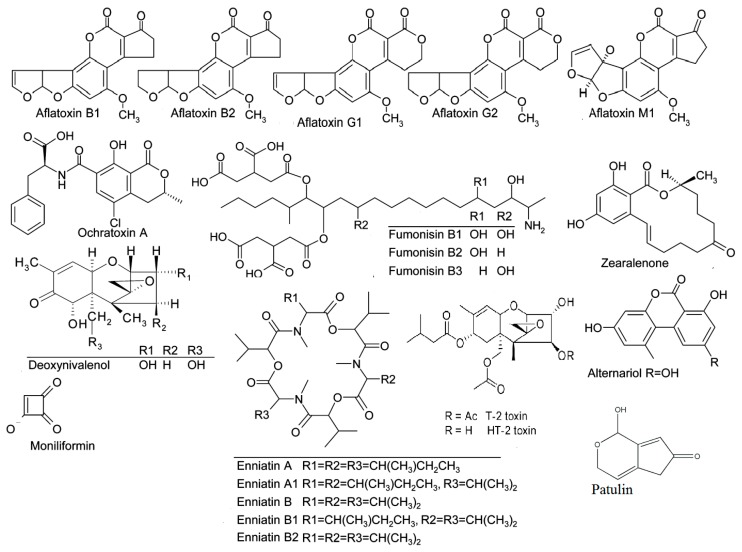
Mycotoxins are toxic substances that can infect many foods with carcinogenic, genotoxic, teratogenic, nephrotoxic, and hepatotoxic effects. Mycotoxin contamination of foodstuffs causes diseases worldwide. The major classes of mycotoxins that are of the greatest agroeconomic importance are aflatoxins, ochratoxins, fumonisins, trichothecenes, emerging Fusarium mycotoxins, enniatins, ergot alkaloids, Alternaria toxins, and patulin. Thus, in order to mitigate mycotoxin contamination of foods, many control approaches are used. Prevention, detoxification, and decontamination of mycotoxins can contribute in this purpose in the pre-harvest and post-harvest stages. Therefore, the purpose of the review is to elaborate on the recent advances regarding the occurrence of main mycotoxins in many types of important agricultural products, as well as the methods of inactivation and detoxification of foods from mycotoxins in order to reduce or fully eliminate them.
Keywords: aflatoxins; decontamination; detoxification; food safety; foodstuffs; fumonisins; mycotoxins; occurrence; ochratoxins; risk.
Conflict of interest statement
The authors declare no conflicts of interest.
Figures
References
-
- Tola M., Kebede B. Occurrence, importance and control of mycotoxins: A review. Cogent Food Agric. 2016;2:1–12. doi: 10.1080/23311932.2016.1191103. - DOI
-
- Mousavi Khaneghah A., Fakhri Y., Gahruie H.H., Niakousari M., Sant’Ana A.S. Mycotoxins in cereal-based products during 24 years (1983–2017): A global systematic review. Trends Food Sci. Technol. 2019;91:95–105. doi: 10.1016/j.tifs.2019.06.007. - DOI
Publication types
LinkOut - more resources
Full Text Sources
