


Investigating usability of mobile health applications in Bangladesh
- PMID: 32013965
- PMCID: PMC6998368
- DOI: 10.1186/s12911-020-1033-3
Investigating usability of mobile health applications in Bangladesh
Abstract
Background: Lack of usability can be a major barrier for the rapid adoption of mobile services. Therefore, the purpose of this paper is to investigate the usability of Mobile Health applications in Bangladesh.
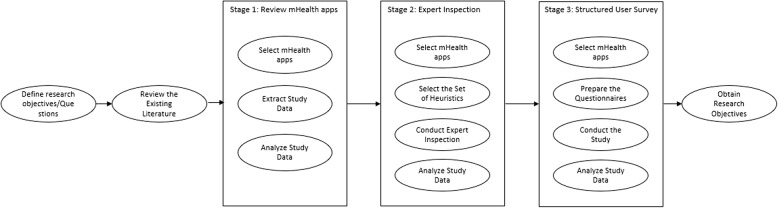
Method: We followed a 3-stage approach in our research. First, we conducted a keyword-based application search in the popular app stores. We followed the affinity diagram approach and clustered the found applications into nine groups. Second, we randomly selected four apps from each group (36 apps in total) and conducted a heuristic evaluation. Finally, we selected the highest downloaded app from each group and conducted user studies with 30 participants.
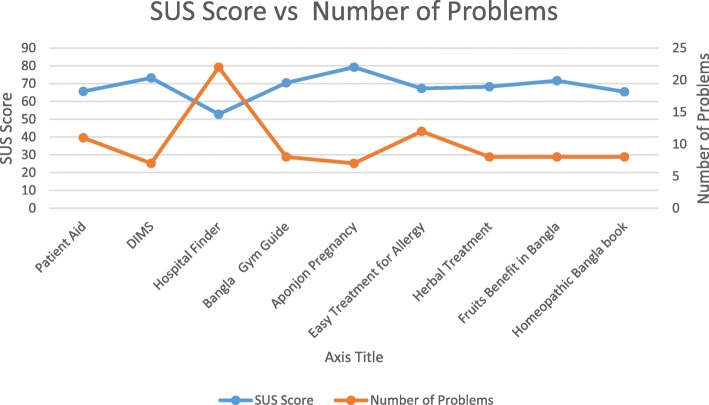
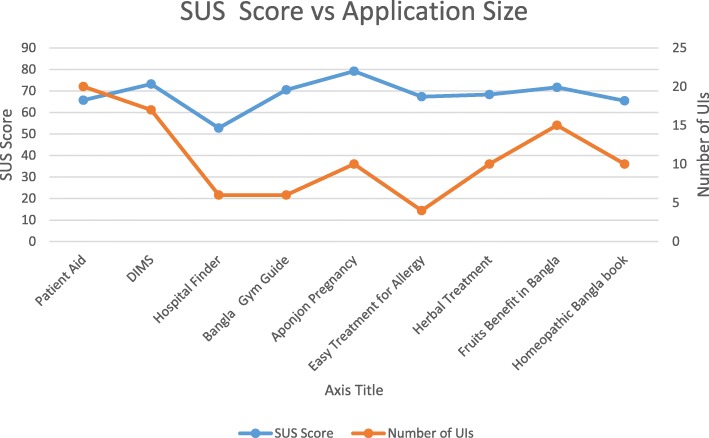
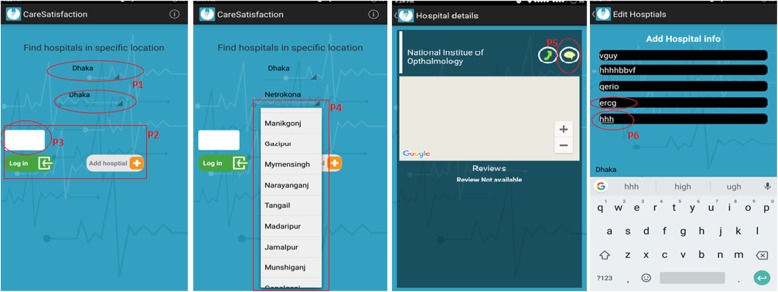
Results: We found 61% usability problems are catastrophe or major in nature from heuristic inspection. The most (21%) violated heuristic is aesthetic and minimalist design. The user studies revealed low System Usability Scale (SUS) scores for those apps that had a high number of usability problems based on the heuristic evaluation. Thus, the results of heuristic evaluation and user studies complement each other.
Conclusion: Overall, the findings suggest that the usability of the mobile health apps in Bangladesh is not satisfactory in general and could be a potential barrier for wider adoption of mobile health services.
Keywords: Bangladesh; Health informatics; Human-computer interaction (HCI); Mobile health; System usability scale; Usability; Usability evaluation; mHealth applications.
Conflict of interest statement
The authors declare that they have no competing interests.
Figures
References
-
- Istepanian R, Laxminarayan S, Pattichis CS. M-health. New York: Springer Science+ Business Media, Incorporated; 2006.
-
- Kay M, Santos J, Takane M. mHealth: new horizons for health through mobile technologies. World Health Organ. 2011;64:66–71.
-
- Rotheram-Borus MJ, Le Roux IM, Tomlinson M, Mbewu N, Comulada WS, Le Roux K, Stewart J, O’Connor MJ, Hartley M, Desmond K, et al. Philani Plus (+): a Mentor Mother community health worker home visiting program to improve maternal and infants’ outcomes. Prev Sci. 2011;12:372–388. doi: 10.1007/s11121-011-0238-1. - DOI - PMC - PubMed
Publication types
MeSH terms
LinkOut - more resources
Full Text Sources
Medical
Research Materials
