


Context, complexity and process in the implementation of evidence-based innovation: a realist informed review
- PMID: 32013977
- PMCID: PMC6998254
- DOI: 10.1186/s12913-020-4935-y
Context, complexity and process in the implementation of evidence-based innovation: a realist informed review
Abstract
Background: This review of scholarly work in health care knowledge translation advances understanding of implementation components that support the complete and timely integration of new knowledge. We adopt a realist approach to investigate what is known from the current literature about the impact of, and the potential relationships between, context, complexity and implementation process.
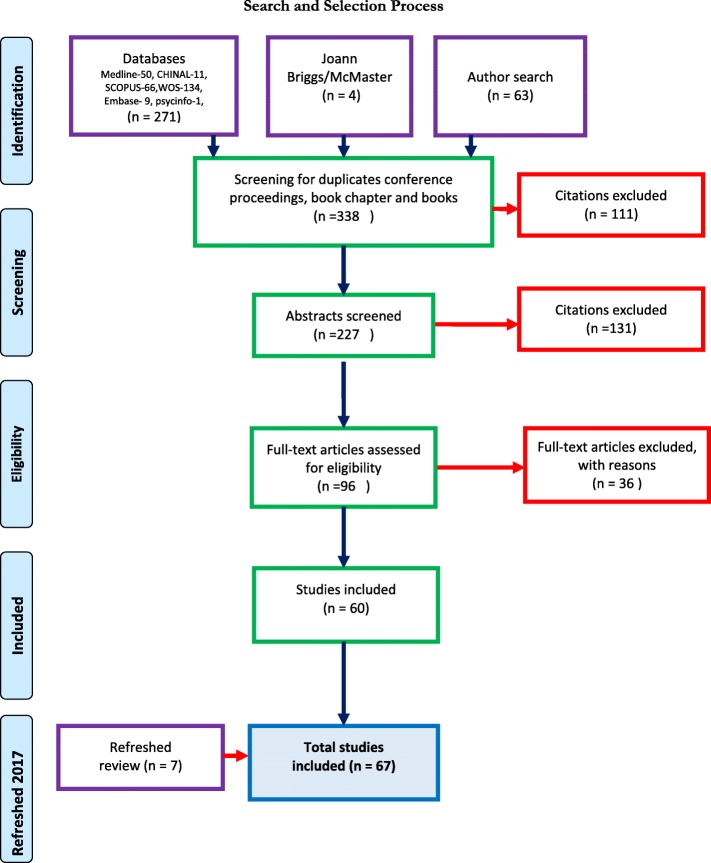
Methods: Informed by two distinct pathways, knowledge utilization and knowledge translation, we utilize Rogers' Diffusion of Innovations theory (DOI) and Harvey and Kitson's integrated- Promoting Action on Research Implementation in Health Service framework (PARIHS) to ground this review. Articles from 5 databases; Medline, Scopus, PsycInfo, Web of Science, and Google Scholar and a search of authors were retrieved. Themes and patterns related to these implementation components were extracted. Literature was selected for inclusion by consensus. Data extraction was iterative and was moderated by the authors.
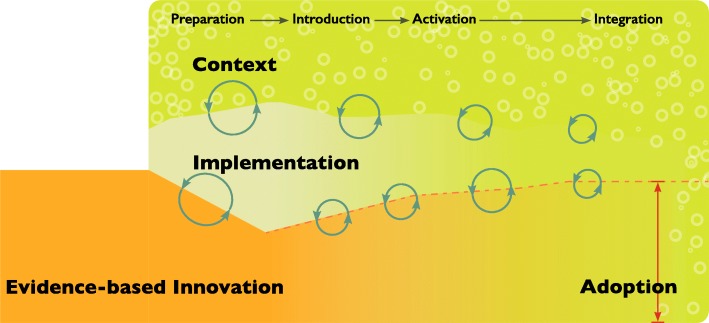
Results: A total of 67 articles were included in the review. Context was a central component to implementation. It was not clear how and to what extent context impacted implementation. Complexity was found to be a characteristic of context, implementation process, innovations and a product of the relationship between these three elements. Social processes in particular were reported as influential however; descriptions of how these social process impact were limited. Multiple theoretical and operational models were found to ground implementation processes. We offer an emerging conceptual model to illustrate the key discoveries.
Conclusions: The review findings indicate there are dynamic relationship between context, complexity and implementation process for enhancing uptake of evidence-based knowledge in hospital settings. These are represented in a conceptual model. Limited empiric evidence was found to explain the nature of the relationships.
Keywords: Implementation; complexity; context; evidence utilization; health care; innovation; knowledge translation.
Conflict of interest statement
The authors declare that they have no competing interests.
Figures
References
-
- Cummings GG, Estabrooks CA, Midodzi WK, Wallin L, Hayduk L. Influence of organizational characteristics and context on research utilization. Nurs Res. 2007;56(4):S24-S39. - PubMed
-
- Rogers E M. Diffusion of innovations. Diffusion of innovations. 5. New York: Free Press; 2003.
-
- McKibbon KA, Lokker C, Wilczynski NL, Ciliska D, Dobbins M, Davis DA, et al. A cross-sectional study of the number and frequency of terms used to refer to knowledge translation in a body of health literature in 2006: a Tower of Babel? Implement Sci. 2010;5:16. doi: 10.1186/1748-5908-5-16. - DOI - PMC - PubMed
Publication types
MeSH terms
LinkOut - more resources
Full Text Sources
Medical
