


A 4-gene signature from histologically normal surgical margins predicts local recurrence in patients with oral carcinoma: clinical validation
- PMID: 32015424
- PMCID: PMC6997450
- DOI: 10.1038/s41598-020-58688-y
A 4-gene signature from histologically normal surgical margins predicts local recurrence in patients with oral carcinoma: clinical validation
Abstract
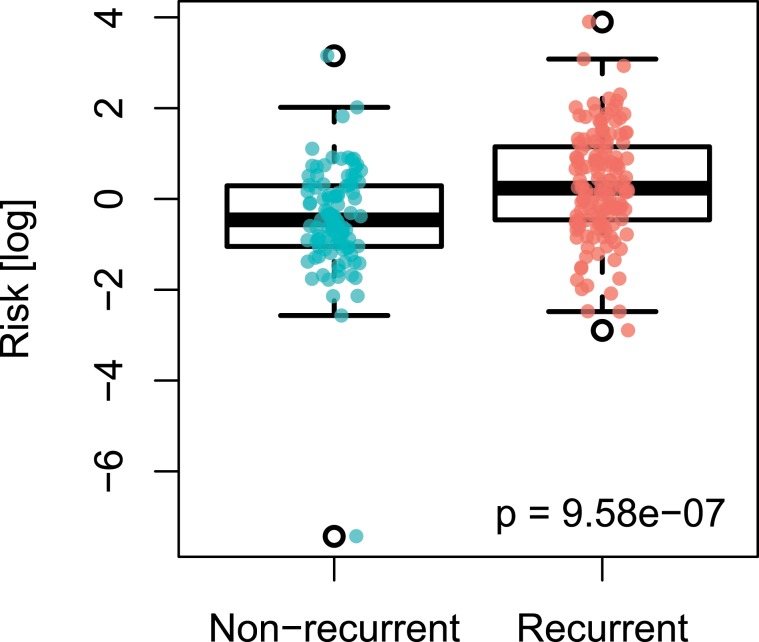
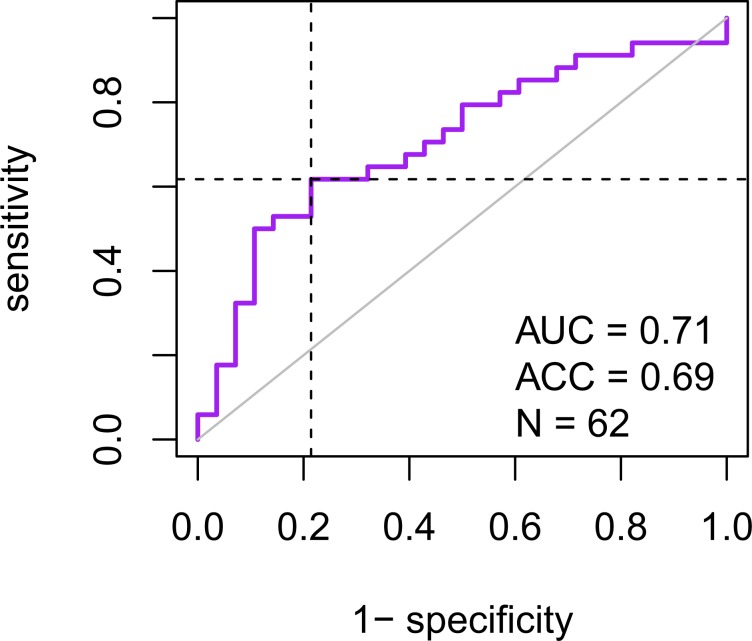
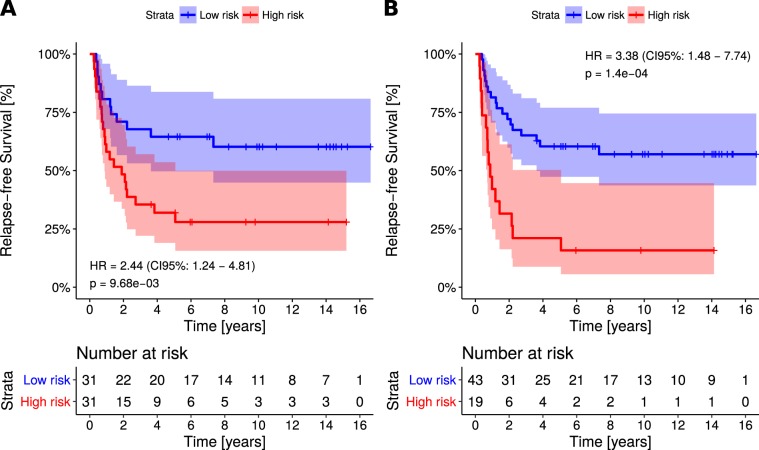
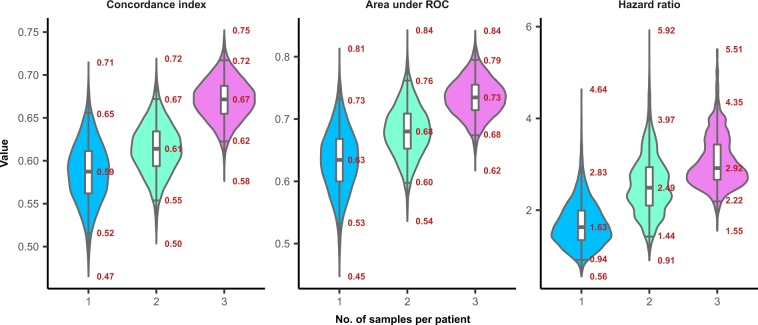
Prognostic biomarkers for recurrence of Oral Squamous Cell Carcinoma (OSCC) are urgently needed. We aimed to independently validate a 4-gene expression signature (MMP1, COL4A1, P4HA2, THBS2) predictive of OSCC recurrence risk. Gene expression was measured using Nanostring nCounter® in 245 histologically normal surgical resection margins from 62 patients. Association between risk scores for individual patients and recurrence was assessed by Kaplan-Meier analysis. Signature performance was quantified by concordance index (CI), hazard ratio (HR) and the area under receiver operating characteristics (AUC). Risk scores for recurrence were significantly higher than recurrence-free patients (p = 9.58e-7, Welch's t-test). A solid performance of the 4-gene signature was determined: CI = 0.64, HR = 3.38 (p = 1.4E-4; log-rank test), AUC = 0.71. We showed that three margins per patient are sufficient to preserve predictive performance (CI = 0.65; HR = 2.92; p = 2.94e-3; AUC = 0.71). Association between the predicted risk scores and recurrence was assessed and showed HR = 2.44 (p = 9.6E-3; log-rank test, N = 62). Signature performance analysis was repeated using an optimized threshold (70th percentile of risks), resulting in HR = 3.38 (p = 1.4E-4; log-rank test, N = 62). The 4-gene signature was validated as predictive of recurrence risk in an independent cohort of patients with resected OSCC and histologically negative margins, and is potentially applicable for clinical decision making on adjuvant treatment and disease monitoring.
Conflict of interest statement
The authors declare no competing interests.
Figures
References
-
- Feller L, Lemmer J. Oral Squamous Cell Carcinoma: Epidemiology, Clinical Presentation and Treatment. J. Cancer Ther. 2012;03:263–268. doi: 10.4236/jct.2012.34037. - DOI
-
- Weijers M, Snow GB, Bezemer PD, Van Der Waal I. The clinical relevance of epithelial dysplasia in the surgical margins of tongue and floor of mouth squamous cell carcinoma with regard to local recurrence; an analysis of 37 patients. J Oral Pathol Med. 2002;37:11–15. doi: 10.1034/j.1600-0714.2002.310103.x. - DOI - PubMed
Publication types
MeSH terms
Substances
LinkOut - more resources
Full Text Sources
Medical
Miscellaneous
