


The Maternal Nutritional Buffering Model: an evolutionary framework for pregnancy nutritional intervention
- PMID: 32015877
- PMCID: PMC6990448
- DOI: 10.1093/emph/eoz037
The Maternal Nutritional Buffering Model: an evolutionary framework for pregnancy nutritional intervention
Abstract
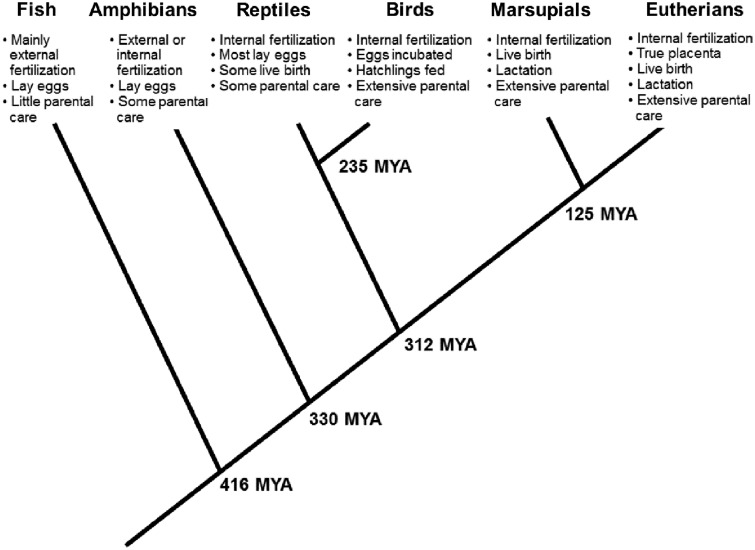
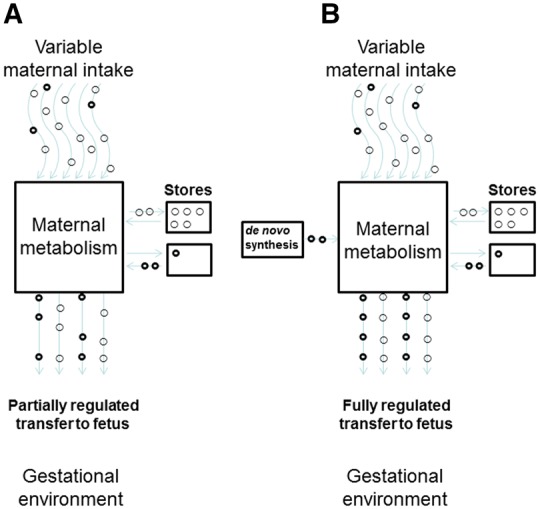
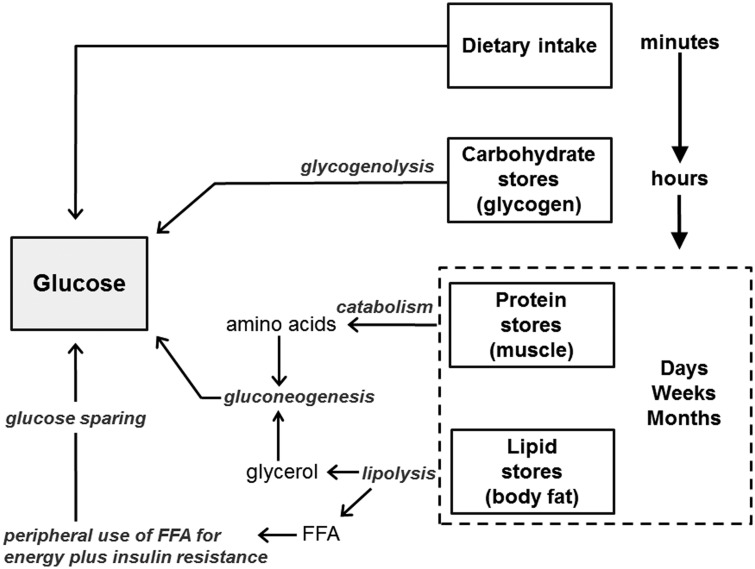
Evidence that fetal nutrition influences adult health has heightened interest in nutritional interventions targeting pregnancy. However, as is true for other placental mammals, human females have evolved mechanisms that help buffer the fetus against short-term fluctuations in maternal diet and energy status. In this review, we first discuss the evolution of increasingly elaborate vertebrate strategies of buffering offspring from environmental fluctuations during development, including the important innovation of the eutherian placenta. We then present the Maternal Nutritional Buffering Model, which argues that, in contrast to many micronutrients that must be derived from dietary sources, the effects of short-term changes in maternal macronutrient intake during pregnancy, whether due to a deficit or supplementation, will be minimized by internal buffering mechanisms that work to ensure a stable supply of essential resources. In contrast to the minimal effects of brief macronutrient supplementation, there is growing evidence that sustained improvements in early life and adult pre-pregnancy nutrition could improve birth outcomes in offspring. Building on these and other observations, we propose that strategies to improve fetal macronutrient delivery will be most effective if they modify the pregnancy metabolism of mothers by targeting nutrition prior to conception and even during early development, as a complement to the conventional focus on bolstering macronutrient intake during pregnancy itself. Our model leads to the prediction that birth weight will be more strongly influenced by the mother's chronic pre-pregnancy nutrition than by pregnancy diet, and highlights the need for policy solutions aimed at optimizing future, intergenerational health outcomes. Lay summary: We propose that strategies to improve fetal macronutrient delivery will be most effective if they modify the pregnancy metabolism of mothers by targeting nutrition prior to conception and even during early development, as a complement to the conventional focus on bolstering macronutrient intake during pregnancy itself.
Keywords: DOHaD; birth outcomes; fetal programming; placenta; pregnancy; supplementation.
� The Author(s) 2020. Published by Oxford University Press on behalf of the Foundation for Evolution, Medicine, and Public Health.
Figures
References
-
- Barker DJ, Godfrey KM, Gluckman PD. et al. Fetal nutrition and cardiovascular disease in adult life. Lancet 1993;341:938–41. - PubMed
-
- Schwarzenberg SJ, Georgieff MK.. Advocacy for improving nutrition in the first 1000 days to support childhood development and adult health. Pediatrics 2018;141:e20173716.. - PubMed
-
- Mulligan CJ. Early environments, stress, and the epigenetics of human health. Annu Rev Anthropol 2016;45:233–49.
Publication types
LinkOut - more resources
Full Text Sources
