


Radiation dose response of neurologic symptoms during conformal radiotherapy for diffuse intrinsic pontine glioma
- PMID: 32016716
- PMCID: PMC7080561
- DOI: 10.1007/s11060-020-03415-w
Radiation dose response of neurologic symptoms during conformal radiotherapy for diffuse intrinsic pontine glioma
Abstract
Purpose: To estimate the rate and magnitude of neurologic symptom change during radiation therapy (RT) and impact of symptom change on survival outcomes in patients with diffuse intrinsic pontine glioma (DIPG).
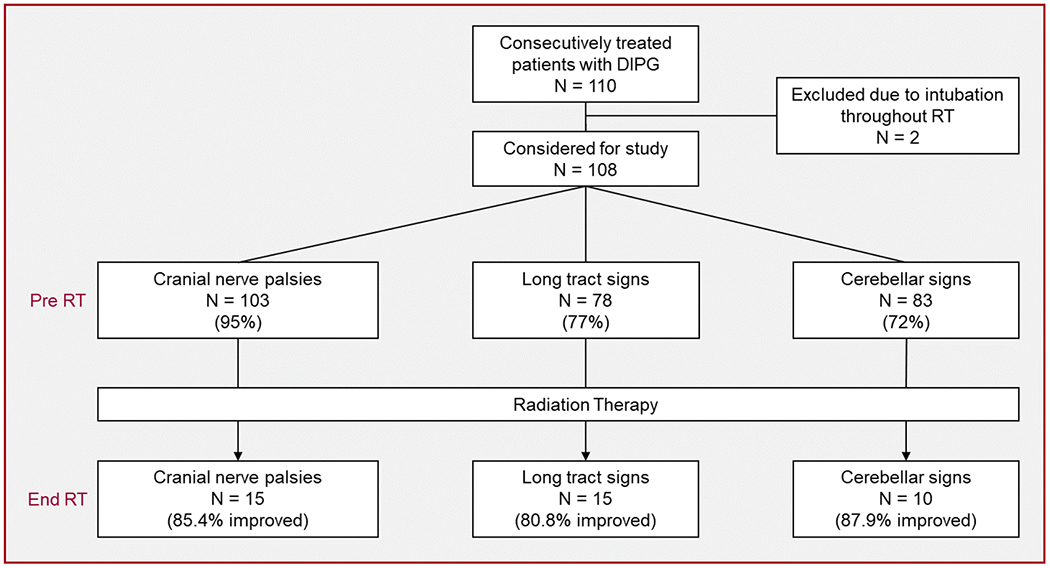
Methods: From 2006 to 2014, 108 patients with newly diagnosed DIPG were treated with conventionally fractionated radiation therapy (RT) to 54 Gy (median) at our institution. The presence and severity of neurologic symptoms related to cranial neuropathy (CN) and cerebellar (CB) and long-tract (LT) signs was reviewed before and weekly during RT for each patient. The rate and magnitude of change for each symptom category was evaluated according to accumulated RT dose. The impact of clinical factors and radiation dose-volume parameters was determined using Cox proportional hazards models.
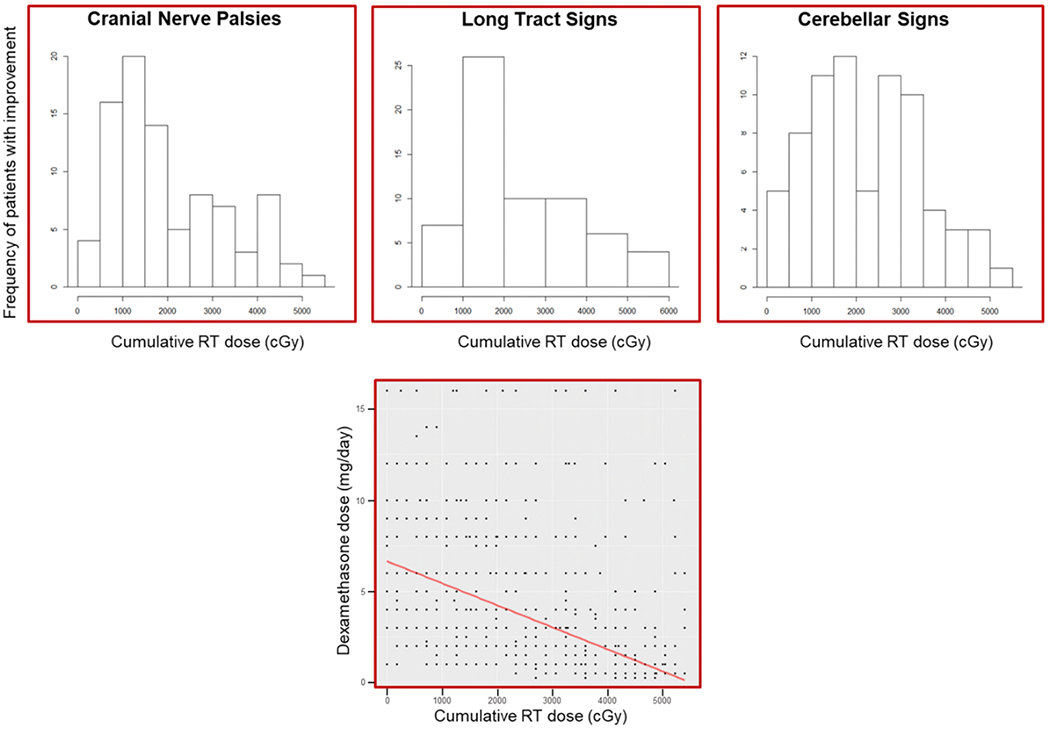
Results: Median dose to first sign of symptomatic improvement was 16.2 Gy (CN), 19.8 Gy (LT) and 21.6 Gy (CB). Most patients showed an improvement by 20 Gy. Larger uninvolved brainstem volume, alone or normalized to total brain (TB) or posterior fossa volume (PF), was associated with shorter time to LT sign improvement (P = 0.044, P = 0.033, and P = 0.05, respectively). Patients with any improvement in CN experienced significantly, yet modestly, prolonged progression-free survival (PFS) and overall survival (OS) (P = 0.002 and P = 0.008, respectively). Tumor volume, with or without normalization to TB or PF, was not significantly associated with PFS or OS.
Conclusions: Low cumulative RT doses resulted in neurologic improvement in most patients with DIPG. The volume of brainstem spared by tumor influenced time to symptomatic improvement. Neurologic improvement during RT was associated with superior survival.
Keywords: Diffuse intrinsic pontine glioma; Diffuse midline glioma; Dose response; Neurologic symptoms; Radiation therapy.
Conflict of interest statement
Figures

References
-
- Donaldson SS, Laningham F, Fisher PG. Advances toward an understanding of brainstem gliomas. J. Clin Oncol 2006;24(8):1266–1272. - PubMed
-
- Hargrave D, Bartels U, Bouffet E. Diffuse brainstem glioma in children: critical review of clinical trials. Lancet Oncol 2006;7(3):241–248. - PubMed
-
- Whyte TR, Colby MY Jr, Layton DD Jr. Radiation therapy of brain-stem tumors. Radiology. 1969;93(2):413–416 passim. - PubMed
MeSH terms
Grants and funding
LinkOut - more resources
Full Text Sources
