


Developing New Health Material: The Utilization of Spray Drying Technology on Avocado (Persea Americana mill.) Seed Powder
- PMID: 32019061
- PMCID: PMC7074260
- DOI: 10.3390/foods9020139
Developing New Health Material: The Utilization of Spray Drying Technology on Avocado (Persea Americana mill.) Seed Powder
Abstract
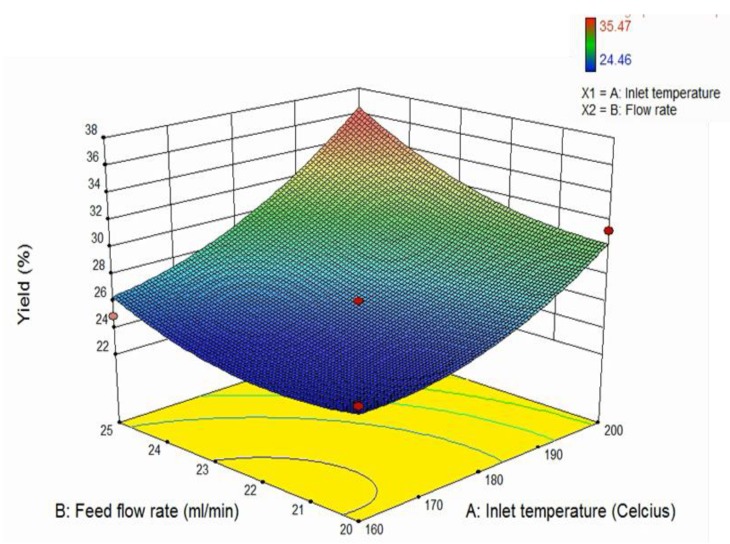
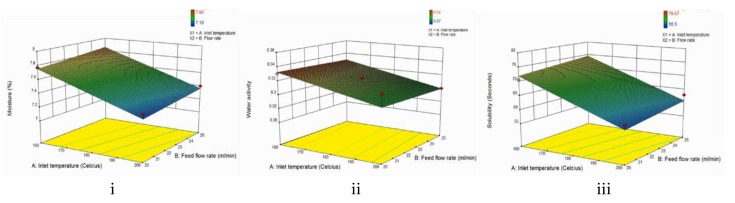
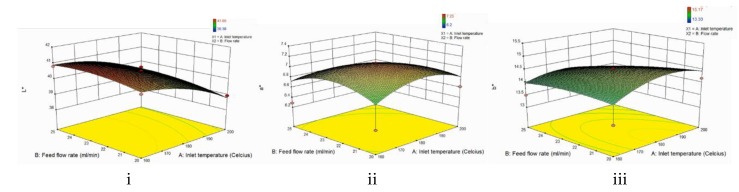
Avocado (Persea Americana Mill.) generates byproducts, especially the avocado seeds. Hence, the aim of this study was to investigate the potential utilization of avocado seed as a very important, high phenolic content, climacteric fruit with unique characteristics and high nutritional properties. As such, theantioxidative test is conducted, then spray drying is used to produce avocado seed powder. The objective of this study was to develop an avocado seed powder using the spray drying technique by investigating the solution stability with different avocado seed extract concentrations, and to determine the physical properties of spray dried avocado powder that consists of powder yield, moisture, water activity, solubility, and color. The avocado seed extract was mixed with maltodextrin and water and homogenized for 10 min at 8000 rpm. The avocado seed solution was then spray dried with different inlet temperatures and feed flow rates. The spray dried avocado seed powder was analyzed for its yield, moisture content, water activity, solubility, and color. It was reported that the solution with the least avocado extract concentration (10 g) had the best stability in terms of presence of solute particles and color. The avocado seed powder obtained from this experiment had yield ranges from 24.46-35.47%, moisture content ranges from 7.18-7.96%, water activity ranges from 0.27-0.34, solubility ranges from 55.50-79.67 seconds, L* value ranges from 38.38-41.05, a* value ranges from 6.20-7.25, and b* value ranges from 13.33-15.17. In addition, increasing inlet temperature resulted in an increase in powder yield, solubility, a* value, and b*value, as well as a decrease in moisture, water activity, and L* value. Meanwhile, increasing the feed flow rate resulted in an increase in powder yield, moisture, water activity, and all L*, a*, b* values, as well as a decrease in solubility. In conclusion, spray drying technology is able to develop avocado seed powder.
Keywords: avocado seed; avocado seed powder; feed flow rate; inlet temperature; maltodextrin; spray drying.
Conflict of interest statement
The authors declare no conflict of interest.
Figures
References
-
- Villa-Rodriguez J.A., Yahia E.M., González-León A., Ifie I., Robles-Zepeda R.E., Domínguez-Avila J.A., González-Aguilar G.A. Ripening of ‘Hass’ Avocado Mesocarp Alters Its Phytochemical Profile and the in Vitro Cytotoxic Activity of Its Methanolic Extracts. South African J. Bot. 2020;128:1–8. doi: 10.1016/j.sajb.2019.09.020. - DOI
-
- Araújo R.G., Rodriguez-Jasso R.M., Ruiz H.A., Pintado M.M.E., Aguilar C.N. Avocado By-Products: Nutritional and Functional Properties. Trends Food Sci. Technol. 2018;80:51–60. doi: 10.1016/j.tifs.2018.07.027. - DOI
-
- Leite J.J.G., Brito É.H.S., Cordeiro R.A., Brilhante R.S.N., Sidrim J.J.C., Bertini L.M., De Morais S.M., Rocha M.F.G. Chemical Composition, Toxicity and Larvicidal and Antifungal Activities of Persea Americana (Avocado) Seed Extracts. Rev. Soc. Bras. Med. Trop. 2009;42:110–113. doi: 10.1590/S0037-86822009000200003. - DOI - PubMed
LinkOut - more resources
Full Text Sources
Research Materials
