


Syzygium aromaticum L. (Myrtaceae): Traditional Uses, Bioactive Chemical Constituents, Pharmacological and Toxicological Activities
- PMID: 32019140
- PMCID: PMC7072209
- DOI: 10.3390/biom10020202
Syzygium aromaticum L. (Myrtaceae): Traditional Uses, Bioactive Chemical Constituents, Pharmacological and Toxicological Activities
Abstract
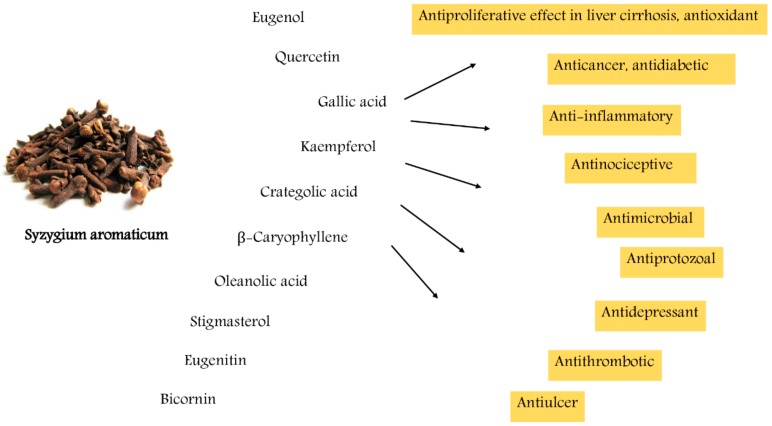
Herbal medicinal products have been documented as a significant source for discovering new pharmaceutical molecules that have been used to treat serious diseases. Many plant species have been reported to have pharmacological activities attributable to their phytoconstituents such are glycosides, saponins, flavonoids, steroids, tannins, alkaloids, terpenes, etc. Syzygium aromaticum (clove) is a traditional spice that has been used for food preservation and possesses various pharmacological activities. S. aromaticum is rich in many phytochemicals as follows: sesquiterpenes, monoterpenes, hydrocarbon, and phenolic compounds. Eugenyl acetate, eugenol, and β-caryophyllene are the most significant phytochemicals in clove oil. Pharmacologically, S. aromaticum has been examined toward various pathogenic parasites and microorganisms, including pathogenic bacteria, Plasmodium, Babesia, Theileria parasites, Herpes simplex, and hepatitis C viruses. Several reports documented the analgesic, antioxidant, anticancer, antiseptic, anti-depressant, antispasmodic, anti-inflammatory, antiviral, antifungal, and antibacterial activity of eugenol against several pathogenic bacteria including methicillin-resistant Staphylococcusepidermidis and S. aureus. Moreover, eugenol was found to protect against CCl4-induced hepatotoxicity and showed a potential lethal efficacy against the multiplication of various parasites including Giardia lamblia, Fasciolagigantica, Haemonchuscontortus, and Schistosomamansoni. This review examines the phytochemical composition and biological activities of clove extracts along with clove essential oil and the main active compound, eugenol, and implicates new findings from gas chromatography-mass spectroscopy (GC-MS) analysis.
Keywords: Syzygium aromaticum; bioactive chemical constituents; clove; essential oil; pharmacological activities.
Conflict of interest statement
The authors declare no conflict of interest.
Figures
References
-
- Batiha G.E.S., Beshbishy A.A., Tayebwa D.S., Shaheen M.H., Yokoyama N., Igarashi I. Inhibitory effects of Uncaria tomentosa bark, Myrtus communis roots, Origanum vulgare leaves and Cuminum cyminum seeds extracts against the growth of Babesia and Theileria in vitro. Jap. J. Vet. Parasitol. 2018;17:1–13.
-
- Beshbishy A.M., Batiha G.E.S., Adeyemi O.S., Yokoyama N., Igarashi I. Inhibitory effects of methanolic Olea europaea and acetonic Acacia laeta on the growth of Babesia and Theileria. Asian Pac. J. Trop. Med. 2019;12:425–434.
Publication types
MeSH terms
Substances
LinkOut - more resources
Full Text Sources
Miscellaneous
