. 2020 Feb 4;10(1):1756.
doi: 10.1038/s41598-020-58623-1.

Streptomyces sp. VN1, a producer of diverse metabolites including non-natural furan-type anticancer compound

Affiliations

Streptomyces sp. VN1, a producer of diverse metabolites including non-natural furan-type anticancer compound

Hue Thi Nguyen et al. Sci Rep. .

Abstract

Streptomyces sp. VN1 was isolated from the coastal region of Phu Yen Province (central Viet Nam). Morphological, physiological, and whole genome phylogenetic analyses suggested that strain Streptomyces sp. VN1 belonged to genus Streptomyces. Whole genome sequencing analysis showed its genome was 8,341,703 base pairs in length with GC content of 72.5%. Diverse metabolites, including cinnamamide, spirotetronate antibiotic lobophorin A, diketopiperazines cyclo-L-proline-L-tyrosine, and a unique furan-type compound were isolated from Streptomyces sp. VN1. Structures of these compounds were studied by HR-Q-TOF ESI/MS/MS and 2D NMR analyses. Bioassay-guided purification yielded a furan-type compound which exhibited in vitro anticancer activity against AGS, HCT116, A375M, U87MG, and A549 cell lines with IC50 values of 40.5, 123.7, 84.67, 50, and 58.64 µM, respectively. In silico genome analysis of the isolated Streptomyces sp. VN1 contained 34 gene clusters responsible for the biosynthesis of known and/or novel secondary metabolites, including different types of terpene, T1PKS, T2PKS, T3PKS, NRPS, and hybrid PKS-NRPS. Genome mining with HR-Q-TOF ESI/MS/MS analysis of the crude extract confirmed the biosynthesis of lobophorin analogs. This study indicates that Streptomyces sp. VN1 is a promising strain for biosynthesis of novel natural products.


Conflict of interest statement

The authors declare no competing interests.

Figures
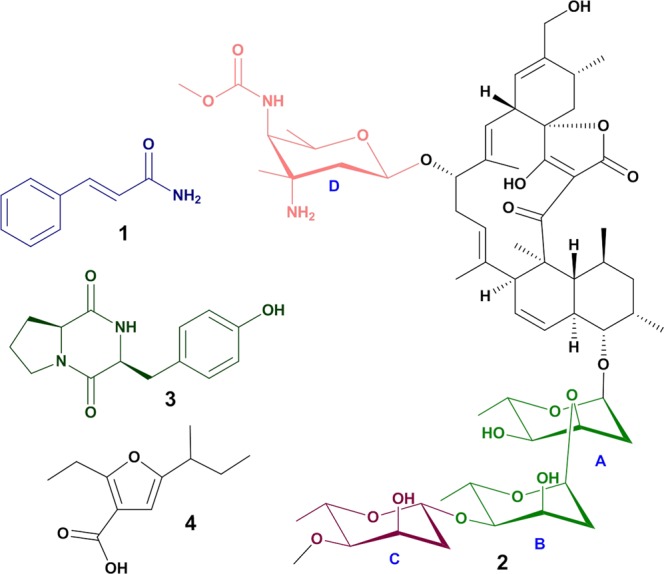
Figure 1
Figure 1
Structures of compounds 1, 2, 3, and 4. Letters “A-D” indicate four sugar units in lobophorin A.
Figure 2
Figure 2
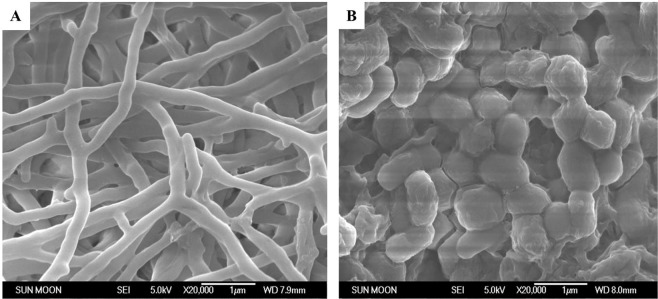
Scanning electron microscopic image showing the morphology of Streptomyces sp. VN1. (A) Rectiflexible mycelium; bar, 1 µm. (B) Smooth and oval-shaped spores; bar, 1 µm.
Figure 3
Figure 3
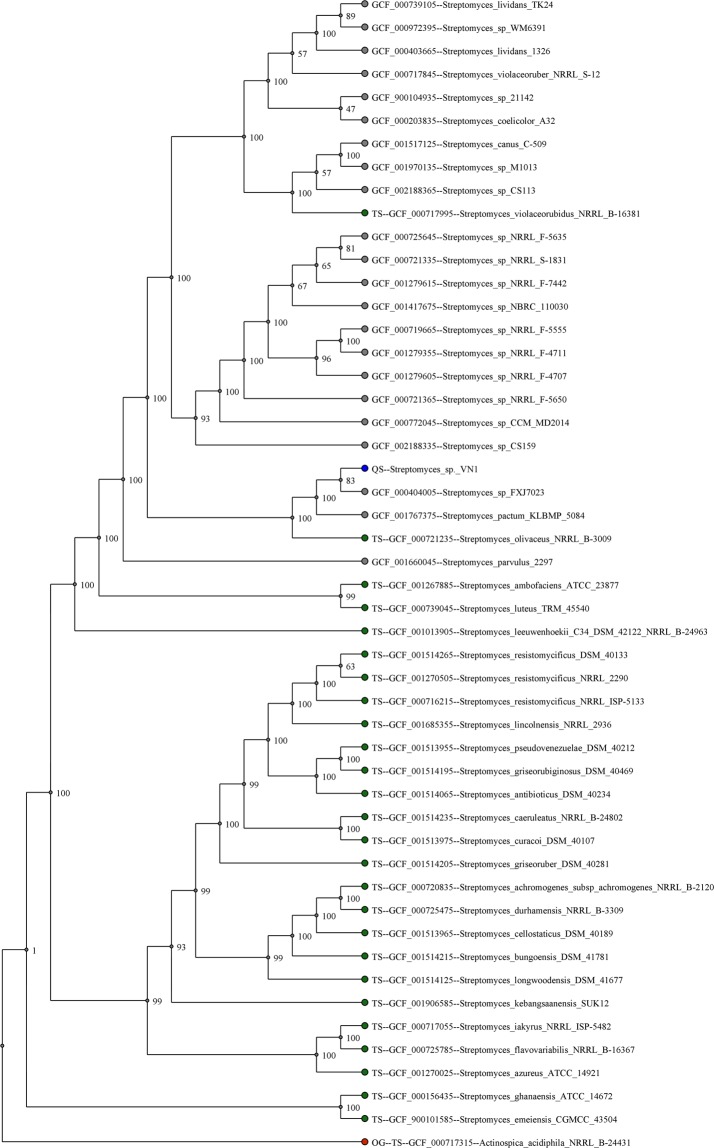
Molecular phylogenetic analysis of using default parameters (>100 core genes) by autoMLST. Bootstrap confidence levels are indicated at internodes whereas scale bar indicates nucleotide substitutions per nucleotide position.
Figure 4
Figure 4
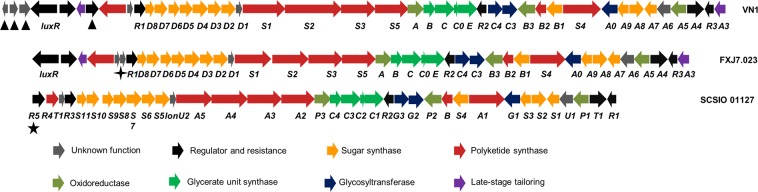
Genetic organization of the lobophorin biosynthetic gene cluster of Streptomyces sp. VN1 (GenBank: SUB5241063), lobophorin gene cluster of Streptomyces olivaceus FXJ7.023 (GenBank: JX306680), and lobophorin gene cluster of Streptomyces sp. SCSIO 01127 (GenBank: KC013978). “▲”; “formula image”; “★” denote unique genes in Streptomyces sp. VN1, Streptomyces olivaceus FXJ7.023, and Streptomyces sp. SCSIO 01127, respectively.
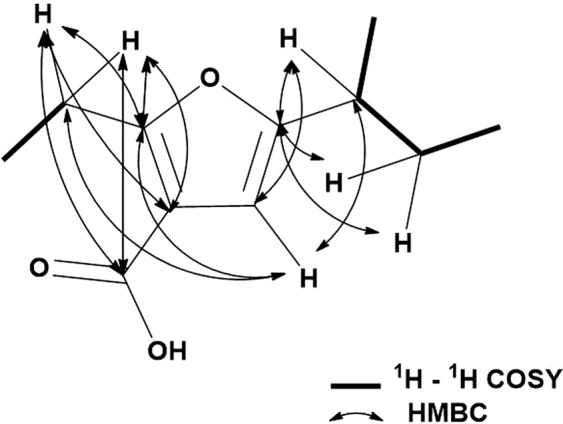
Figure 5
Figure 5
Selected key 1H -1H COSY (bold line) and HMBC (H formula image C) correlations of furan type-compound 4.
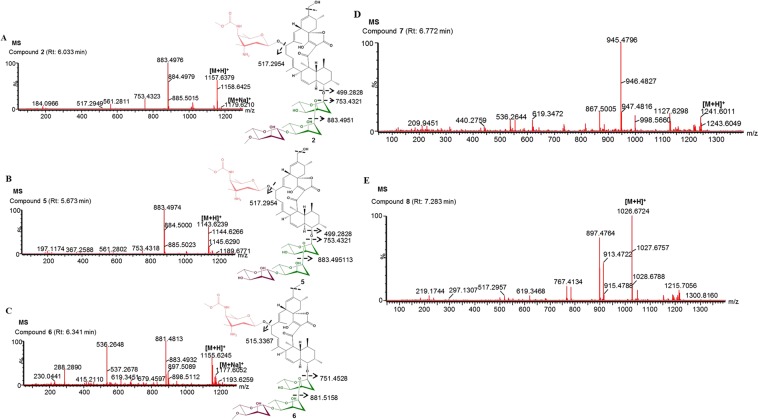
Figure 6
Figure 6
HR-MS and MS/MS analyses of lobophorin analogs. (A) The component of lobophorin A generates a [M + H]+ ion at m/z 1,157.6379. (B) The component of compound 5 (demethylation of lobophorin A) generates a [M + H]+ ion at m/z 1,143.6239. (C) The component of compound 6 (dehydroxylation of lobophorin A) generates a [M + H]+ ion at m/z 1,155.6245. (D) The component of compound 7 generates a [M + H]+ ion at m/z 1,2041.6011. (E) The component of compound 8 generates a [M + H]+ ion at m/z 1,026.6724.
Figure 7
Figure 7
In vitro growth inhibitory activities of compound 4 against different cell lines. (A) cancer cell lines, (B) normal cell lines. NT: no treatment. *p < 0.05 vs. control.
Figure 8
Figure 8
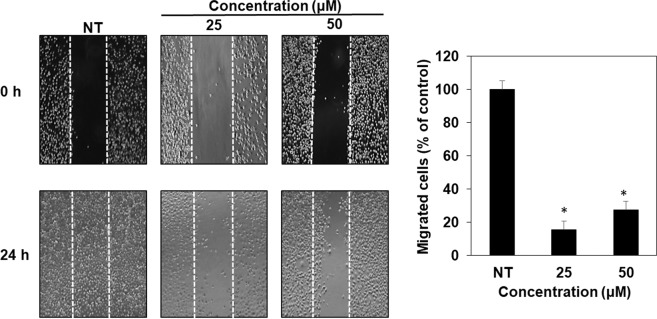
Cell migration inhibitory activity of furan-type compound against AGS cancer cells. NT: no treatment. *p < 0.05 vs. control.
Figure 9
Figure 9
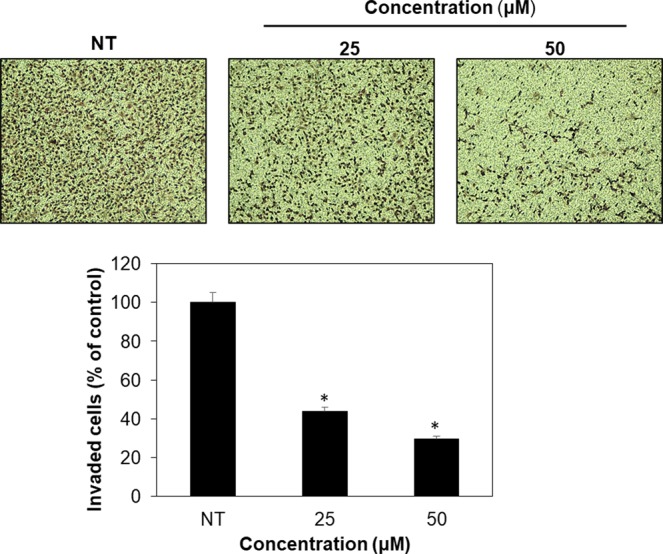
Cell invasion inhibitory activity of furan-type compound against AGS cancer cells. NT: no treatment. *p < 0.05 vs. control.

References

    1. Harvey AL, Edrada-Ebel R, Quinn RJ. The re-emergence of natural products for drug discovery in the genomics era. Nat. Rev. Drug. Discov. 2015;14:111–129. doi: 10.1038/nrd4510. - DOI - PubMed
    1. Newman DJ, Cragg GM. Natural Products as Sources of New Drugs over the 30 Years from 1981 to 2010. J. Nat. Prod. 2012;75:311–335. doi: 10.1021/np200906s. - DOI - PMC - PubMed
    1. Chaudhary AK, Dhakal D, Sohng JK. An Insight into the “-Omics”; Based Engineering of Streptomycetes for Secondary Metabolite Overproduction. Biomed. Res. Int. 2013;2013:968518. doi: 10.1155/2013/968518. - DOI - PMC - PubMed
    1. Clardy J, Fischbach MA, Walsh CT. New antibiotics from bacterial natural products. Nat. Biotechnol. 2006;24:1541–1550. doi: 10.1038/nbt1266. - DOI - PubMed
    1. Antoraz S, Santamaria RI, Diaz M, Sanz D, Rodriguez H. Toward a new focus in antibiotic and drug discovery from the Streptornyces arsenal. Front. Microbiol. 2015;6:461. doi: 10.3389/fmicb.2015.00461. - DOI - PMC - PubMed

Publication types