


Comparative analysis of the effect of IV administered acid suppressants on gastric pH in dogs
- PMID: 32020689
- PMCID: PMC7096616
- DOI: 10.1111/jvim.15718
Comparative analysis of the effect of IV administered acid suppressants on gastric pH in dogs
Erratum in
-
Erratum for Comparative analysis of the effect of IV administered acid suppressants on gastric pH in dogs.J Vet Intern Med. 2020 May;34(3):1359. doi: 10.1111/jvim.15790. Epub 2020 May 16. J Vet Intern Med. 2020. PMID: 32463987 Free PMC article. No abstract available.
Abstract
Background: Upper gastrointestinal (GI) ulceration and bleeding in critically ill dogs can cause severe anemia and increase morbidity. Acid suppressants using proton pump inhibitors or histamine-2 receptor blockers administered IV is commonly recommended.
Hypothesis/objectives: To evaluate the efficacy of IV administered esomeprazole, pantoprazole, and famotidine constant rate infusion (CRI) on increasing the intragastric pH of dogs. We hypothesized that esomeprazole and famotidine CRI would provide superior acid suppression compared to pantoprazole and reach pH goals for the treatment of GI bleeding.
Animals: Nine healthy research Beagles.
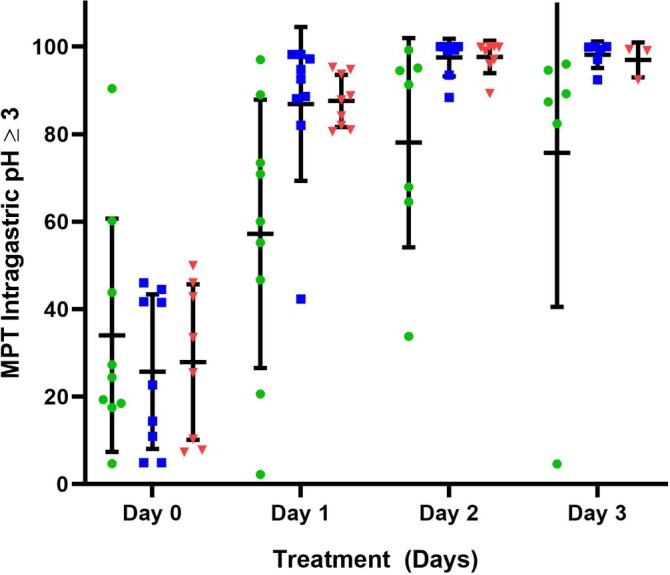
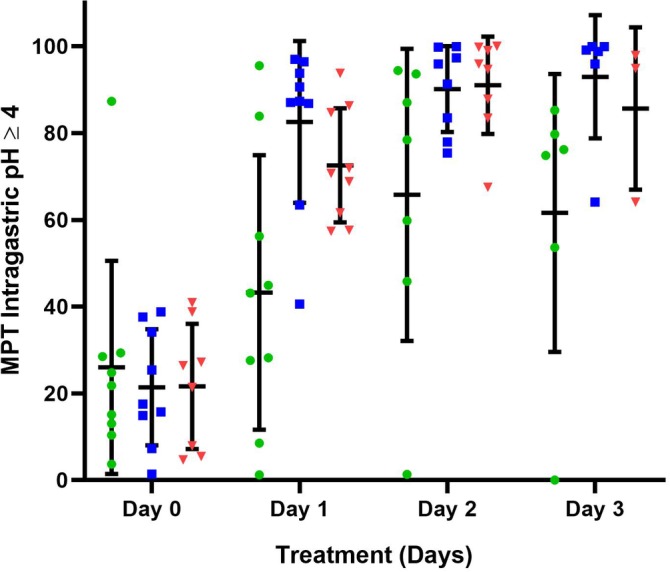
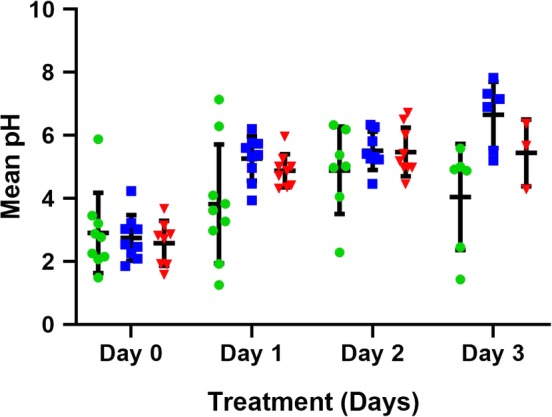
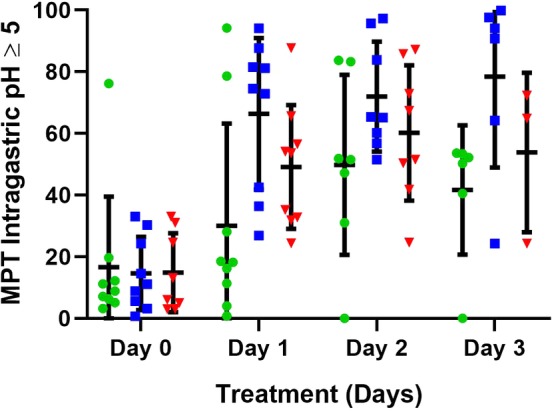
Methods: Randomized, 3-way crossover. Dogs received pantoprazole or esomeprazole at 1 mg/kg IV q12h and famotidine with a loading dose of 1 mg/kg followed by 8 mg/kg IV CRI daily for 3 consecutive days. The intragastric pH was recorded at baseline and for 72 hours of treatment. The mean pH and the mean percentage time (MPT) the intragastric pH was ≥3 or ≥4 were compared among and within treatment groups.
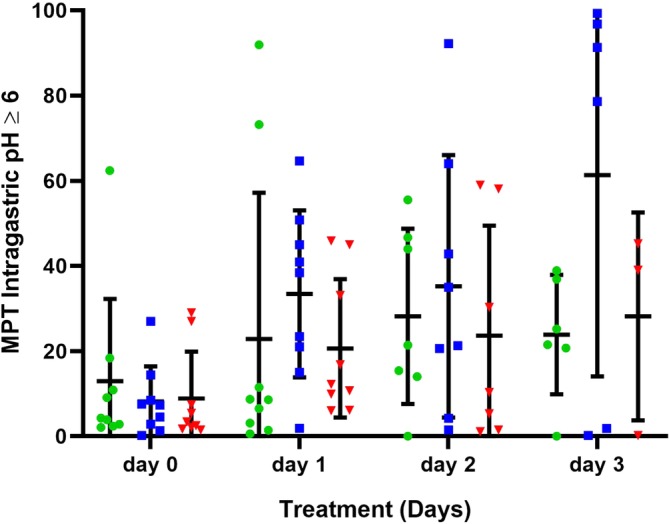
Results: Significant increases in mean pH (P < 0.0001), MPT ≥3 (P < 0.001), and MPT ≥4 (P = 0.0006) were noted over time with all 3 treatments. The time effect did not differ by treatment for mean pH, MPT ≥3, and MPT ≥4 (P = .29, .56, and .37, respectively); however, only esomeprazole and famotidine CRI achieved the goals established for the treatment of gastroduodenal ulceration in people.
Conclusions and clinical importance: Famotidine CRI and esomeprazole might be superior acid suppressants compared to standard doses of pantoprazole for the first 72 hours of treatment.
Keywords: bravo monitoring; canine; histamine-2 receptor antagonist; proton pump inhibitor.
© 2020 The Authors. Journal of Veterinary Internal Medicine published by Wiley Periodicals, Inc. on behalf of the American College of Veterinary Internal Medicine.
Conflict of interest statement
Authors declare no conflict of interest.
Figures
References
-
- Waldrop JE, Rozanski EA, Freeman LM, et al. Packed red blood cell transfusions in dogs with gastrointestinal hemorrhage: 55 cases (1999–2001). J Am Anim Hosp Assoc. 2003;39:523‐527. - PubMed
-
- Burget DW, Chiverton SG, Hunt RH. Is there an optimal degree of acid suppression for healing of duodenal ulcers? A model of the relationship between ulcer healing and acid suppression. Gastroenterology. 1990;99:345‐351. - PubMed
-
- Bell NJ, Burget D, Howden CW, et al. Appropriate acid suppression for the management of gastro‐oesophageal reflux disease. Digestion. 1992;51(Suppl 1):59‐67. - PubMed
-
- Green FW Jr, Kaplan MM, Curtis LE, et al. Effect of acid and pepsin on blood coagulation and platelet aggregation: a possible contributor to prolonged gastroduodenal mucosal hemorrhage. Gastroenterology. 1978;74:38‐43. - PubMed
Publication types
MeSH terms
Substances
Grants and funding
LinkOut - more resources
Full Text Sources
