


Neonatal sepsis and its association with birth weight and gestational age among admitted neonates in Ethiopia: systematic review and meta-analysis
- PMID: 32020850
- PMCID: PMC7001294
- DOI: 10.1186/s12887-020-1949-x
Neonatal sepsis and its association with birth weight and gestational age among admitted neonates in Ethiopia: systematic review and meta-analysis
Abstract
Background: Neonatal sepsis is an invasive infection, usually bacterial, and often occurring during the neonatal period (0-28 days). Neonatal sepsis causes a high burden of morbidity and mortality in developing countries like Ethiopia. There are fragmented, inconsistency, and no review has been conducted to report the magnitude and associated factors of neonatal sepsis in Ethiopia. Thus, this study aimed to assess the pooled prevalence of neonatal sepsis and its association with birth weight and gestational age among admitted neonates in Ethiopia.
Methods: Electronic media searches like PubMed, CINHAL, EMBASE, Google Scholar, Web of Science, Cochrane library databases and African health science library were used. All original peer-reviewed papers which reported the prevalence of neonatal sepsis in Ethiopia were included in this study. Two reviewers independently extracted the data using a standardized data extraction format for eligibility and appraised their quality. Data were analyzed using Stata version 14 software. The pooled prevalence of neonatal sepsis was estimated with the random-effect model. Heterogeneity between studies was assessed by I 2 statistics test. Subgroup and meta-regression analyses were done to assess the source of variation between the studies. Egger's test followed by trim and fill analysis were used to determine publication bias. A sensitivity analysis was carried out.
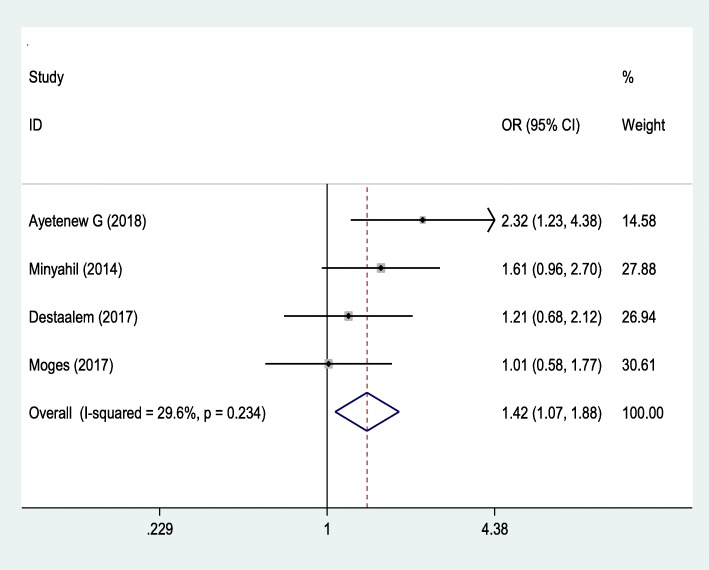
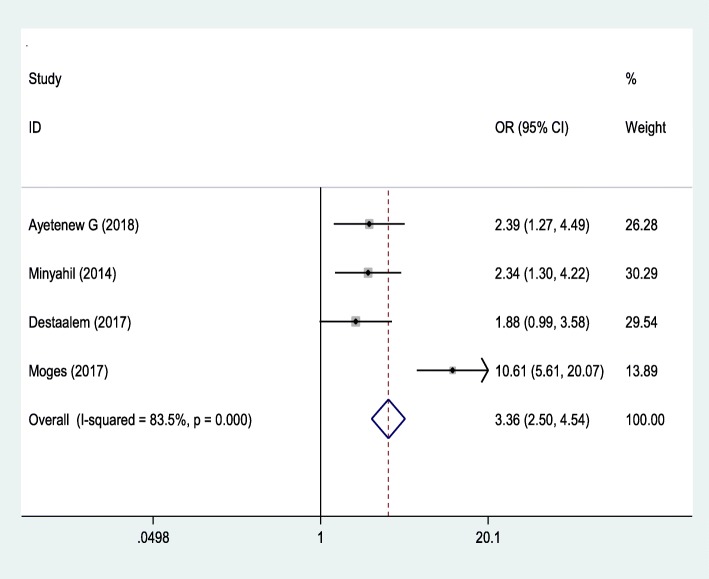
Result: A total of 952 research papers reviewed, of which, eight studies were finally included in this systematic review and meta-analysis. The random effect pooled prevalence of neonatal sepsis in Ethiopia was 49.98% (CI: 36.06, 63.90). In subgroup analysis, the pooled estimated neonatal sepsis among cross-sectional studies was 53.15% while the cohort was 40.56%. Newborns with a birth weight of less than 2.5 kg were 1.42 times more likely to develop neonatal sepsis infection compared to normal babies. The odds ratios of preterm babies were 3.36 to develop neonatal sepsis compared to term infants.
Conclusion: The pooled prevalence of neonatal sepsis in Ethiopia was high. Thus, health care providers should adhere to aseptic precautions while performing procedures, especially in preterm and low birth weight infants were recommended.
Keywords: Determinants; Ethiopia; Neonatal sepsis; Newborn; Prevalence.
Conflict of interest statement
The authors declare that they have no competing interests.
Figures


References
-
- Ann L Anderson-Berry, Linda L Bellig, Bryan L Ohning. Neonatal Sepsis. 2015. Available at: https://medlineplus.gov/ency/article/007303.htm.
-
- Central Statistical Agency (CSA) [Ethiopia] and ICF. 2017. 2016 Ethiopia Demographic and Health Survey Key Findings. Addis Ababa: CSA and ICF; 2017.
-
- WHO. Neonatal mortality. Global Health Observatory. WorldHealth Organization.2018. Available at: http://www.who.int/gho/child_health/mortality/neonatal/en/.
-
- Gro Harlem Brundtland, “Plenary Address” (delivered at United Nations General Assembly Special Session on Children. New York: WHO; 2002. https://www.who.int/dg/brundtland/speeches/2002/en/.
-
- Afolabi BM. Sub-Sahara African Neonates–Ghosts to Statistics. J Neonatal Biol. 2017;6(1):2167–0897.
Publication types
MeSH terms
LinkOut - more resources
Full Text Sources
Medical
