


Effects of Estimated Community-Level Health Literacy on Treatment Initiation and Preventive Care Among Older Adults with Newly Diagnosed Diabetes
- PMID: 32021112
- PMCID: PMC6954850
- DOI: 10.2147/PPA.S211784
Effects of Estimated Community-Level Health Literacy on Treatment Initiation and Preventive Care Among Older Adults with Newly Diagnosed Diabetes
Abstract
Purpose: Individual measures of health literacy are not feasible for administration on a large scale, yet estimates of community-level health literacy in the US recently became available. We sought to investigate whether community-level health literacy estimates are associated with the initiation of oral antihyperglycemic agents (OHA) and the use of standard preventive care services among older adults with newly diagnosed diabetes.
Patients and methods: We conducted a retrospective cohort study of 169,758 patients, ≥65 years old with hypertension and newly diagnosed type 2 diabetes using 2007-2011 data from the Center for Medicare and Medicaid Services Chronic Conditions Warehouse. We examined the relationship between community-level health literacy estimates and initiation of OHA, receipt of flu shots, eye exams, Hemoglobin A1c tests, and lipid tests within 12 months post diabetes diagnosis.
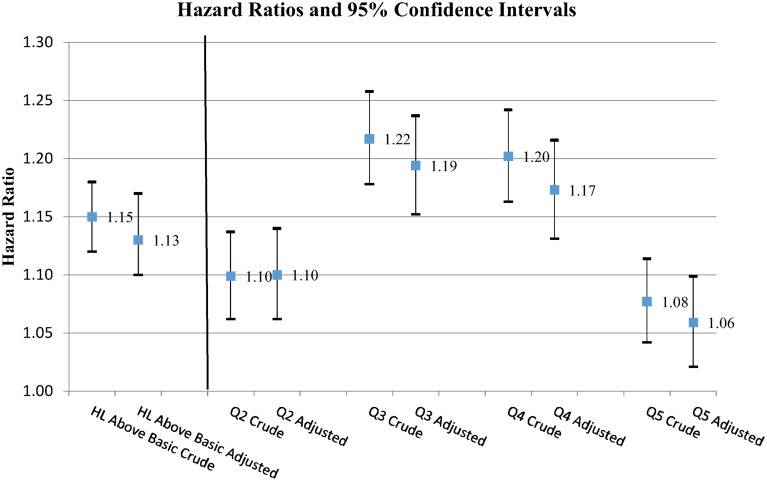
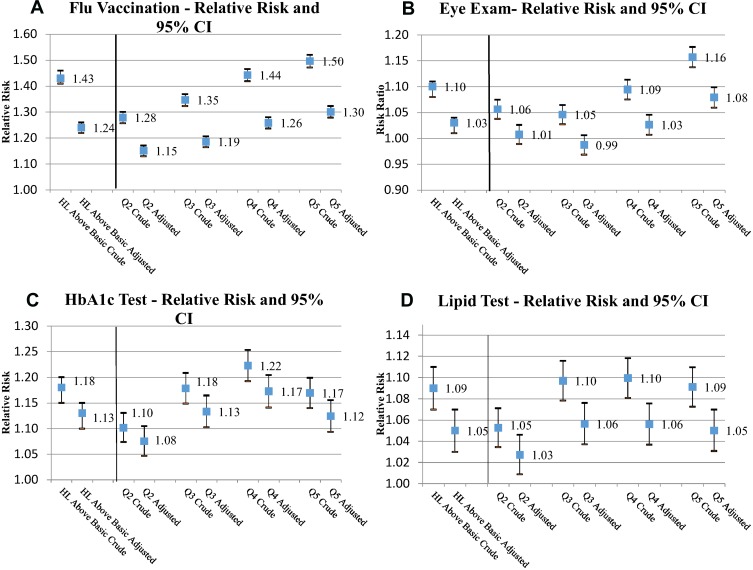
Results: Patients living in communities with above basic health literacy (vs. basic/below basic) were 15% more likely to initiate OHA (Hazard Ratio=1.15; 95% CI 1.12 to 1.18). After classifying the health literacy distribution as quintiles, the analysis revealed a dose-response relationship with OHA initiation that plateaued at the third and fourth quintiles and declined at the fifth quintile. Individuals residing in communities with higher health literacy were more likely to participate in preventive care services (relative risk ranged from 1.09 for lipid test [95% CI 1.07-1.11] to 1.43 for flu shot [95% CI 1.41-1.46]).
Conclusion: Community-level health literacy estimates were associated with the initiation of OHA and uptake of standard preventive care services in older adults. Community-level health literacy may help to inform targeted diabetes education and support efforts.
Keywords: adherence; diabetes mellitus; health literacy; preventive care.
© 2020 Fang et al.
Conflict of interest statement
MSW has predoctoral student fellowships funded through Abbvie and Amgen. He has also received grant support from Merck, Sharp & and Dohme, Eli Lilly, UnitedHealthcare, Amgen and AbbVie. MSW has also served as a consultant or advisory board member to Luto UK, Vivus, AbbVie, Abbott Labs, Merck, Pfizer, CVS/Caremark, AB Imbev Foundation, Deborah Adler and OptumHealth. SCB has served as a consultant for Merck, Sharp and Dohme, Pfizer, and Luto UK and has received grant funding via her institution from Eli Lilly and Merck, Sharp and Dohme. SCB has also received personal fees from Northwestern University/Gordon and Betty Moore Foundation. MKP-O has served as a consultant for Communicate Health, Engineered Care, Nous, and Merck. He has also received grant support from OptumHealth. MAB has received grant support from Amgen and AstraZeneca and served as a scientific advisor for RxAnte, Pfizer, Merck, and Amgen. KBF consults with QuiO, a technology adherence company and receives hourly compensation. All other authors have no conflicts of interest to report.
Figures
References
-
- International Diabetes Federation. Diabetes Atlas: The Global Burden. Brussels, Belgium: International Diabetes Federation; 2011.
-
- Centers for Disease Control and Prevention. 2014. National Diabetes Statistics Report: Estimates of Diabetes and Its Burden in the United States, 2014. Atlanta, GA: US Department of Health and Human Services.
-
- Institute of Medicine. Health Literacy: A Prescription to End Confusion. Washington, DC: National Academies Press; 2014.
Grants and funding
LinkOut - more resources
Full Text Sources
