. 2020:2020:3366-3375.
Epub 2020 Jan 7.

Respiratory Rate Monitoring in Clinical Environments with a Contactless Ultra-Wideband Impulse Radar-based Sensor System

Affiliations

Respiratory Rate Monitoring in Clinical Environments with a Contactless Ultra-Wideband Impulse Radar-based Sensor System

Charlotte E Goldfine et al. Proc Annu Hawaii Int Conf Syst Sci. 2020.

Abstract

Respiratory rate is an extremely important but poorly monitored vital sign for medical conditions. Current modalities for respiratory monitoring are suboptimal. This paper presents a proof of concept of a new algorithm using a contactless ultra-wideband (UWB) impulse radar-based sensor to detect respiratory rate in both a laboratory setting and in a two-subject case study in the Emergency Department. This novel approach has shown correlation with manual respiratory rate in the laboratory setting and shows promise in Emergency Department subjects. In order to improve respiratory rate monitoring, the UWB technology is also able to localize subject movement throughout the room. This technology has potential for utilization both in and out of the hospital environments to improve monitoring and to prevent morbidity and mortality from a variety of medical conditions associated with changes in respiratory rate.


Figures
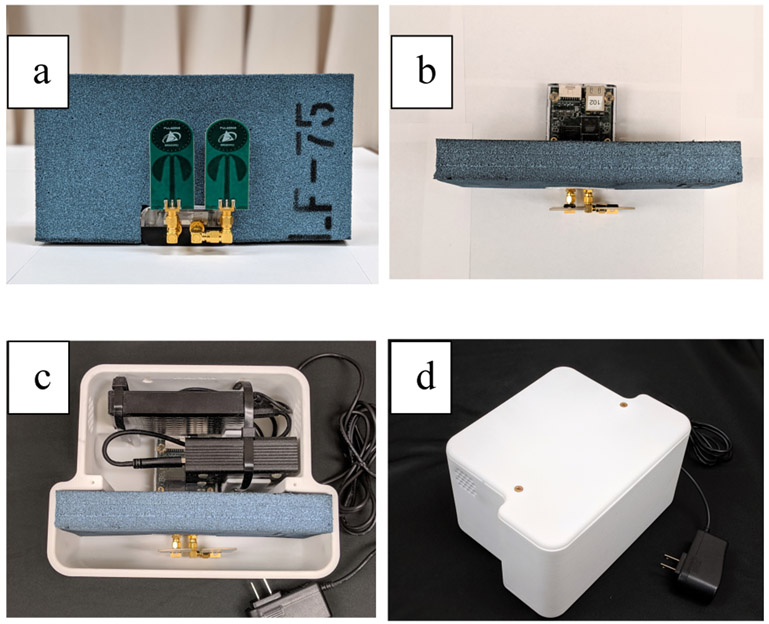
Figure 1:
Figure 1:
(a) P440 MRM radar module with LF-75 absorber behind the antenna (b) Top view of the radar with absorber (c) Radar Box with Raspberry Pi and a hard disk drive (d) enclosed radar box
Figure 2.
Figure 2.
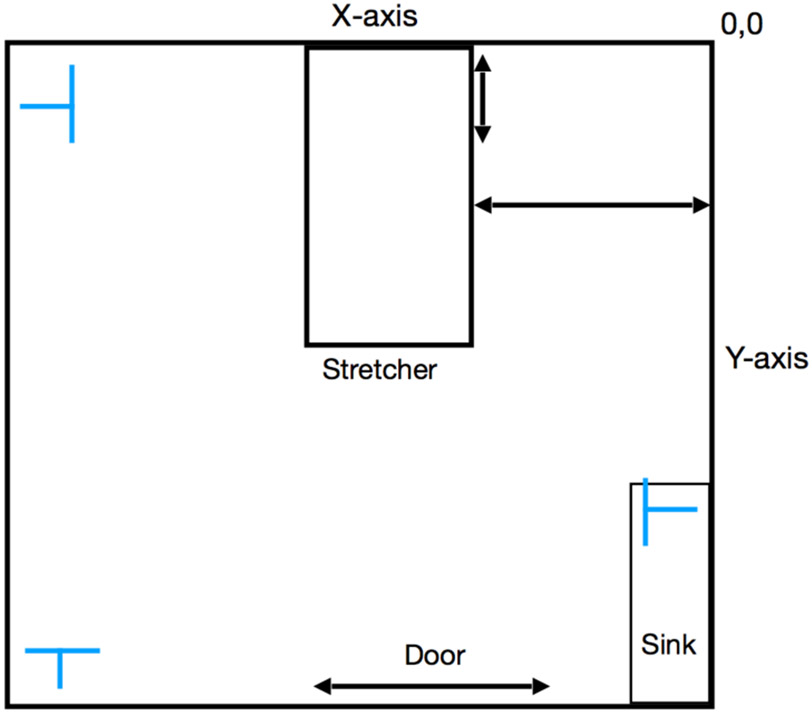
Room layout, the letter T indicates sensor placement.
Figure 3:
Figure 3:
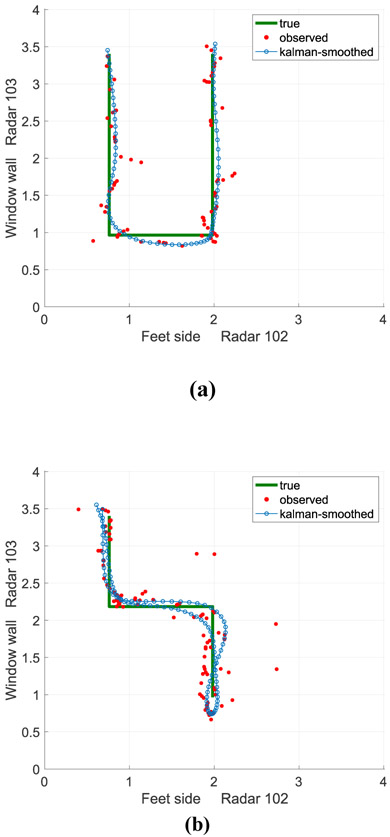
Single Person Tracking: Walking in different patterns (a) Shape: U (b) Shape: Four
Figure 4:
Figure 4:
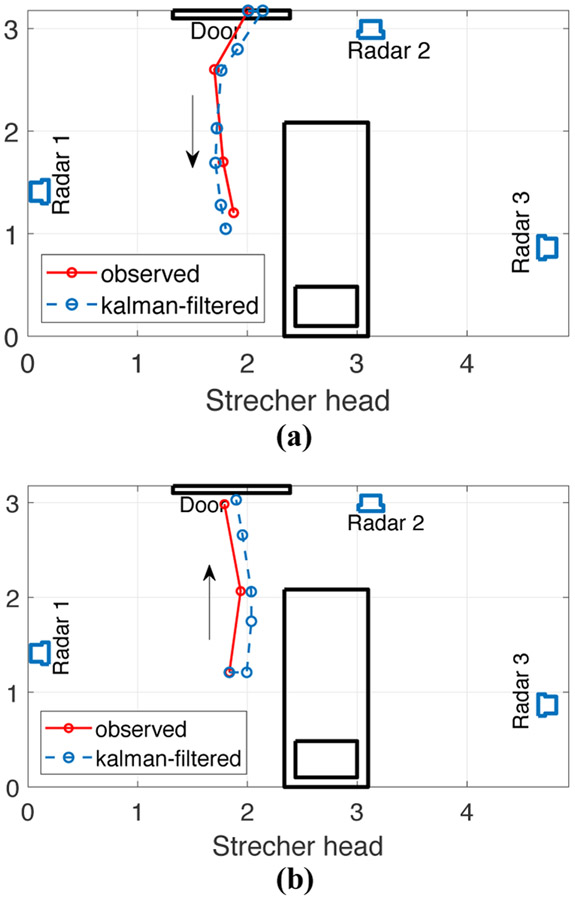
(a) Event: ED Doctor Entry at 14:51:41 hr (b) Event: ED Doctor Exit at 14:55:19 hr.
Figure 5:
Figure 5:
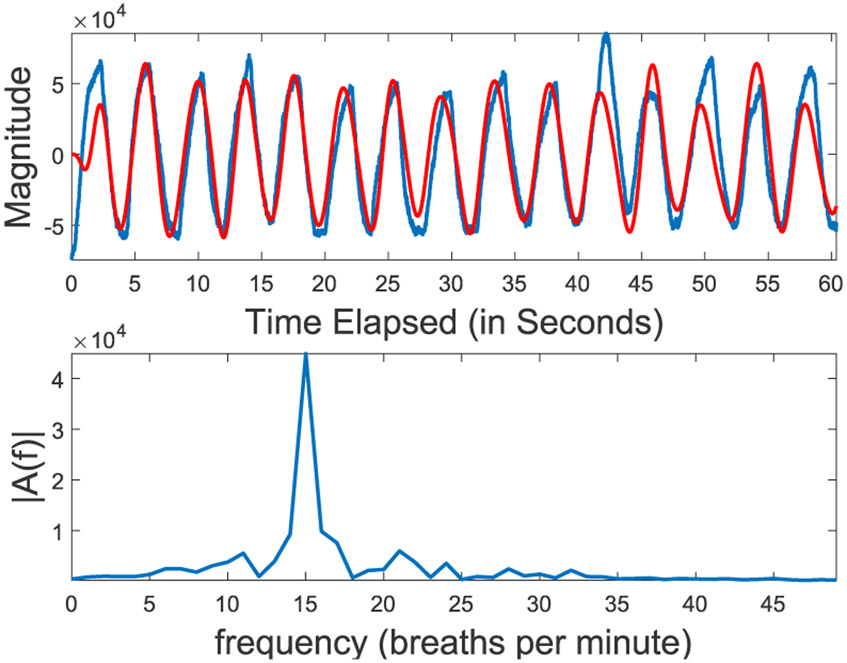
(Top) Respiratory Signal captured by the radar module and (Bottom) Respiratory Rate extracted by FFT for Lab Subject 1 at metronome count 15 breaths per minute.
Figure 6:
Figure 6:
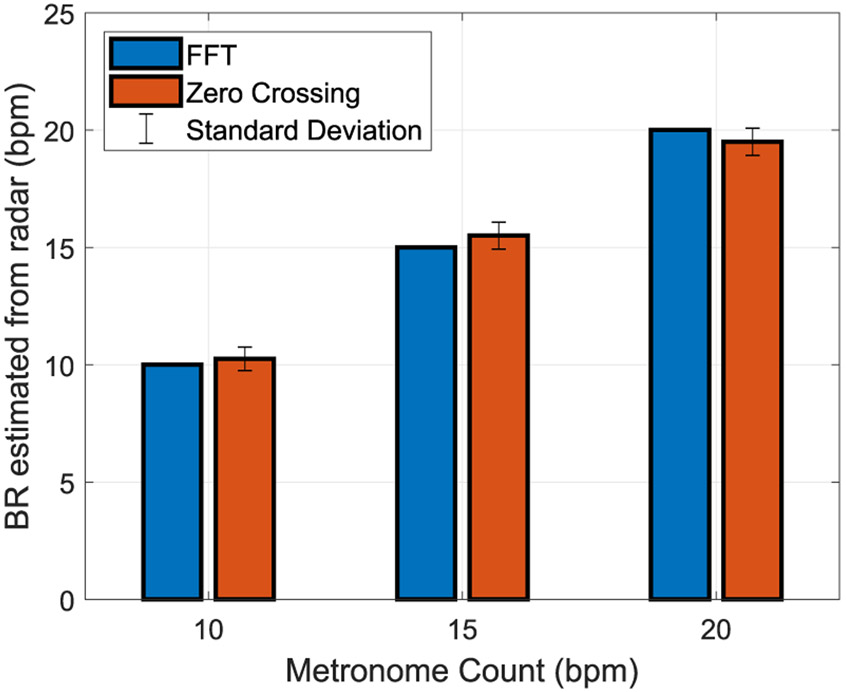
Estimated Respiratory Rate compared with corresponding metronome count over 4 subjects in Laboratory setting
Figure 7:
Figure 7:
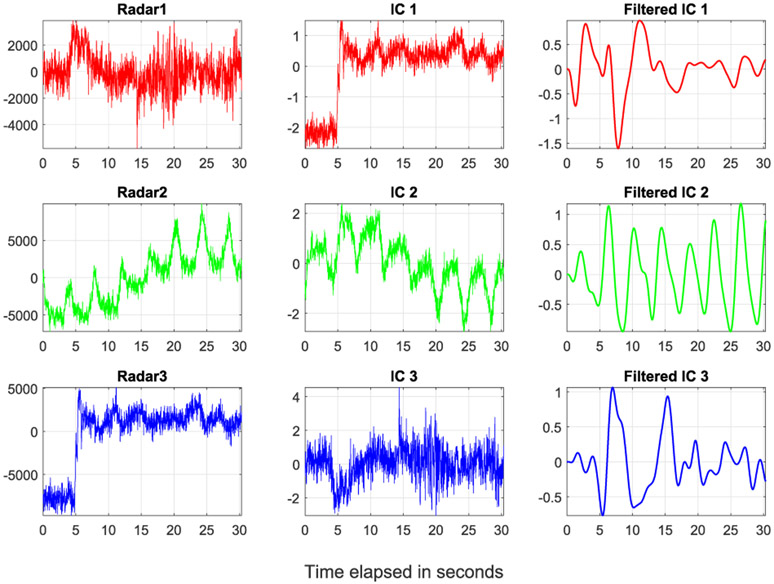
Left Column: Raw radar returns from the radars, Middle Column: Independent components extracted from the three radar returns using ICA, Right Column: band pass filtered independent components
Figure 8:
Figure 8:
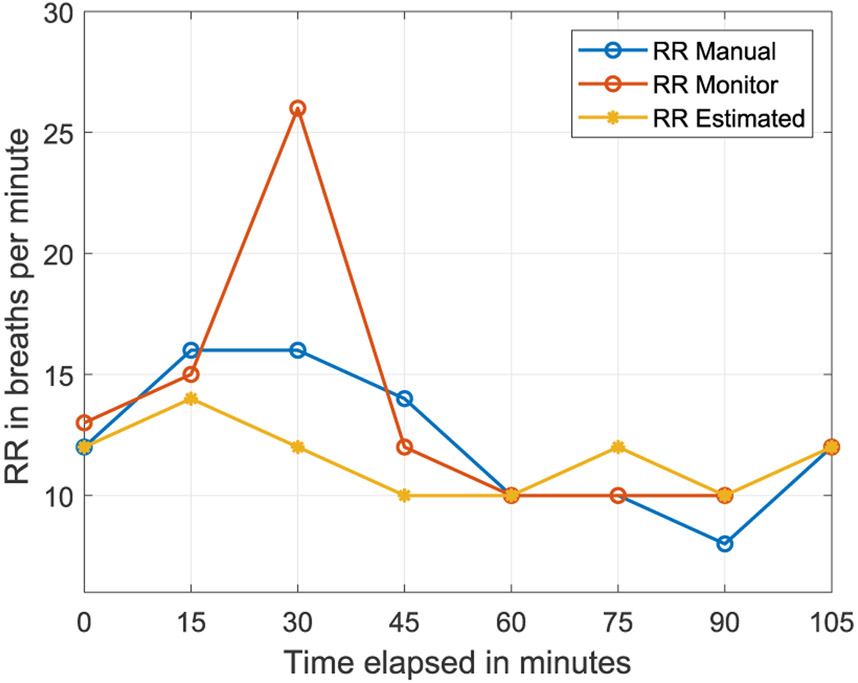
ED Subject 2: Comparison of the RR estimation with the ground truth taken manually at 15 minutes intervals

References

    1. Khanna A, Overdyk J, Greening C et al. Respiratory depression in low acuity hospital settings- Seeking answers from the PRODIGY trial. Journal of Critical Care 47 (2018) 80–87. 10.1016/j.jcrc.2018.06.014 - DOI - PubMed
    1. Fieselmann JF, Hendryx MS, Helms CM, et al. Respiratory rate predicts cardiopulmonary arrest for internal medicine patients. J Gen Intern Med 1993; 8: 354–360. - PubMed
    1. Cretikos M Respiratory rate: the neglected vital sign.. The Medical journal of Australia. 2008-June;188:657–659. - PubMed
    1. Hogan J Why don’t nurses monitor the respiratory rates of patients? British Journal of Nursing, 2006:15(9), 489–492. doi: 10.12968/bjon.2006.15.9.21087 - DOI - PubMed
    1. Subbe C, & Kinsella S Continuous Monitoring of Respiratory Rate in Emergency Admissions: Evaluation of the RespiraSense™ Sensor in Acute Care Compared to the Industry Standard and Gold Standard. Sensors, 2018:18(8), 2700. doi: 10.3390/s18082700 - DOI - PMC - PubMed

LinkOut - more resources