Ten-year trends and prevalence of asthma, allergic rhinitis, and atopic dermatitis among the Korean population, 2008-2017
- PMID: 32023407
- PMCID: PMC7374008
- DOI: 10.3345/cep.2019.01291
Ten-year trends and prevalence of asthma, allergic rhinitis, and atopic dermatitis among the Korean population, 2008-2017
Abstract
Background: Major questions remain regarding the age-stratified trends of allergic diseases and asthma in Korea.
Purpose: To identify the estimated recent prevalence and 10- year trends in asthma, allergic rhinitis, and atopic dermatitis among the Korean population from 2008 to 2017.
Methods: This nationwide cross-sectional survey (Korean National Health and Nutrition Examination Survey) over 10 years (2008-2017) examined representative samples of the Korean population (n=85,006) including 2,131 infants, 4,352 preschool children, 12,919 school-age children, 44,200 adults, and 21,404 elderly adults.
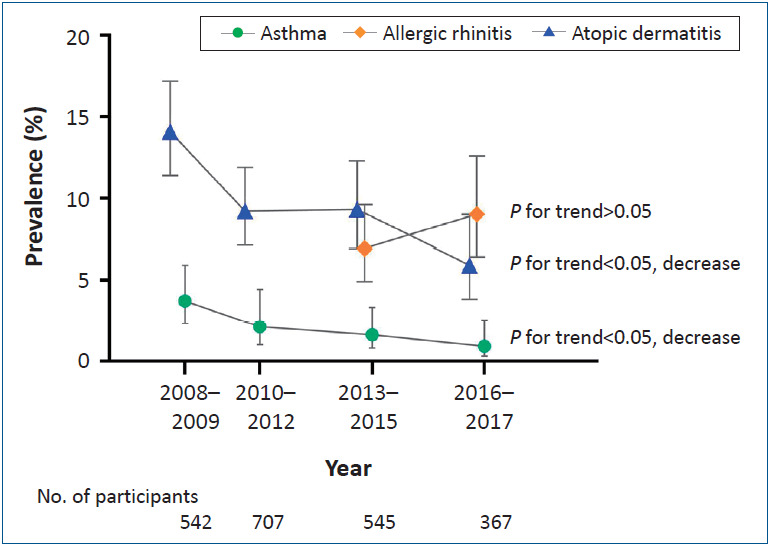
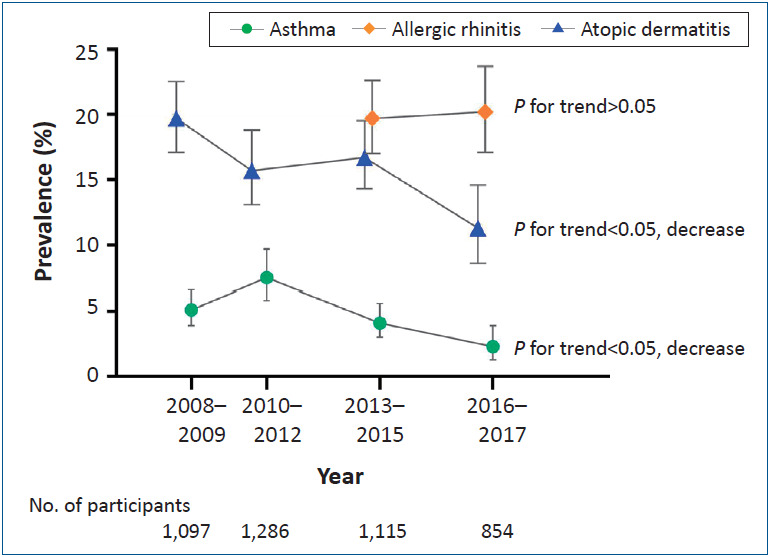
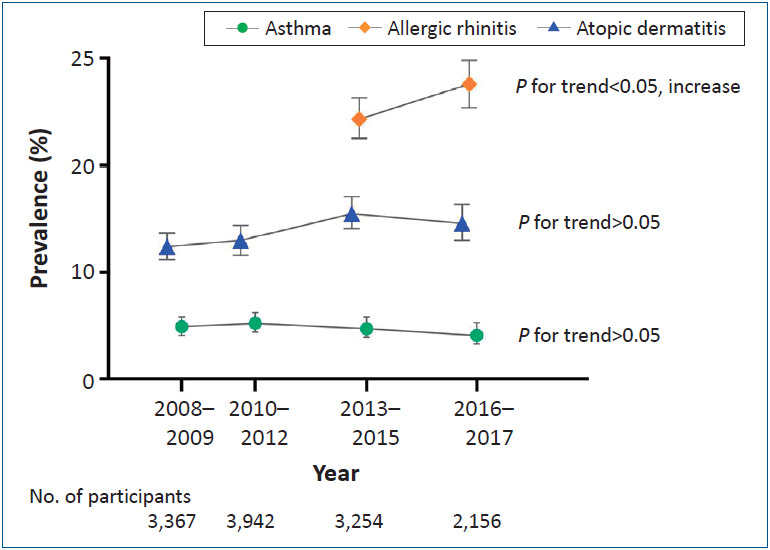
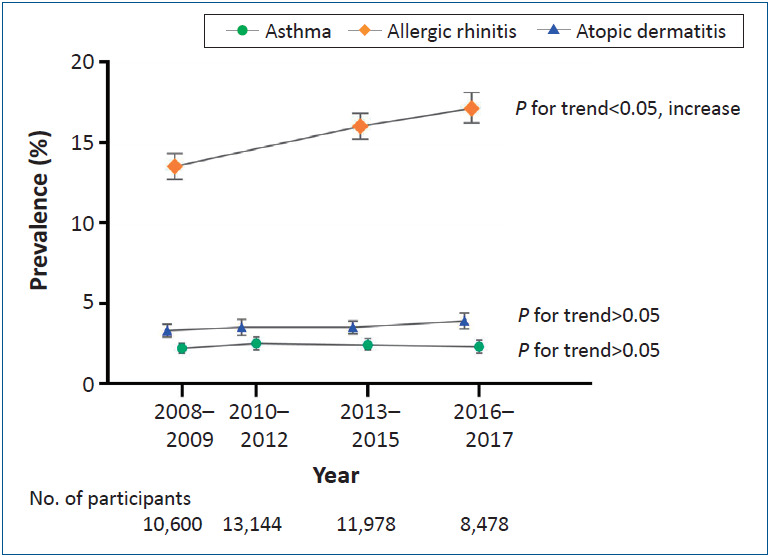
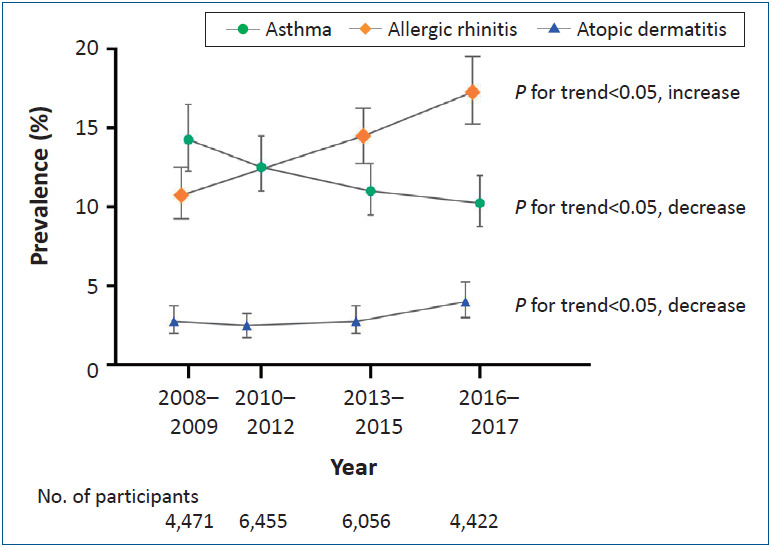
Results: In the 2016 to 2017 population, the estimated prevalence of asthma was 0.9% in infants, 2.3% in preschool children, 4.1% in school-age children, 2.3% in adults, and 4.1% in the elderly. The estimated prevalence of allergic rhinitis was 9.0%, 20.2%, 27.6%, 17.1%, and 6.9%, respectively. The estimated prevalence of atopic dermatitis was 5.9%, 11.3%, 14.6%, 3.9%, and 1.6%, respectively. Ten-year trends revealed a significant decrease in asthma prevalence in infants, preschool children, and the elderly. and in atopic dermatitis prevalence in infants and preschool children (P<0.05 for all trends). Furthermore, 10-year trends demonstrated a significant increase in allergic rhinitis prevalence in school-age children, adults, and the elderly, and in atopic dermatitis prevalence in school-age children and the elderly (P<0.05 for all trends).
Conclusion: These results improve our understanding of the age-stratified epidemiology of allergic diseases in Korea and suggest the need for the development of tailored and precise strategies to prevent allergic diseases in different age groups.
Keywords: Allergic rhinitis; Asthma; Atopic dermatitis; Korea, Prevalence.
Conflict of interest statement
No potential conflict of interest relevant to this article was reported.
Figures
References
-
- Song WJ, Wong GWK. Changing trends and challenges in the management of asthma in Asia. J Allergy Clin Immunol. 2017;140:1272–4. - PubMed
-
- Kim BK, Kim JY, Kang MK, Yang MS, Park HW, Min KU, et al. Allergies are still on the rise? A 6-year nationwide population-based study in Korea. Allergol Int. 2016;65:186–91. - PubMed
LinkOut - more resources
Full Text Sources