


Dog and Cat Ownership Predicts Adolescents' Mental Well-Being: A Population-Based Longitudinal Study
- PMID: 32023841
- PMCID: PMC7037461
- DOI: 10.3390/ijerph17030884
Dog and Cat Ownership Predicts Adolescents' Mental Well-Being: A Population-Based Longitudinal Study
Abstract
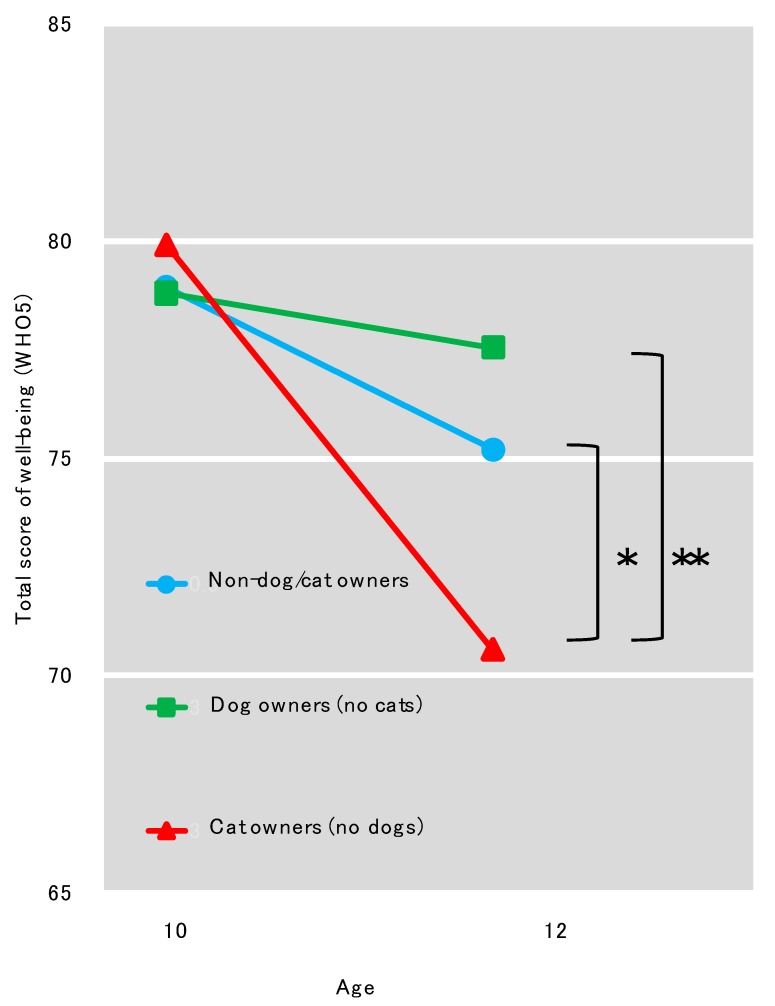
A potential association between pet ownership and mental well-being is suggested, but there is a shortage of high-quality longitudinal studies that consider probable differences among different species. We aimed to examine whether ownership of the most popular pets (dogs and cats) would predict mental well-being. The Tokyo Teen Cohort (TTC), a prospective population-based birth cohort study, had dog and cat ownership data at age 10 and mental well-being score at ages 10 and 12 from 2584 adolescents. Linear regression analysis with adjusting for covariates showed that dog ownership had a positive effect on mental well-being compared to no dog ownership, however, cat ownership had a negative effect compared to no cat ownership. Two-factor mixed-design analysis of variance showed that dog ownership predicted maintained mental well-being, while cat ownership predicted progressing decline of mental well-being. Thus, dog and cat ownership may have different effects on adolescents' mental well-being, implying that the underlying mechanisms that are activated by these types of ownership may differ.
Keywords: adolescent; cats; cohort studies; dogs; pets; well-being.
Conflict of interest statement
The authors declare no conflict of interest.
Figures
References
Publication types
MeSH terms
LinkOut - more resources
Full Text Sources
Medical
Miscellaneous
