


Progression of Neuropsychiatric Symptoms over Time in an Incident Parkinson's Disease Cohort (ICICLE-PD)
- PMID: 32024222
- PMCID: PMC7071603
- DOI: 10.3390/brainsci10020078
Progression of Neuropsychiatric Symptoms over Time in an Incident Parkinson's Disease Cohort (ICICLE-PD)
Abstract
Background: Cross-sectional studies have identified that the prevalence of neuropsychiatric symptoms (NPS) in Parkinson's disease (PD) ranges from 70-89%. However, there are few longitudinal studies determining the impact of NPS on quality of life (QoL) in PD patients and their caregivers. We seek to determine the progression of NPS in early PD.
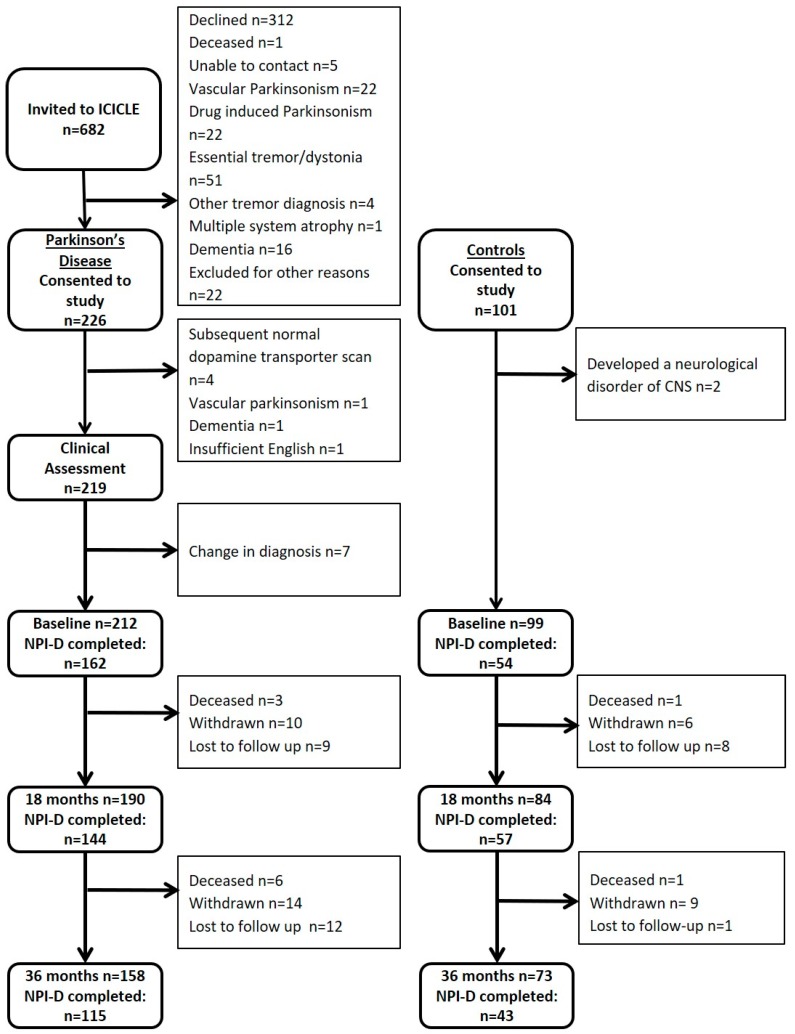
Methods: Newly diagnosed idiopathic PD cases (n = 212) and age-matched controls (n = 99) were recruited into a longitudinal study. NPS were assessed using the Neuropsychiatric Inventory with Caregiver Distress scale (NPI-D). Further neuropsychological and clinical assessments were completed by participants, with reassessment at 18 and 36 months. Linear mixed-effects modelling determined factors associated with NPI-D and QoL over 36 months.
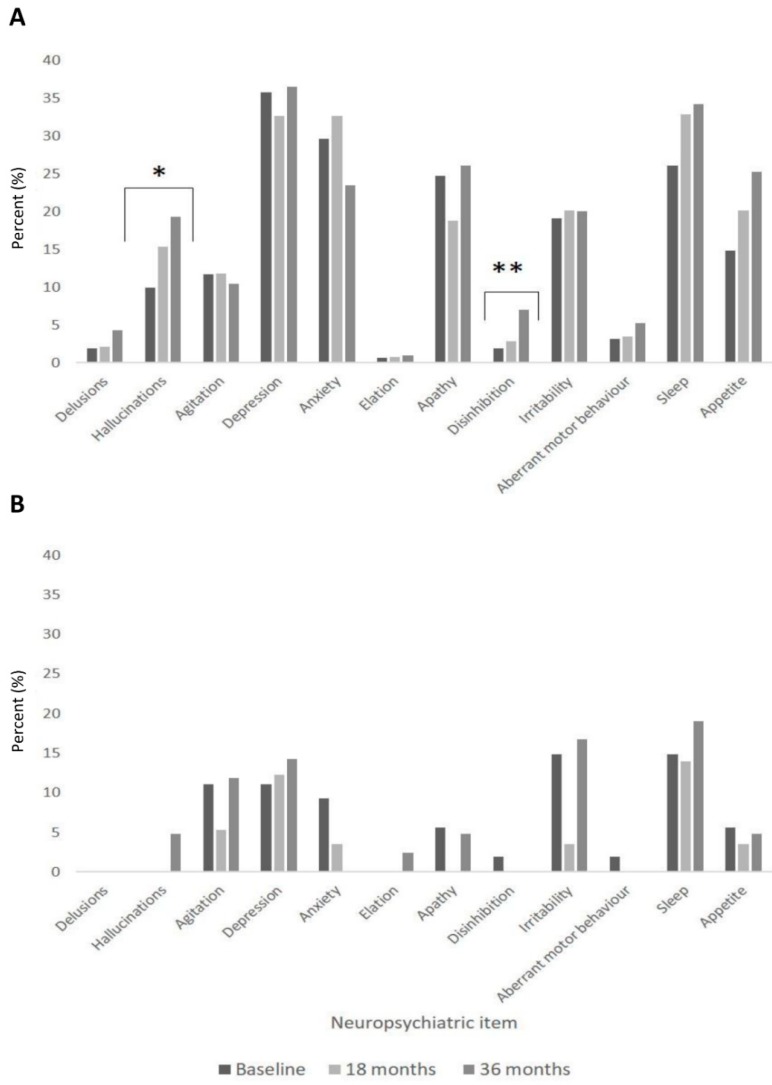
Results: Depression, anxiety, apathy and hallucinations were more frequent in PD than controls at all time points (p < 0.05). Higher motor severity at baseline was associated with worsening NPI-D scores over time (β = 0.1, p < 0.05), but not cognition. A higher NPI total score was associated with poorer QoL at any time point (β = 0.3, p < 0.001), but not changed in QoL scores.
Conclusion: NPS are significantly associated with poorer QoL, even in early PD. Screening for NPS from diagnosis may allow efficient delivery of better support and treatment to patients and their families.
Keywords: Parkinson’s disease; neuropsychiatric symptoms; non-motor; quality of life.
Conflict of interest statement
The authors declare no conflict of interest.
Figures
References
-
- Aarsland D., Bronnick K., Ehrt U., De Deyn P.P., Tekin S., Emre M., Cummings J.L. Neuropsychiatric symptoms in patients with Parkinson’s disease and dementia: Frequency, profile and associated care giver stress. J. Neurol. Neurosurg. Psychiatry. 2007;78:36–42. doi: 10.1136/jnnp.2005.083113. - DOI - PMC - PubMed
Grants and funding
LinkOut - more resources
Full Text Sources
