Increasing incidence of inflammatory bowel disease in children and adolescents: significance of environmental factors
- PMID: 32024322
- PMCID: PMC7462828
- DOI: 10.3345/cep.2019.00500
Increasing incidence of inflammatory bowel disease in children and adolescents: significance of environmental factors
Abstract
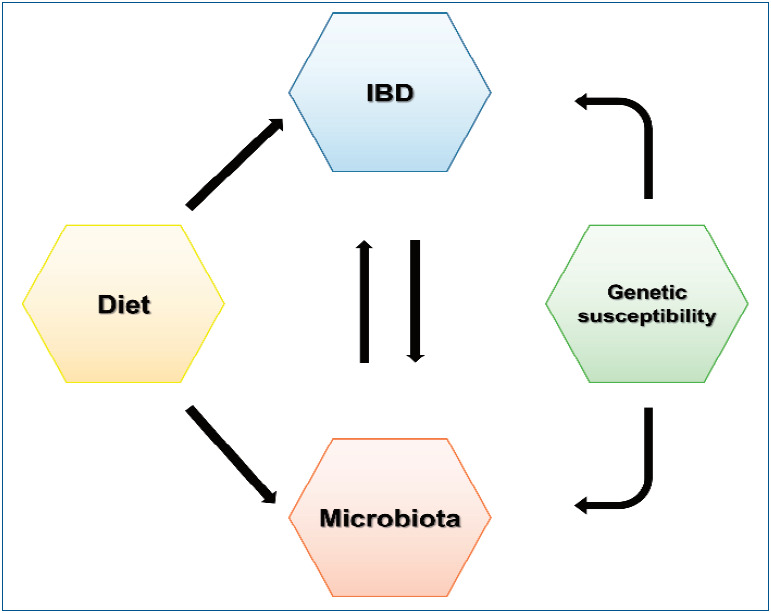
Inflammatory bowel disease (IBD) is a chronic relapsing immune-mediated disease of the intestinal tract. Although its prevalence is reportedly lower in Asia than in Western countries, the rapid increase in the incidence of IBD has drawn attention to its etiology, including genetic susceptibility and environmental factors. Specifically, recent studies concerning dietary treatments and intestinal microbiota suggest that these factors may interact with the immune system, and the imbalance of this relationship may lead to immune dysregulation in IBD. Changes in diet or alterations in the composition of the intestinal microbiota may be associated with the increasing incidence of IBD in Asia. Here, we aim to review recent studies on the role of diet and intestinal microbiota in IBD pathogenesis and the results of the investigations performed to modulate these factors.
Keywords: Diet; Fecal microbiota transplantation; Inflammatory bowel disease; Microbiota.
Conflict of interest statement
No potential conflict of interest relevant to this article was reported.
Figures
References
-
- Benchimol EI, Manuel DG, Guttmann A, Nguyen GC, Mojaverian N, Quach P, et al. Changing age demographics of inflammatory bowel disease in Ontario, Canada: a population-based cohort study of epidemiology trends. Inflamm Bowel Dis. 2014;20:1761–9. - PubMed
-
- Kaplan GG, Ng SC. Understanding and preventing the global increase of inflammatory bowel disease. Gastroenterology. 2017;152:313–21. e2. - PubMed
-
- Asakura K, Nishiwaki Y, Inoue N, Hibi T, Watanabe M, Takebayashi T. Prevalence of ulcerative colitis and Crohn's disease in Japan. J Gastroenterol. 2009;44:659–65. - PubMed
-
- Yang SK, Yun S, Kim JH, Park JY, Kim HY, Kim YH, et al. Epidemiology of inflammatory bowel disease in the Songpa-Kangdong district, Seoul, Korea, 1986-2005: a KASID study. Inflamm Bowel Dis. 2008;14:542–9. - PubMed
LinkOut - more resources
Full Text Sources