. 2020 Feb 5;11(1):733.
doi: 10.1038/s41467-019-13824-9.

Genomic footprints of activated telomere maintenance mechanisms in cancer

Collaborators, Affiliations

Genomic footprints of activated telomere maintenance mechanisms in cancer

Lina Sieverling et al. Nat Commun. .

Erratum in

  • Author Correction: Genomic footprints of activated telomere maintenance mechanisms in cancer.
    Sieverling L, Hong C, Koser SD, Ginsbach P, Kleinheinz K, Hutter B, Braun DM, Cortés-Ciriano I, Xi R, Kabbe R, Park PJ, Eils R, Schlesner M; PCAWG-Structural Variation Working Group; Brors B, Rippe K, Jones DTW, Feuerbach L; PCAWG Consortium. Sieverling L, et al. Nat Commun. 2022 Dec 8;13(1):7574. doi: 10.1038/s41467-022-32328-7. Nat Commun. 2022. PMID: 36481818 Free PMC article. No abstract available.

Abstract

Cancers require telomere maintenance mechanisms for unlimited replicative potential. They achieve this through TERT activation or alternative telomere lengthening associated with ATRX or DAXX loss. Here, as part of the ICGC/TCGA Pan-Cancer Analysis of Whole Genomes (PCAWG) Consortium, we dissect whole-genome sequencing data of over 2500 matched tumor-control samples from 36 different tumor types aggregated within the ICGC/TCGA Pan-Cancer Analysis of Whole Genomes (PCAWG) Consortium to characterize the genomic footprints of these mechanisms. While the telomere content of tumors with ATRX or DAXX mutations (ATRX/DAXXtrunc) is increased, tumors with TERT modifications show a moderate decrease of telomere content. One quarter of all tumor samples contain somatic integrations of telomeric sequences into non-telomeric DNA. This fraction is increased to 80% prevalence in ATRX/DAXXtrunc tumors, which carry an aberrant telomere variant repeat (TVR) distribution as another genomic marker. The latter feature includes enrichment or depletion of the previously undescribed singleton TVRs TTCGGG and TTTGGG, respectively. Our systematic analysis provides new insight into the recurrent genomic alterations associated with telomere maintenance mechanisms in cancer.


Conflict of interest statement

The authors declare no competing interests.

Figures

Fig. 1
Fig. 1. Telomere content is increased in ATRX/DAXXtrunc samples.
a Overview of the telomere content distribution of all analyzed tumor types. The number of samples in each tumor type is indicated. Cohorts with sample sizes <15 are not shown. b TMM-associated mutations in different tumor types. c Telomere content in samples with different TMM-associated mutations. d TERT expression in samples with different TMM-associated mutations. The center lines of the boxplots are the medians, the bounds of the boxes represent the first and third quartiles, the upper and lower whiskers extend from the hinge to the largest or smallest value, respectively, no further than 1.5 × IQR from the hinge (where IQR is the interquartile range, or distance between the first and third quartiles). ****p < 0.0001, Wilcoxon rank-sum tests.
Fig. 2
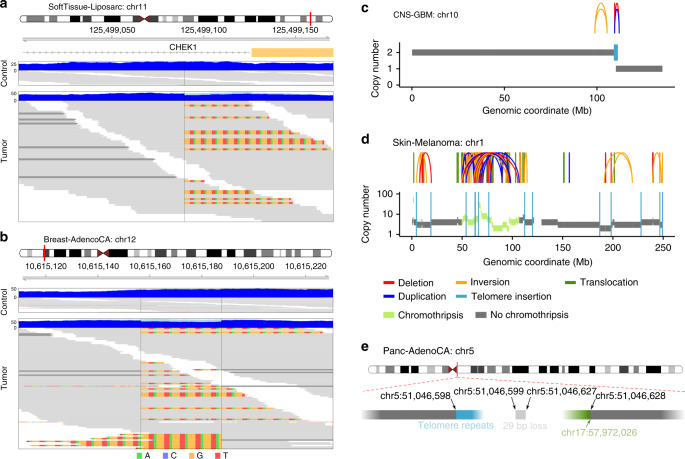
Fig. 2. Examples of telomere insertions.
a One-sided telomere insertion in liposarcoma sample SP121774. Blue tracks show the sequencing coverage; light blue represents clipped sequences. Individual reads are grey and clipped bases are colored. Dark grey reads represent the nontelomeric end of a discordant read pair. b Two-sided telomere insertion in breast adenocarcinoma sample SP5636. Nontelomeric clipped bases are transparent. c One-sided telomere insertion accompanied by copy number loss of the adjacent chromosome end in glioblastoma sample SP29559. Arches represent structural variations. d Multiple telomere insertions in a chromosome that underwent chromothripsis in melanoma sample SP124441. e One-sided telomere insertion accompanied by a translocation of the adjacent chromosome segment in pancreatic adenocarcinoma sample SP125764.
Fig. 3
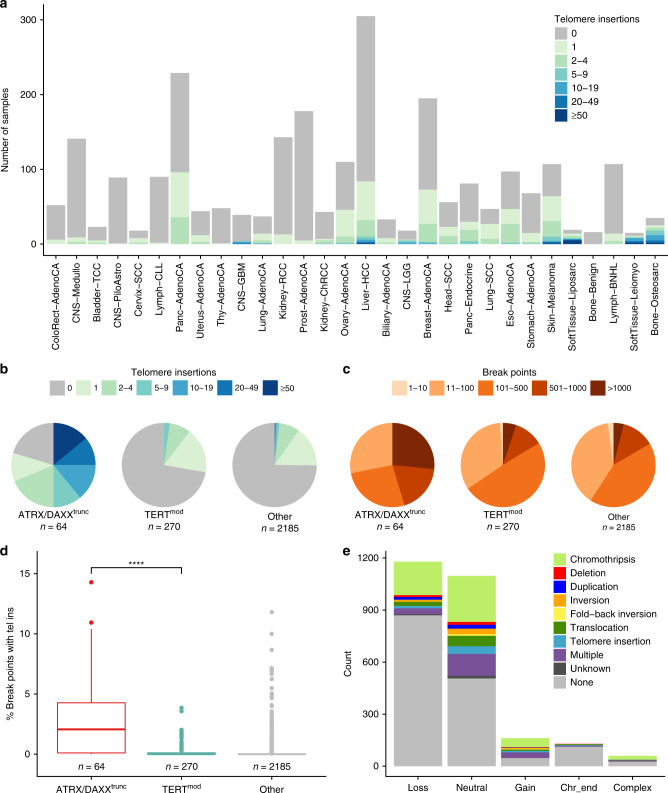
Fig. 3. Insertion of telomere sequences into nontelomeric chromosomal regions.
a Number of telomere insertions in samples of different tumor types. The tumor types are sorted by mean telomere content tumor/control log2 ratios. Cohorts with sample sizes <15 are not shown. b Number of telomere insertions in samples with different TMM-associated mutations. c Number of breakpoints in samples with different TMM-associated mutations. d Percent of breakpoints coinciding with telomere insertions in samples with different TMM-associated mutations. The center line of the boxplot is the median, the bounds of the box represent the first and third quartiles, the upper and lower whiskers extend from the hinge to the largest or smallest value, respectively, no further than 1.5 × IQR from the hinge (where IQR is the interquartile range, or distance between the first and third quartiles). ****p < 0.0001, Wilcoxon rank-sum test. e Copy number changes of adjacent segments accompanying telomere insertions. “Complex” means that the copy numbers between segments differ in more than four copies. Overlaps with regions of chromothripsis are indicated. For telomere insertions that did not overlap with regions of chromothripsis, structural variations, or additional telomere insertions within 10 kb are indicated.
Fig. 4
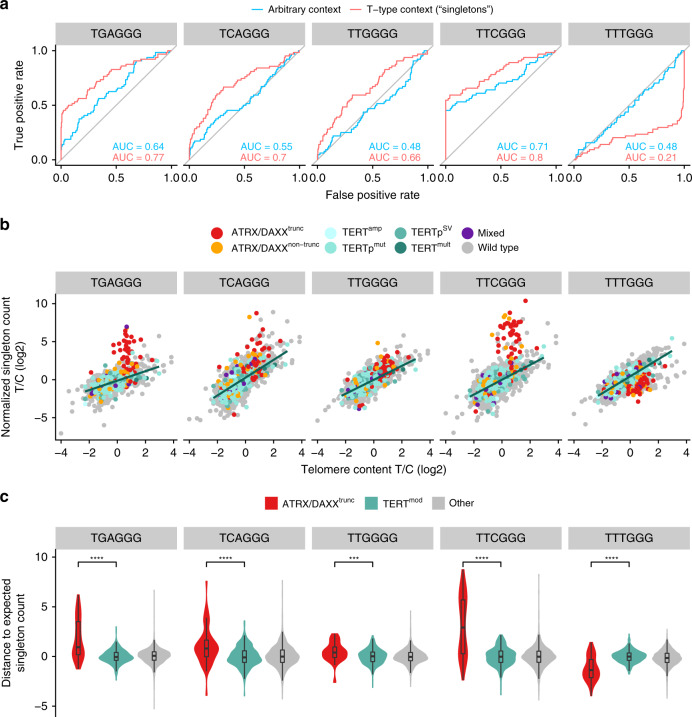
Fig. 4. Singleton TVRs enriched or depleted in ATRX/DAXXtrunc samples.
a Receiver operating characteristic for the classification of samples with ALT-associated mutations from telomere variant repeats. Red: no specific sequence context required. Blue: singletons ((TTAGGG)3-NNNGGG-(TTAGGG)3). The more the area under the curve (AUC) deviates from 0.5, the better the repeat occurrence distinguishes ATRX/DAXXtrunc from TERTmod samples. b Pattern count tumor/control log2 ratios of all patients plotted against telomere content tumor/control log2 ratios for selected singletons. The regression line through the TERTmod samples is shown in green and is defined as the expected pattern count in the following. c Distance to the expected singleton repeat count in ATRX/DAXXtrunc and TERTmod samples. The center line of the boxplot is the median, the bounds of the box represent the first and third quartiles, the upper and lower whiskers extend from the hinge to the largest or smallest value, respectively, no further than 1.5 × IQR from the hinge (where IQR is the interquartile range, or distance between the first and third quartiles). ****p < 0.0001; ***p < 0.001, Wilcoxon rank-sum tests after Bonferroni correction. The profiles of all analyzed patterns are shown in Supplementary Figs. 11 and 13.
Fig. 5
Fig. 5. Genomic footprints of telomerase-mediated telomere elongation and ALT.
It is known that telomeres elongated by telomerase have a homologous length with few TVRs in distal telomeric regions (left), while ALT telomeres have heterogeneous lengths with an increased amount of TVRs (right). Moreover, ALT cells have abundant extrachromosomal telomeric sequences. From this study, we conclude that the chromosomes of ALT cells have a higher number of aberrant interstitial telomere insertions, most of which are one-sided and accompanied by a loss of the adjacent chromosomal segment. We also showed that several TVRs occurring as singletons are more abundant in ALT telomeres, while one singleton (TTTGGG) was more abundant in telomerase-elongated telomeres. Please note that it is currently undetermined whether the different types of singletons are located in proximal or distal telomeric regions.

Comment in

References

    1. O’Sullivan RJ, Karlseder J. Telomeres: protecting chromosomes against genome instability. Nat. Rev. Mol. Cell Biol. 2010;11:171–181. doi: 10.1038/nrm2848. - DOI - PMC - PubMed
    1. Allshire RC, Dempster M, Hastie ND. Human telomeres contain at least three types of G-rich repeat distributed non-randomly. Nucleic Acids Res. 1989;17:4611–4627. doi: 10.1093/nar/17.12.4611. - DOI - PMC - PubMed
    1. Baird DM, Jeffreys AJ, Royle NJ. Mechanisms underlying telomere repeat turnover, revealed by hypervariable variant repeat distribution patterns in the human Xp/Yp telomere. EMBO J. 1995;14:5433–5443. doi: 10.1002/j.1460-2075.1995.tb00227.x. - DOI - PMC - PubMed
    1. Harley CB, Futcher AB, Greider CW. Telomeres shorten during ageing of human fibroblasts. Nature. 1990;345:458–460. doi: 10.1038/345458a0. - DOI - PubMed
    1. d’Adda di Fagagna F, et al. A DNA damage checkpoint response in telomere-initiated senescence. Nature. 2003;426:194–198. doi: 10.1038/nature02118. - DOI - PubMed

Publication types