


Surfing-related head injuries presenting to United States emergency departments
- PMID: 32025130
- PMCID: PMC6997652
- DOI: 10.1016/j.jor.2019.11.042
Surfing-related head injuries presenting to United States emergency departments
Abstract
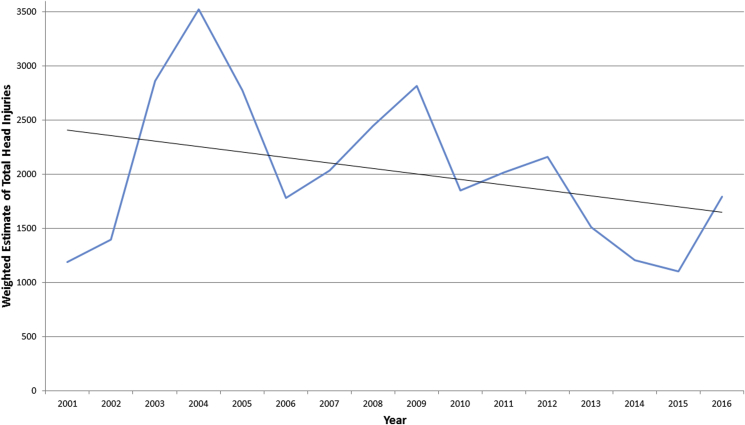
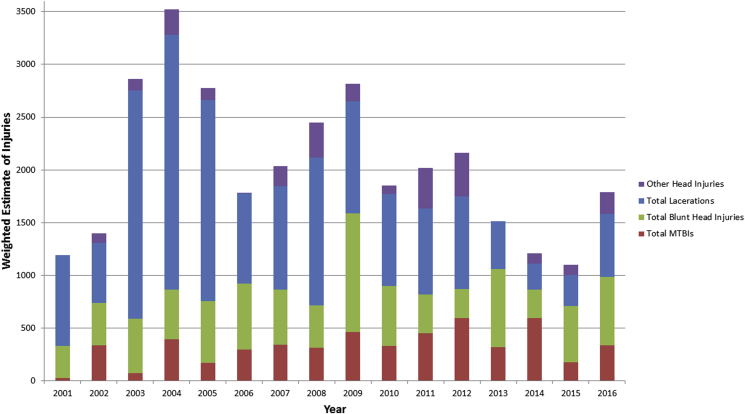
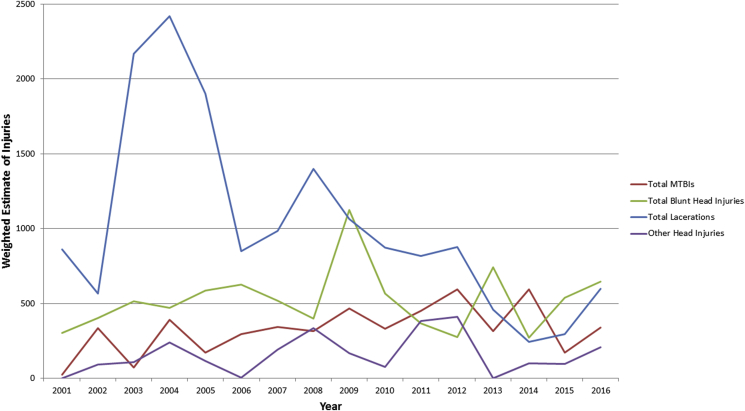
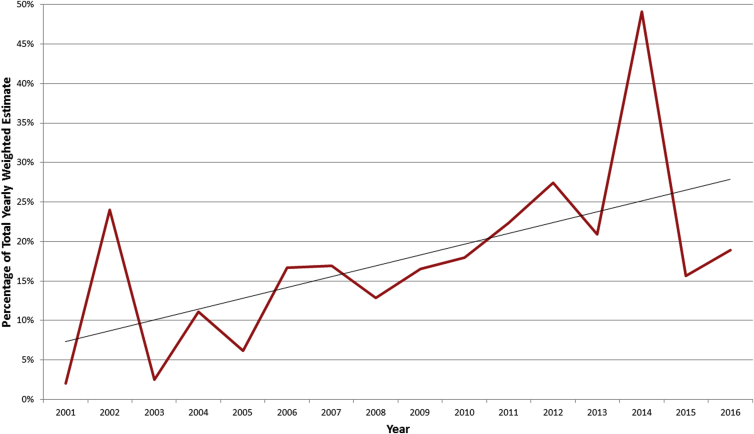
This study examined the incidence and trends of surfing-related and mild traumatic brain injuries that presented to United States emergency departments between 2001 and 2016. Subjects with surging-related head injuries were retrieved from the National Electronic Injury Surveillance System. A weighted total of 34,337 surfing-related head injuries were identified. The annual incidence of surfing-related head injuries insignificantly decreased from 2001 to 2016 (R2 = .119; p = .19). Most common injuries included lacerations (50.4%), blunt head injuries (25.7%), and mild traumatic brain injuries (16.1%). Mild traumatic brain injury incidence and annual percentage increased significantly during the study period (R2 = .251; p = .05 and R2 = .346; p = .02, respectively).
Keywords: Concussion; Epidemiology; Head injury; Mild traumatic brain injury; Sports-related injury; Surfing.
© 2019 Professor P K Surendran Memorial Education Foundation. Published by Elsevier B.V. All rights reserved.
Conflict of interest statement
No conflicts of interest.
Figures
References
-
- Harmon K.G., Drezner J.A., Gammons M. American Medical Society for Sports Medicine position statement: concussion in sport. Br J Sports Med. 2013;47(1):15–26. - PubMed
-
- Chatterjee D., Frumberg D.B., Mulchandani N.B. Current concepts in sports-related concussion. Crit Rev Biomed Eng. 2015;43(5-6):371–383. - PubMed
-
- Klick C., Jones C.M.C., Adler D. Surfing USA: an epidemiological study of surfing injuries presenting to US EDs 2002 to 2013. Am J Emerg Med. 2016;34(8):1491–1496. - PubMed
LinkOut - more resources
Full Text Sources
