. 2020 Mar 10;16(3):1555-1567.
doi: 10.1021/acs.jctc.9b01129. Epub 2020 Feb 21.

Extended Dynamically Weighted CASPT2: The Best of Two Worlds

Affiliations

Extended Dynamically Weighted CASPT2: The Best of Two Worlds

Stefano Battaglia et al. J Chem Theory Comput. .

Abstract

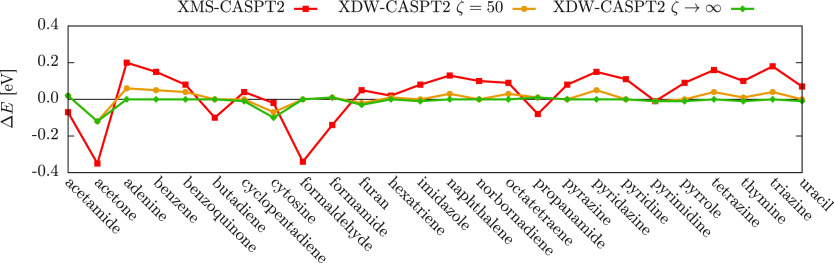
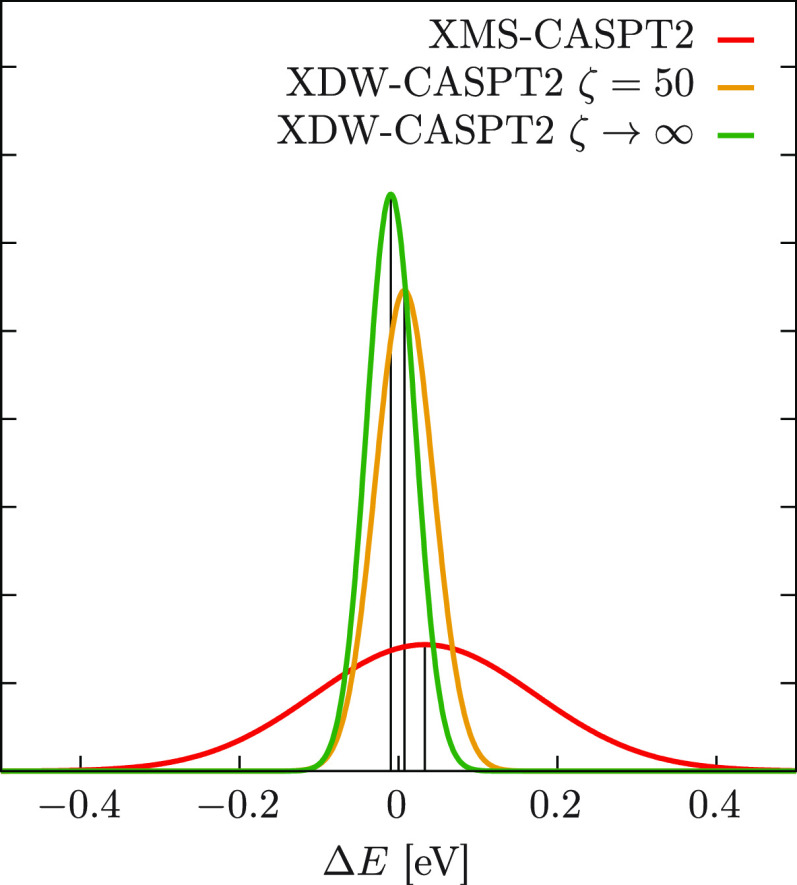
We introduce a new variant of the complete active space second-order perturbation theory (CASPT2) method that performs similarly to multistate CASPT2 (MS-CASPT2) in regions of the potential energy surface where the electronic states are energetically well separated and is akin to extended MS-CASPT2 (XMS-CASPT2) in case the underlying zeroth-order references are near-degenerate. Our approach follows a recipe analogous to that of XMS-CASPT2 to ensure approximate invariance under unitary transformations of the model states and a dynamic weighting scheme to smoothly interpolate the Fock operator between state-specific and state-average regimes. The resulting extended dynamically weighted CASPT2 (XDW-CASPT2) methodology possesses the most desirable features of both MS-CASPT2 and XMS-CASPT2, that is, the ability to provide accurate transition energies and correctly describe avoided crossings and conical intersections. The reliability of XDW-CASPT2 is assessed on a number of molecular systems. First, we consider the dissociation of lithium fluoride, highlighting the distinctive characteristics of the new approach. Second, the invariance of the theory is investigated by studying the conical intersection of the distorted allene molecule. Finally, the relative accuracy in the calculation of vertical excitation energies is benchmarked on a set of 26 organic compounds. We found that XDW-CASPT2, albeit being only approximately invariant, produces smooth potential energy surfaces around conical intersections and avoided crossings, performing equally well to the strictly invariant XMS-CASPT2 method. The accuracy of vertical transition energies is almost identical to MS-CASPT2, with a mean absolute deviation of 0.01-0.02 eV, in contrast to 0.12 eV for XMS-CASPT2.


Conflict of interest statement

The authors declare no competing financial interest.

Figures
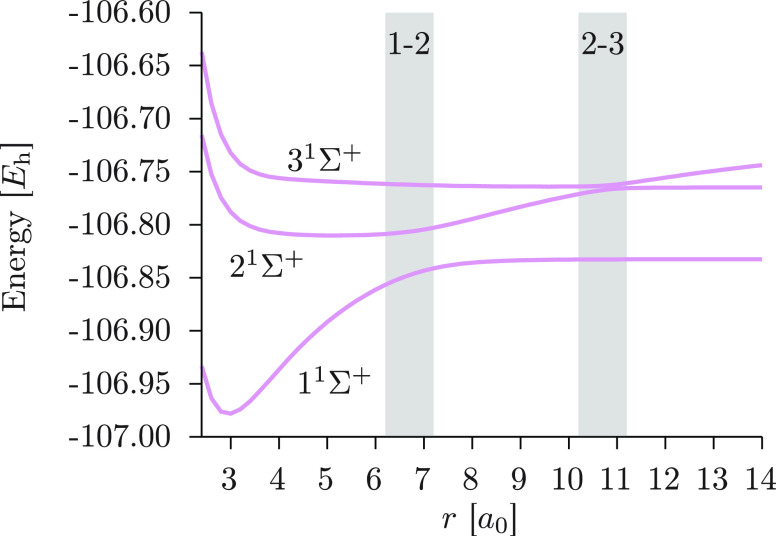
Figure 1
Figure 1
SA-CASSCF potential energy curves of the three lowest 1Σ+ states of lithium fluoride. There are two avoided crossing regions (highlighted in gray), one between the ground and the first excited states, labeled 1–2, and one between the first and the second excited states, labeled 2–3.
Figure 2
Figure 2
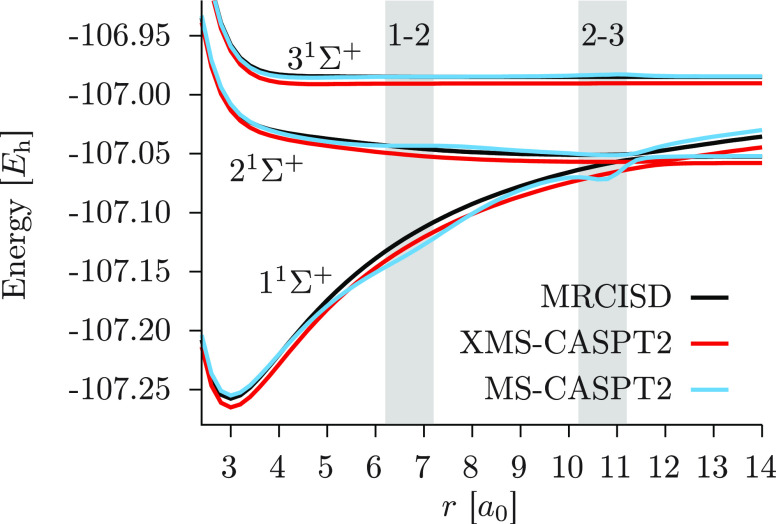
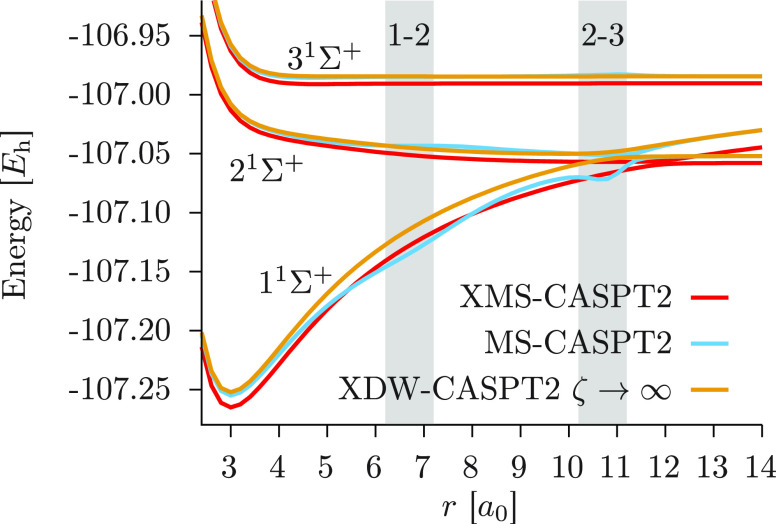
Potential energy curves of the three lowest 1Σ+ states of lithium fluoride. The zones highlighted in gray correspond to the avoided crossing regions at the CASSCF level of theory.
Figure 3
Figure 3
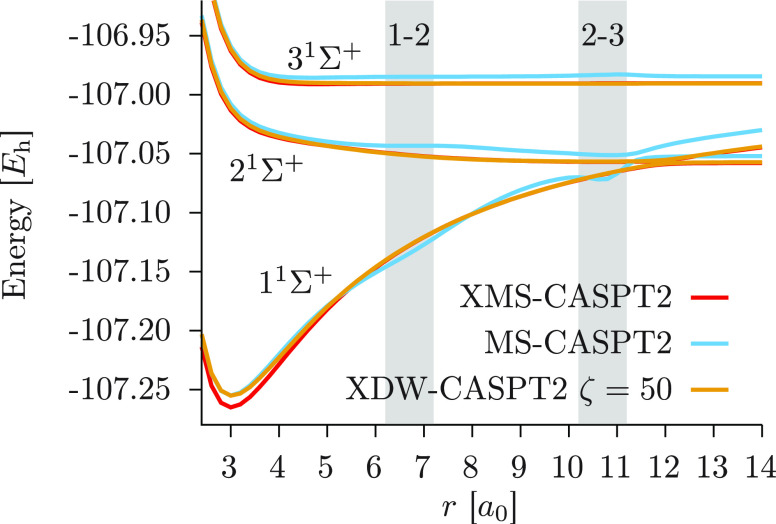
Potential energy curves of the three lowest 1Σ+ states of lithium fluoride. Note that to a large extent the XMS-CASPT2 curves are covered by the XDW-CASPT2 ones.
Figure 4
Figure 4
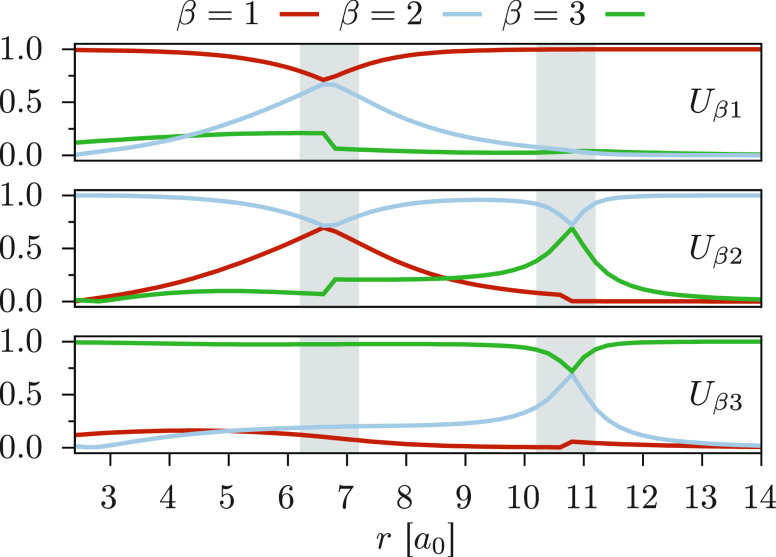
Absolute value of the elements Uβα of the rotation matrix mixing the zeroth-order CASSCF wave functions. The ground state (α = 1) is shown at the top; the first excited state (α = 2) is in the center, and the second excited state (α = 3) is at the bottom. The zones highlighted in gray correspond to SA-CASSCF ACs.
Figure 5
Figure 5
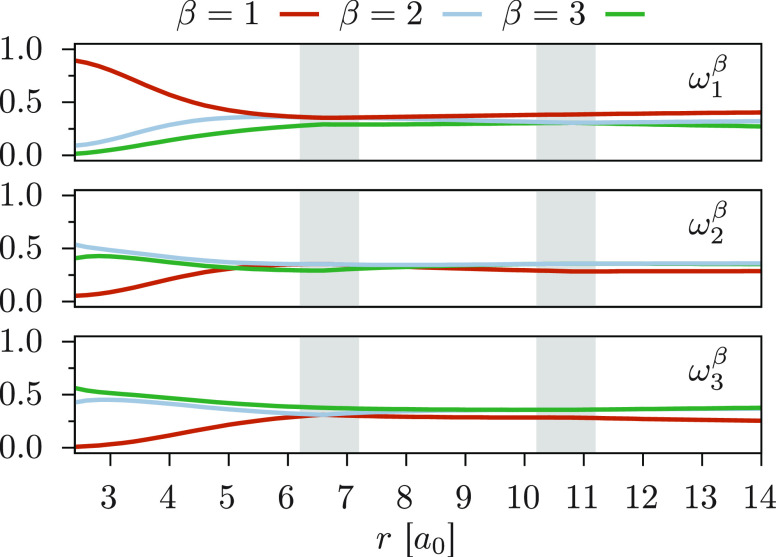
Weights ωαβ for ζ = 50. The ground state (α = 1) is shown at the top; the first excited state (α = 2) is in the center, and the second excited state (α = 3) is at the bottom.
Figure 6
Figure 6
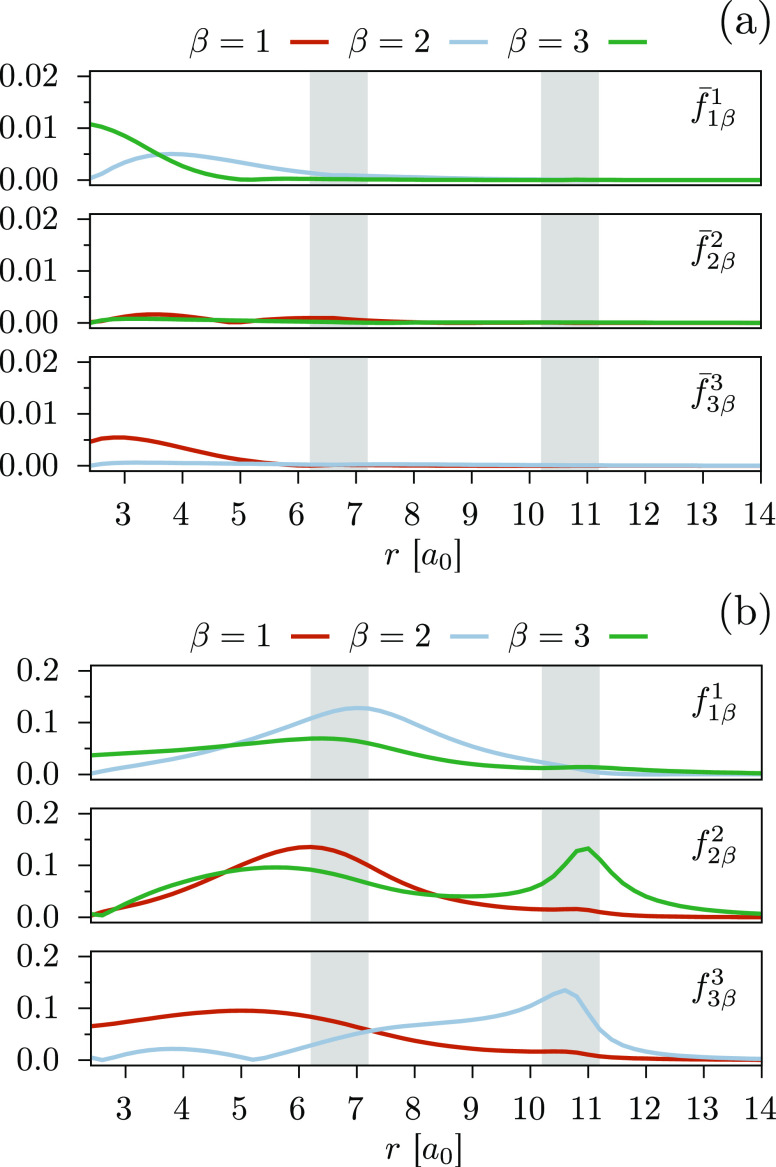
Absolute values of the Fock operator off-diagonal entries for (a) XDW-CASPT2 with ζ = 50 (elements αβγ) and (b) MS-CASPT2 (elements fαβγ). For each method (three plots), the ground state (α = 1) is shown at the top; the first excited state (α = 2) is in the center, and the second excited state (α = 3) is at the bottom. Note that the Fock operator used to compute the couplings is different for each state, and only the case γ = α is of relevance.
Figure 7
Figure 7
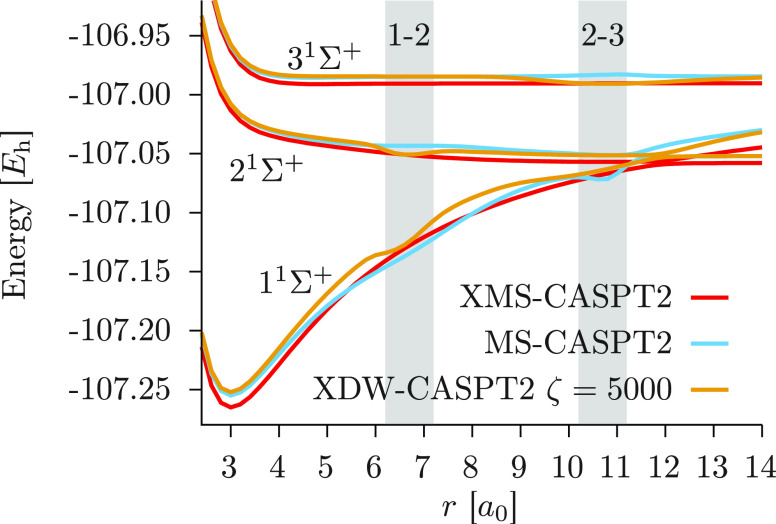
Potential energy curves of the three lowest 1Σ+ states of lithium fluoride.
Figure 8
Figure 8
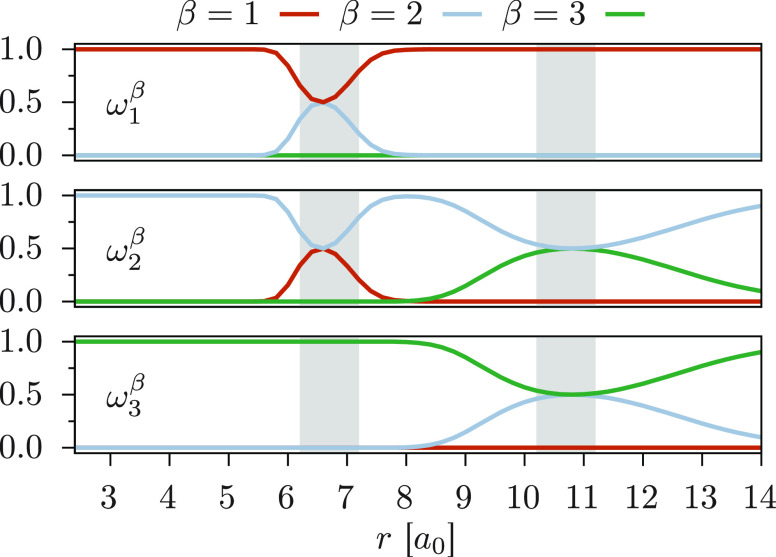
Weights ωαβ for ζ = 5000.
Figure 9
Figure 9
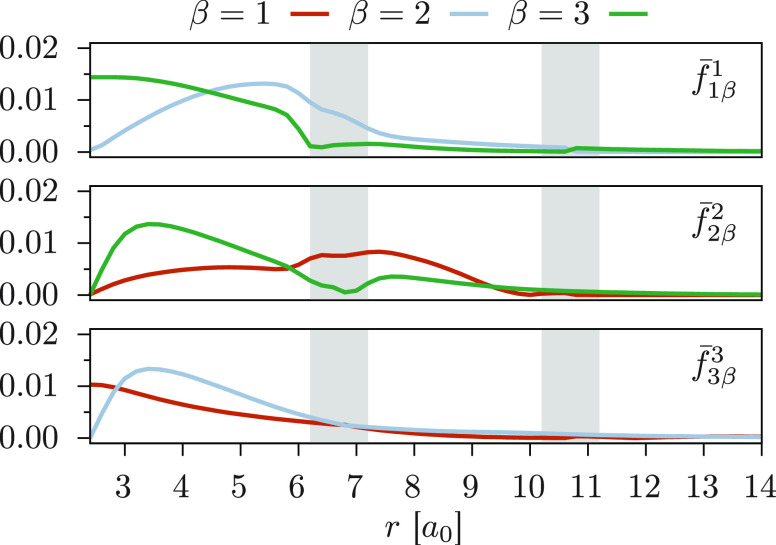
Absolute values of the elements αβ for ζ = 5000.
Figure 10
Figure 10
Potential energy curves of the three lowest 1Σ+ states of lithium fluoride.
Figure 11
Figure 11
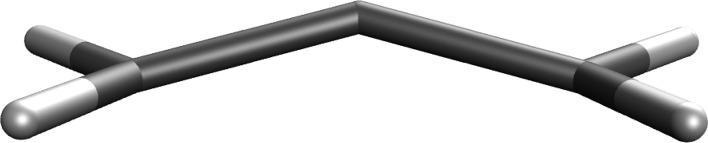
11A′ and 21A′ MECI geometry of the allene molecule.
Figure 12
Figure 12
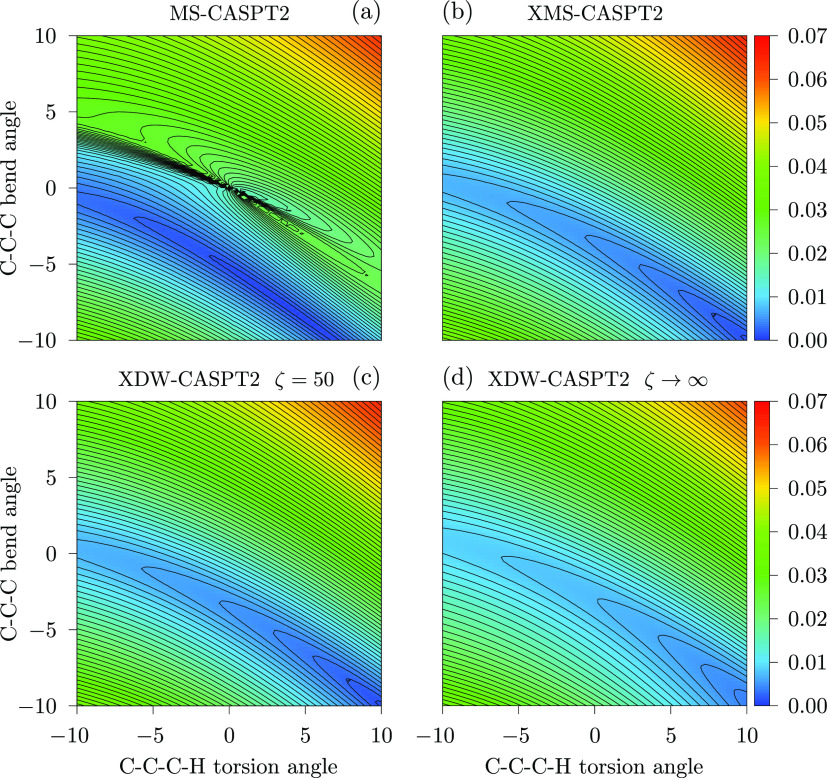
Color-mapped isosurface plot of the absolute energy difference (in Eh) between the 11A′ and 21A′ states for a model space including 2 states. The same calculation was carried out with different methodologies: (a) MS-CASPT2, (b) XMS-CASPT2, (c) XDW-CASPT2 with ζ = 50, and (d) XDW-CASPT2 with ζ → .
Figure 13
Figure 13
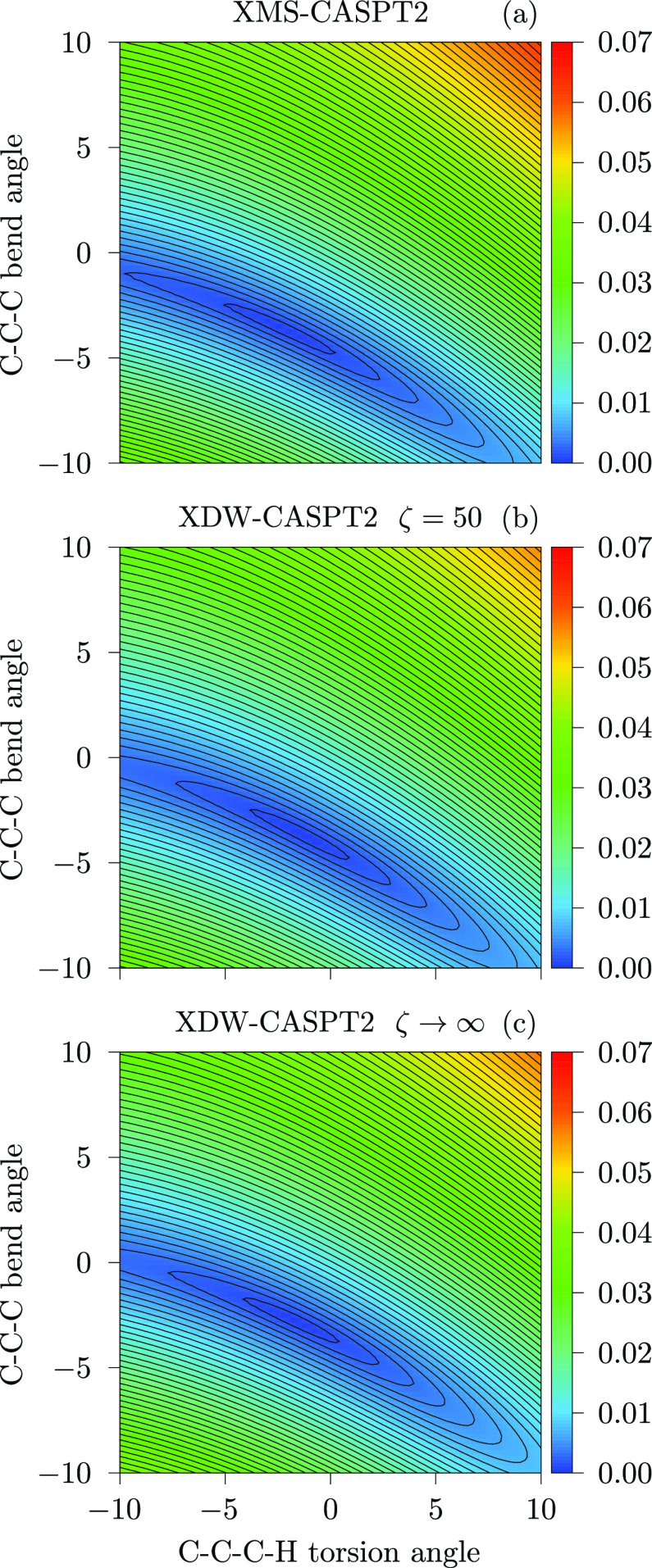
Color-mapped isosurface plot of the absolute energy difference between the 11A′ and 21A′ states for a 12-state model space computed with different methodologies: (a) XMS-CASPT2, (c) XDW-CASPT2 (ζ = 50), and (c) XDW-CASPT2 (ζ → ).
Scheme 1
Scheme 1. Three Main Scenarios for the Calculation of Excited States Energies
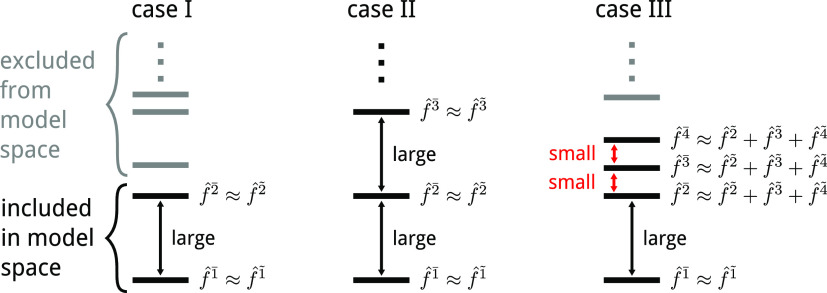
In case I, only the well-separated ground and first excited states are included in the model space. In case II, many states are included in the calculation, but all of them are well separated. In case III, several low-lying excited states are included in the model space, and these are energetically very close to each other. Therefore, their Fock operators will be approximately state-average in contrast to the other cases.
Figure 14
Figure 14
Signed deviations of singlet vertical excitation energies with respect to MS-CASPT2.
Figure 15
Figure 15
Normal distributions of excitation energy deviations with respect to MS-CASPT2.

References

    1. Matsika S.; Krylov A. I. Introduction: Theoretical Modeling of Excited State Processes. Chem. Rev. 2018, 118, 6925–6926. 10.1021/acs.chemrev.8b00436. - DOI - PubMed
    1. Vacher M.; Fdez. Galván I.; Ding B.-W.; Schramm S.; Berraud-Pache R.; Naumov P.; Ferré N.; Liu Y.-J.; Navizet I.; Roca-Sanjuán D.; Baader W. J.; Lindh R. Chemi- and Bioluminescence of Cyclic Peroxides. Chem. Rev. 2018, 118, 6927–6974. 10.1021/acs.chemrev.7b00649. - DOI - PubMed
    1. Norman P.; Dreuw A. Simulating X-ray Spectroscopies and Calculating Core-Excited States of Molecules. Chem. Rev. 2018, 118, 7208–7248. 10.1021/acs.chemrev.8b00156. - DOI - PubMed
    1. Casanova D. Theoretical Modeling of Singlet Fission. Chem. Rev. 2018, 118, 7164–7207. 10.1021/acs.chemrev.7b00601. - DOI - PubMed
    1. Lischka H.; Nachtigallová D.; Aquino A. J.; Szalay P. G.; Plasser F.; MacHado F. B.; Barbatti M. Multireference Approaches for Excited States of Molecules. Chem. Rev. 2018, 118, 7293–7361. 10.1021/acs.chemrev.8b00244. - DOI - PubMed