


Contributions of the Biofilm Matrix to Candida Pathogenesis
- PMID: 32028622
- PMCID: PMC7151000
- DOI: 10.3390/jof6010021
Contributions of the Biofilm Matrix to Candida Pathogenesis
Abstract
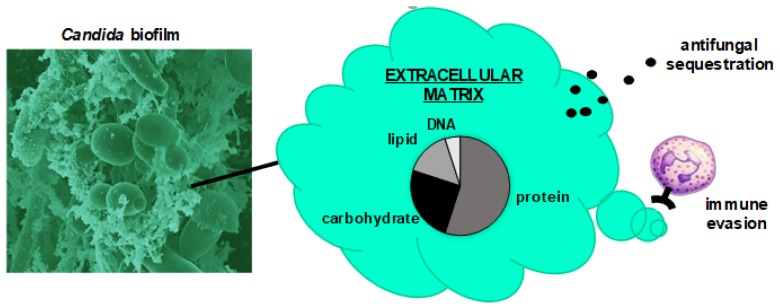
In healthcare settings, Candida spp. cause invasive disease with high mortality. The overwhelming majority of cases are associated with the use of critically-needed medical devices, such as vascular catheters. On the surface of these indwelling materials, Candida forms resilient, adherent biofilm communities. A hallmark characteristic of this process is the production of an extracellular matrix, which promotes fungal adhesion and provides protection from external threats. In this review, we highlight the medical relevance of device-associated Candida biofilms and draw attention to the process of Candida-biofilm-matrix production. We provide an update on the current understanding of how biofilm extracellular matrix contributes to pathogenicity, particularly through its roles in the promoting antifungal drug tolerance and immune evasion.
Keywords: Candida; biofilm; drug resistance; immunity; matrix.
Conflict of interest statement
The authors declare no conflict of interest.
Figures
References
-
- Magill S.S., Edwards J.R., Bamberg W., Beldavs Z.G., Dumyati G., Kainer M.A., Lynfield R., Maloney M., McAllister-Hollod L., Nadle J., et al. Multistate point-prevalence survey of health care-associated infections. N. Engl. J. Med. 2014;370:1198–1208. doi: 10.1056/NEJMoa1306801. - DOI - PMC - PubMed
-
- Pappas P.G., Kauffman C.A., Andes D.R., Clancy C.J., Marr K.A., Ostrosky-Zeichner L., Reboli A.C., Schuster M.G., Vazquez J.A., Walsh T.J., et al. Clinical Practice Guideline for the Management of Candidiasis: 2016 Update by the Infectious Diseases Society of America. Clin. Infect. Dis. 2016;62:e1–e50. doi: 10.1093/cid/civ1194. - DOI - PMC - PubMed
Publication types
Grants and funding
LinkOut - more resources
Full Text Sources
Miscellaneous
