Cellular sources of interleukin-6 and associations with clinical phenotypes and outcomes in pulmonary arterial hypertension
- PMID: 32029443
- PMCID: PMC8243361
- DOI: 10.1183/13993003.01761-2019
Cellular sources of interleukin-6 and associations with clinical phenotypes and outcomes in pulmonary arterial hypertension
Erratum in
-
"Cellular sources of interleukin-6 and associations with clinical phenotypes and outcomes in pulmonary arterial hypertension." Catherine E. Simpson, Jenny Y. Chen, Rachel L. Damico, et al. Eur Respir J 2020; 55: 1901761.Eur Respir J. 2022 Apr 7;59(4):1951761. doi: 10.1183/13993003.51761-2019. Print 2022 Apr. Eur Respir J. 2022. PMID: 35484798 No abstract available.
Abstract
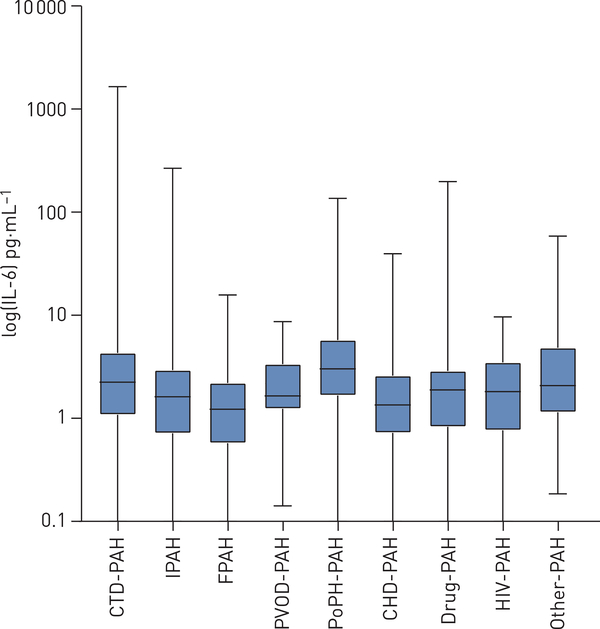
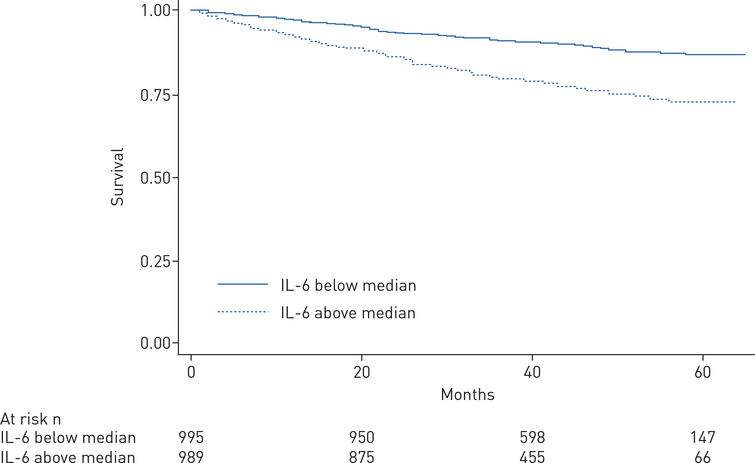
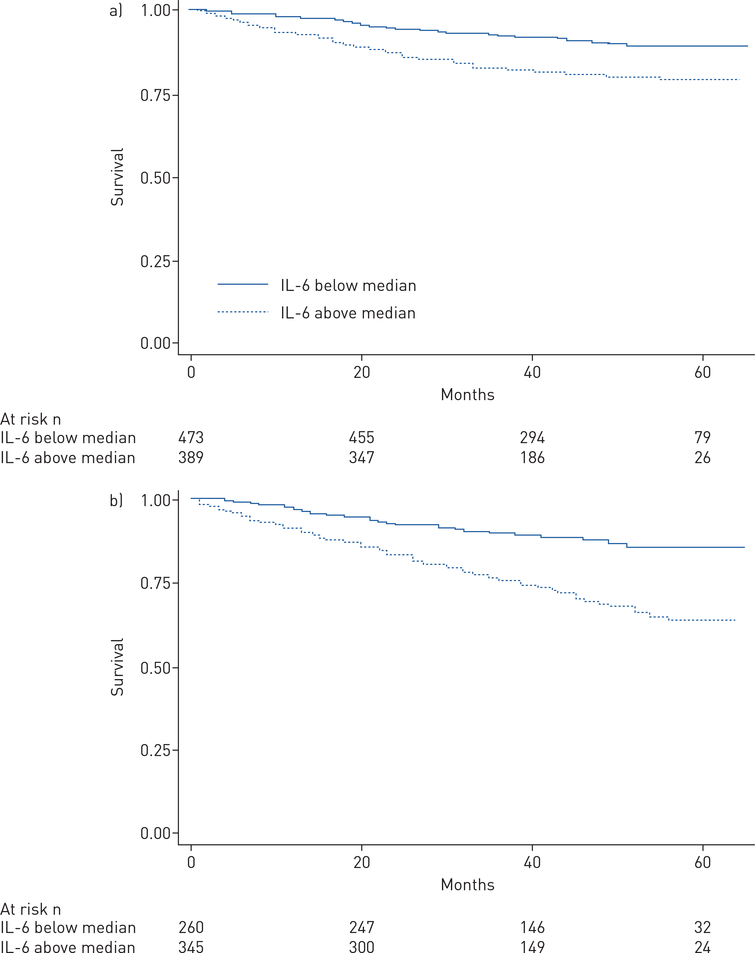
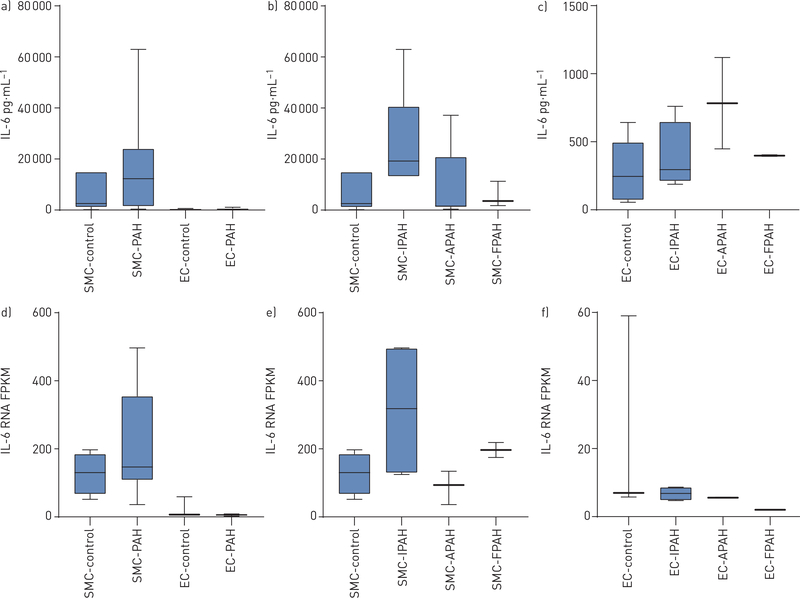
The pro-inflammatory cytokine interleukin (IL)-6 has been associated with outcomes in small pulmonary arterial hypertension (PAH) cohorts composed largely of patients with severe idiopathic PAH (IPAH). It is unclear whether IL-6 is a marker of critical illness or a mechanistic biomarker of pulmonary vascular remodelling. We hypothesised that IL-6 is produced by pulmonary vascular cells and sought to explore IL-6 associations with phenotypes and outcomes across diverse subtypes in a large PAH cohort.IL-6 protein and gene expression levels were measured in cultured pulmonary artery smooth muscle cells (PASMCs) and endothelial cells (PAECs) from PAH patients and healthy controls. Serum IL-6 was measured in 2017 well-characterised PAH subjects representing each PAH subgroup. Relationships between IL-6 levels, clinical variables, and mortality were analysed using regression models.Significantly higher IL-6 protein and gene expression levels were produced by PASMCs than by PAECs in PAH (p<0.001), while there was no difference in IL-6 between cell types in controls. Serum IL-6 was highest in PAH related to portal hypertension and connective tissue diseases (CTD-PAH). In multivariable modelling, serum IL-6 was associated with survival in the overall cohort (hazard ratio 1.22, 95% CI 1.08-1.38; p<0.01) and in IPAH, but not in CTD-PAH. IL-6 remained associated with survival in low-risk subgroups of subjects with mild disease.IL-6 is released from PASMCs, and circulating IL-6 is associated with specific clinical phenotypes and outcomes in various PAH subgroups, including subjects with less severe disease. IL-6 is a mechanistic biomarker, and thus a potential therapeutic target, in certain PAH subgroups.
Copyright ©ERS 2020.
Conflict of interest statement
Conflict of interest: Catherine E. Simpson has nothing to disclose. Conflict of interest: Jenny Y. Chen has nothing to disclose. Conflict of interest: Rachel L. Damico has nothing to disclose. Conflict of interest: Paul M. Hassoun has nothing to disclose. Conflict of interest: Lisa J. Martin has nothing to disclose. Conflict of interest: Jun Yang has nothing to disclose. Conflict of interest: Melanie Nies has nothing to disclose. Conflict of interest: Megan Griffiths has nothing to disclose. Conflict of interest: R. Dhananjay Vaidya has nothing to disclose. Conflict of interest: Stephanie Brandal has nothing to disclose. Conflict of interest: Michael W. Pauciulo has nothing to disclose. Conflict of interest: Katie A. Lutz has nothing to disclose. Conflict of interest: Anna W. Coleman has nothing to disclose. Conflict of interest: Eric D. Austin has nothing to disclose. Conflict of interest: Dunbar D. Ivy has nothing to disclose. Conflict of interest: William C. Nichols has nothing to disclose. Conflict of interest: Allen D. Everett has nothing to disclose.
Figures
Comment in
-
IL-6 in pulmonary hypertension: why novel is not always best.Eur Respir J. 2020 Apr 16;55(4):2000314. doi: 10.1183/13993003.00314-2020. Print 2020 Apr. Eur Respir J. 2020. PMID: 32300021 No abstract available.
References
-
- Jasiewicz M, Knapp M, Waszkiewicz E, et al. Enhanced IL-6 trans-signaling in pulmonary arterial hypertension and its potential role in disease-related systemic damage. Cytokine 2015; 76: 187–192. - PubMed
-
- Humbert M, Monti G, Brenot F, et al. Increased interleukin-1 and interleukin-6 serum concentrations in severe primary pulmonary hypertension. Am J Respir Crit Care Med 1995; 151: 1628–1631. - PubMed
Publication types
MeSH terms
Substances
Grants and funding
LinkOut - more resources
Full Text Sources