


The role of ADP-ribose metabolism in metabolic regulation, adipose tissue differentiation, and metabolism
- PMID: 32029456
- PMCID: PMC7050491
- DOI: 10.1101/gad.334284.119
The role of ADP-ribose metabolism in metabolic regulation, adipose tissue differentiation, and metabolism
Abstract
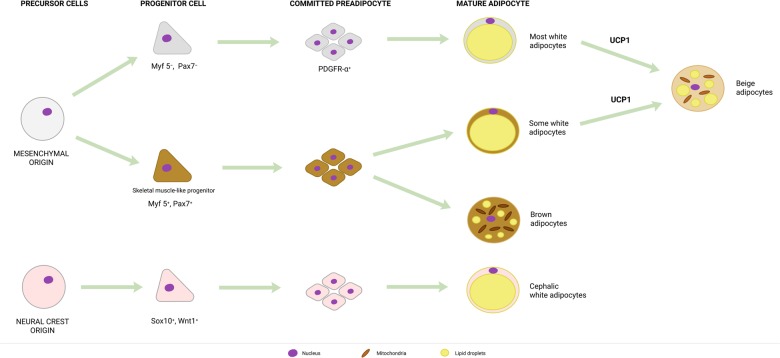
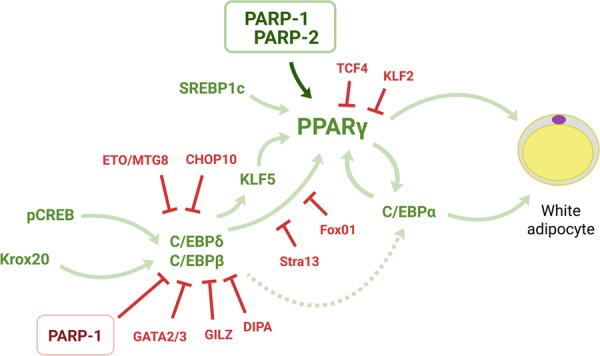
Poly(ADP-ribose) polymerases (PARPs or ARTDs), originally described as DNA repair factors, have metabolic regulatory roles. PARP1, PARP2, PARP7, PARP10, and PARP14 regulate central and peripheral carbohydrate and lipid metabolism and often channel pathological disruptive metabolic signals. PARP1 and PARP2 are crucial for adipocyte differentiation, including the commitment toward white, brown, or beige adipose tissue lineages, as well as the regulation of lipid accumulation. Through regulating adipocyte function and organismal energy balance, PARPs play a role in obesity and the consequences of obesity. These findings can be translated into humans, as evidenced by studies on identical twins and SNPs affecting PARP activity.
Keywords: AFLD; ARTD; NAFLD; PARP; PARylation; adipocyte; adipogenesis; atherosclerosis; beige adipocytes; brown adipocytes; differentiation; high fat diet; insulin resistance; lipolysis; mitochondria; obesity; stem cell; white adipocytes.
© 2020 Szántó and Bai; Published by Cold Spring Harbor Laboratory Press.
Figures
References
-
- Abdul-Rahman O, Kristóf E, Doan-Xuan QM, Vida A, Nagy L, Horváth A, Simon J, Maros T, Szentkirályi I, Palotás L, et al. 2016. AMP-activated kinase (AMPK) activation by AICAR in human white adipocytes derived from pericardial white adipose tissue stem cells induces a partial beige-like phenotype. PLoS One 11: e0157644 10.1371/journal.pone.0157644 - DOI - PMC - PubMed
Publication types
MeSH terms
Substances
LinkOut - more resources
Full Text Sources
Miscellaneous
