


Are Common Sense Model constructs and self-efficacy simultaneously correlated with self-management behaviors and health outcomes: A systematic review
- PMID: 32030192
- PMCID: PMC6978827
- DOI: 10.1177/2055102919898846
Are Common Sense Model constructs and self-efficacy simultaneously correlated with self-management behaviors and health outcomes: A systematic review
Abstract
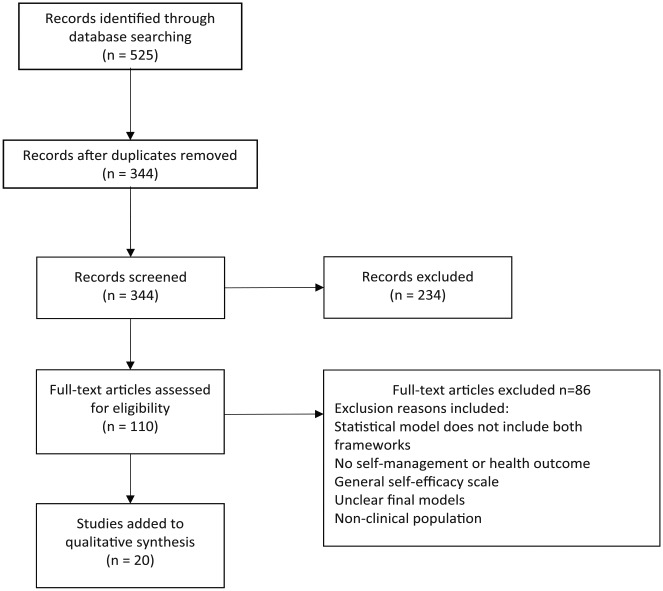
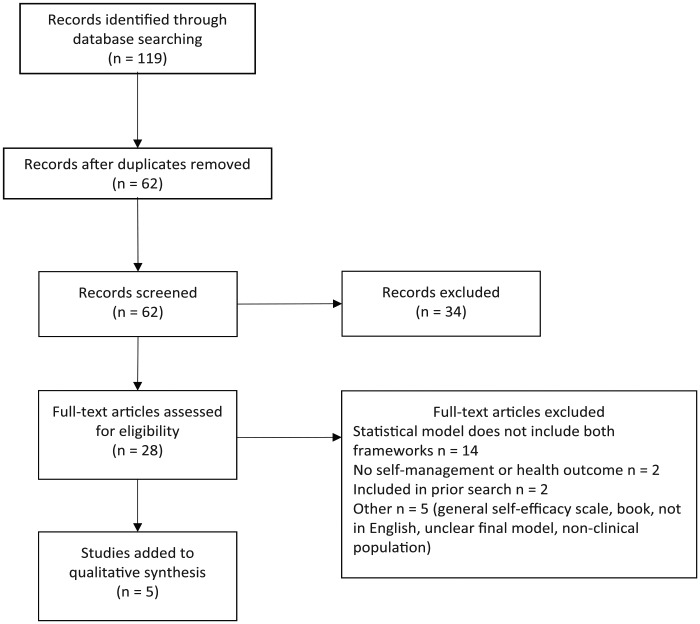
This systematic review answered two questions among adults with chronic conditions: When included in the same statistical model, are Common Sense Model constructs and self-efficacy both associated with (1) self-management behaviors and (2) health outcomes? We followed the Preferred Reporting Items for Systematic Reviews and Meta-Analyses guidelines and included 29 articles. When included in the same statistical model, Common Sense Model constructs and self-efficacy were both correlated with outcomes. Self-efficacy was more consistently associated with self-management behaviors, and Common Sense Model constructs were more consistently associated with health outcomes. Findings support the continued inclusion and integration of both frameworks to understand and/or improve chronic illness self-management and outcomes.
Keywords: Common Sense Model; adults; chronic illness; self-efficacy; self-management.
© The Author(s) 2020.
Conflict of interest statement
Declaration of Conflicting Interests: The author(s) declared no potential conflicts of interest with respect to the research, authorship, and/or publication of this article.
Figures
References
-
- Baines T, Wittkowski A. (2013) A systematic review of the literature exploring illness perceptions in mental health utilising the self-regulation model. Journal of Clinical Psychology in Medical Settings 20: 263–274. - PubMed
-
- Bandura A. (1997) Self-efficacy: The Exercise of Self-control. Gordonsville, VA: WH Freeman.
-
- Bandura A, Locke EA. (2003) Negative self-efficacy and goal effects revisited. Journal of Applied Psychology 88: 87–99. - PubMed
-
- Baumann LJ, Leventhal H. (1985) I can tell when my blood pressure is up, can’t I? Health Psychology 4: 203–218. - PubMed
Publication types
Grants and funding
LinkOut - more resources
Full Text Sources
